0%

A smart ring may look small, but producing one reliably involves many linked decisions. Sensor placement, battery life, charging contacts, materials, and fit can all affect the final experience. A sleek sample is encouraging. It is not proof of consistent production.

Choosing a smart ring factory means looking beyond a polished presentation. Ask how the team handles prototypes, documents material specifications, tests device performance, and checks quality across production batches. Request clear answers about minimum order quantities, lead times, design changes, and communication when problems arise. Details matter.

The ten tips in this guide offer a practical way to compare potential partners. They focus on manufacturing experience, technical capability, quality controls, customization, and after-sales support. When possible, review a sample in person: check its finish, comfort, charging fit, and everyday usability. Ask what testing was performed and whether results can be shared. A sample helps.

No checklist removes uncertainty. A successful prototype cannot guarantee every production run will be identical, and supplier claims deserve verification. Compare written specifications with physical samples, and keep expectations realistic. The goal is not to find a factory that promises everything. It is to find a capable partner that explains its process, acknowledges limitations, and can support your product as it moves from concept to production.
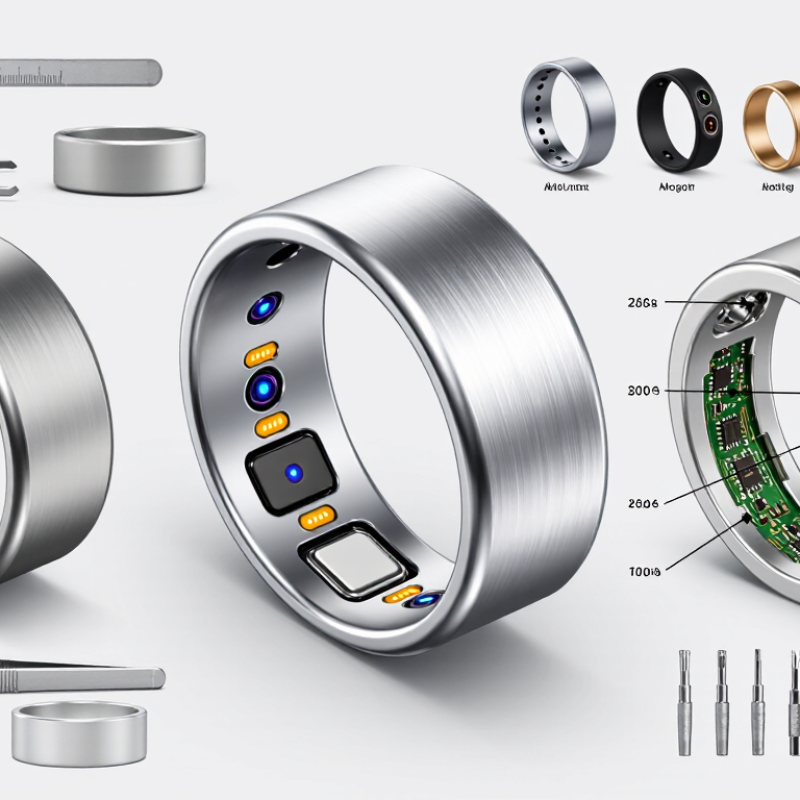
10 Tips for Choosing a Smart Ring Factory?

Define Smart Ring Requirements: BLE, Sensors, Battery, and Sizing

Before contacting a smart ring factory, turn the product idea into measurable requirements. Specify BLE behavior, including reconnection after a phone moves out of range. List each sensor and its purpose, such as optical heart-rate tracking, skin temperature, or motion sensing. Ask how placement, sampling rate, and calibration affect readings. Small changes in fit can shift sensor contact and data quality.

Tips: Share target battery life alongside charging time and usage assumptions. A capacity figure alone tells little. Request test results under realistic conditions, including frequent Bluetooth syncing and overnight tracking. Provide a sizing range, then check sample rings on different fingers and hands. Comfort matters.

Ask the factory how it verifies BLE performance, sensor consistency, battery life, and size tolerances on production samples. Confirm which tests happen on every unit and which apply only to prototypes. A neat specification sheet will not catch every comfort issue. Nor should early readings be treated as final; skin tone, movement, and ring rotation can affect sensor results. Review these limits before locking the design.

Check Factory Quality Systems: ISO 9001 and ISO 13485

A factory’s certificates can offer a useful starting point, but the scope matters. ISO 9001 covers a general quality management system, including documented processes and continual improvement. For a smart ring, ask whether the certified site actually handles the work you are sourcing, such as assembly, inspection, or packaging. Check the certificate’s validity, location, and stated activities. A certificate alone proves little about daily practice.

ISO 13485 is designed for quality management in medical-device contexts. It may be relevant when a ring is developed for medical use, but certification does not automatically mean every product or feature is medically validated. Ask the factory to explain which product types and processes fall within its certified scope. Request examples of how it controls component suppliers, tracks production batches, and handles nonconforming parts. Look closely.

During a factory review, compare written procedures with real records. For example, ask to see calibration logs for test equipment and a recent corrective-action report, with sensitive details removed. Check how design changes reach production staff and how inspection results are retained. If answers are vague, follow up. I would not treat polished documents as proof by themselves; a short, practical walkthrough can reveal gaps that paperwork misses. No system is perfect. What matters is whether issues are recorded, investigated, and addressed consistently.

Review Materials, Traceability, and RoHS Substance Restrictions

A smart ring may look like one compact shell, but its material risks sit in separate parts: the metal body, plating, solder, battery, adhesive, and skin-contact coating. Ask the factory for a bill of materials, supplier declarations, and lot-level records linking each component to its source. A traceability file should identify material grades and production batches, not just list supplier names. Paperwork can look convincing. It still needs checking.

Use RoHS evidence as a specific screening point. EU Directive 2011/65/EU sets maximum concentrations in homogeneous materials at 0.1% for lead, mercury, hexavalent chromium, PBB, PBDE, and four phthalates; the cadmium limit is 0.01%. The phthalates were added through Delegated Directive (EU) 2015/863. These are not whole-ring averages. Request test reports that identify the tested material, method, and sample batch. A report for a metal alloy does not automatically cover its coating or adhesive.

For factory reviews, compare declarations against the actual component list and ask how substitutions are approved. Check whether the lab report matches the current design revision. If a supplier changes plating or resin, request updated evidence before production resumes. One detail is easy to miss: a certificate’s date and scope matter as much as its logo. I would not treat a tidy PDF as proof on its own.

Specify IP68 Water Tests Under IEC 60529, Including Depth and Duration

A smart ring’s IP68 claim is incomplete unless the test depth and duration are written down. IEC 60529:2013 defines IP6X as dust-tight and IPX8 as protection during continuous immersion under conditions agreed between supplier and buyer. Those conditions must be more severe than IPX7, but IPX8 does not set one universal depth or time. For comparison, IEC 60529 specifies IPX7 immersion at up to 1 metre for 30 minutes. That benchmark is not an automatic IPX8 test. Ask the factory to state the exact water depth, exposure time, water temperature, and test orientation in its protocol.

Make the requirement concrete. For example, specify 1.5 metres for 60 minutes only if that matches the ring’s intended use; treat it as your agreed test condition, not an IEC-mandated value. Request the lab report, sample quantity, test date, and pass criteria, then confirm whether tested samples came from normal production. Check seals and charging contacts after immersion, not just the device’s ability to turn on. Look for droplets, corrosion, or intermittent charging. Small details matter. A certificate can look reassuring while leaving the test conditions vague. I would also review the protocol after design changes; this step is easy to miss. The reference for these rating definitions is IEC 60529:2013, clauses 13 and 14.2.7–14.2.8.

Validate Pilot Runs with Yield, Battery, and Bluetooth Performance Data

A smart ring factory’s pilot run should be a measurement exercise, not a miniature sales demo. Ask for a representative batch made with production-intent materials, tooling, and firmware. Track units started, units passing each test, rework, and scrap. Show the denominator. A yield percentage without it can hide problems. Check failure notes for recurring issues, such as loose charging contacts or inconsistent sensor windows.

Battery results need controlled conditions. Record charge time, capacity, and runtime across multiple units, using the same test settings and firmware. Include the sample size and test duration; a single strong result proves little. Bluetooth checks should cover connection time, dropouts, and reconnection after the ring moves out of range. Test on several common phone types, with the ring worn on a hand as well as tested on a bench. Bench results can be misleading.

Request serial-level logs and retest results after any corrective change. Compare the new data with the original pilot, not just a polished summary. One batch cannot establish long-term consistency. That is easy to forget. If yield rises while runtime falls or connections become unstable, pause and investigate before approving a larger build. A clear record of trade-offs is more useful than a perfect-looking chart.

Validate Smart Ring Pilot Runs: Yield, Battery & Bluetooth

Illustrative sample data across five pilot batches—not supplier test results. Compare measured production yield, average battery runtime, and Bluetooth connection success before approving a factory.

FAQS

Which requirements should I define before contacting a smart ring factory?

Specify Bluetooth behavior, sensor purposes, sampling rates, battery life, charging time, and sizing range. Use clear numbers where possible.

How can ring fit affect sensor readings?

A loose fit can reduce sensor contact, while ring rotation may shift readings. Try samples on different fingers and hands. Fit matters.

What should battery testing include?

Test several units with consistent settings and firmware. Include frequent syncing and overnight tracking, then record charge time and runtime.

How should Bluetooth performance be checked?

Measure connection time, dropouts, and reconnection after the phone moves out of range. Test worn rings with several common phone types.

What should I verify on a factory quality certificate?

Check its validity, location, and stated activities. Confirm the certified site handles your actual work, such as assembly or inspection.

Does ISO 13485 prove a ring is medically validated?

No. It relates to quality management in medical-device contexts, but does not validate every product or feature. Scope matters.

What data should a pilot run provide?

Request units started, pass rates, rework, and scrap. Ask for failure notes, too. A percentage without its denominator can mislead.

How can I compare battery and Bluetooth results across a pilot run?

Request sample sizes, test settings, and serial-level logs. Compare retest results with the original data after corrective changes.

When should I pause before approving a larger production run?

Pause if yield improves while runtime falls or connections become unstable. One batch cannot prove lasting consistency. I would not trust a polished chart alone.

Conclusion

Choosing a smart ring factory begins with clearly defining the product’s requirements, including Bluetooth Low Energy connectivity, sensor functions, battery life, and sizing options. Review the factory’s quality systems and confirm that its processes can support the standards relevant to your product, such as ISO 9001 and, where appropriate, ISO 13485. Ask how materials are selected and tracked, and how the factory manages RoHS substance restrictions throughout production.

Before committing to a large order, agree on specific water-resistance test conditions under IEC 60529, including the test depth and duration. Then use a pilot run to assess real production performance. Request clear data on manufacturing yield, battery results, and Bluetooth connectivity so you can identify issues early and make informed adjustments. A careful, evidence-based evaluation helps ensure the factory can consistently meet your technical and quality expectations.

Everett

Everett

Everett is a professional marketing specialist with a strong understanding of the company’s products, their practical applications, and the needs of the customers they serve. He regularly contributes expert articles to the company website, turning product knowledge and industry insights into clear,......