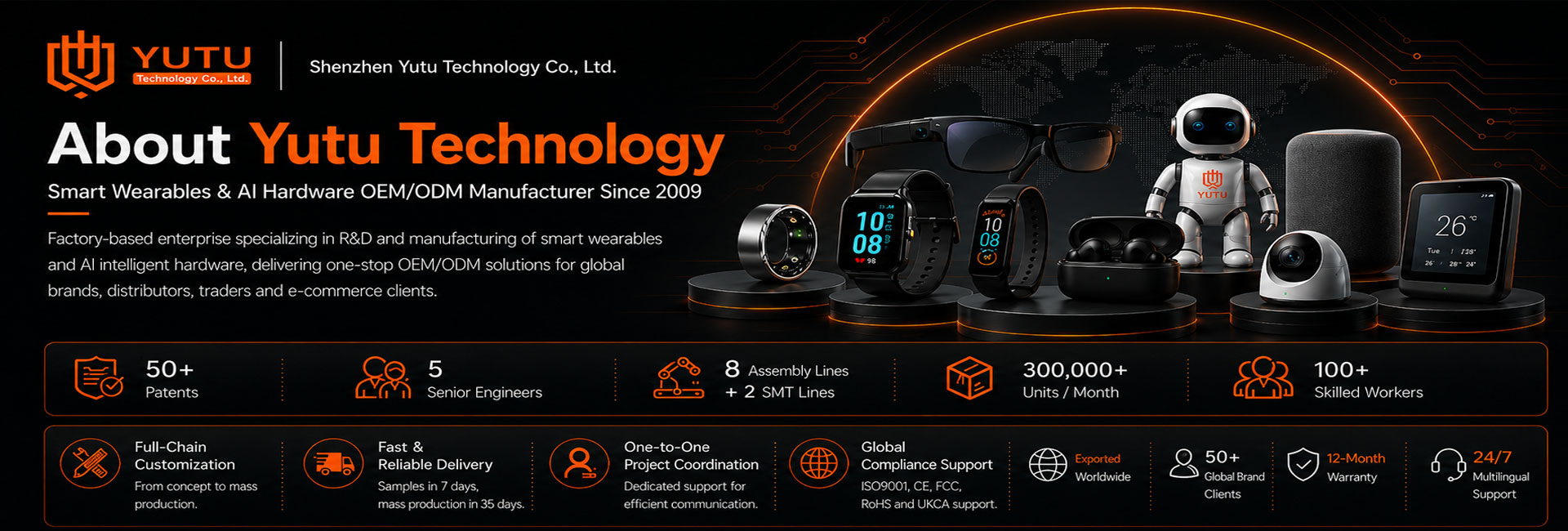
Engineering wearable device systems at Shenzhen Yt Technology Co.,Ltc.
Enterprise B2B Wearable Device Engineering

B2B Wearable Device Procurement: OEM/ODM Sourcing, Sensor Accuracy & Market Trends

Overcoming hardware miniaturization bottlenecks, biosensing accuracy challenges, and regulatory compliance barriers. Factory-direct engineering from Shenzhen Yt Technology Co.,Ltc.

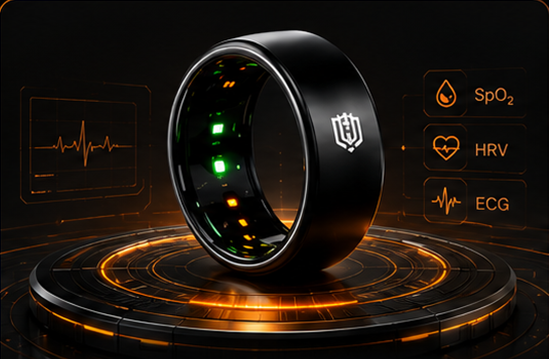
Precision clinical grade smart ring wearable device ODM
Advanced Biometric Architectures

Medical-Grade Smart Rings & Micro-Wearables

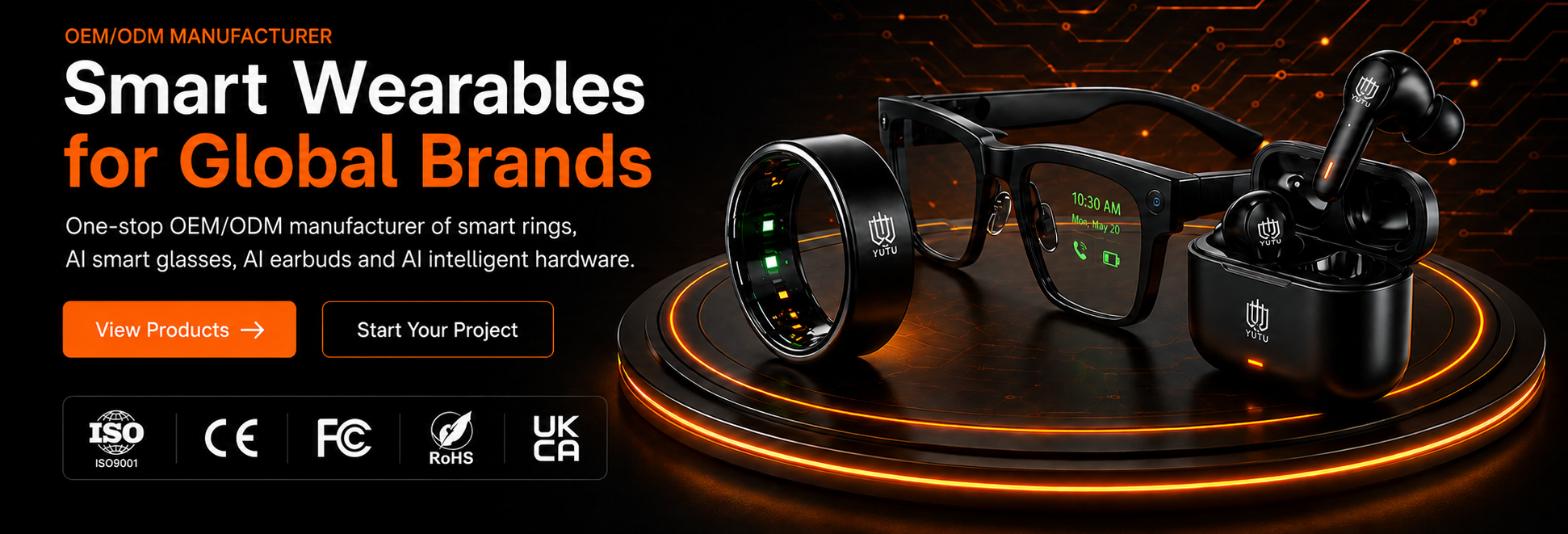
Sub-millimeter multi-channel PPG, micro-ECG dry contact electrodes, and edge AI algorithms embedded in hypoallergenic titanium shells.

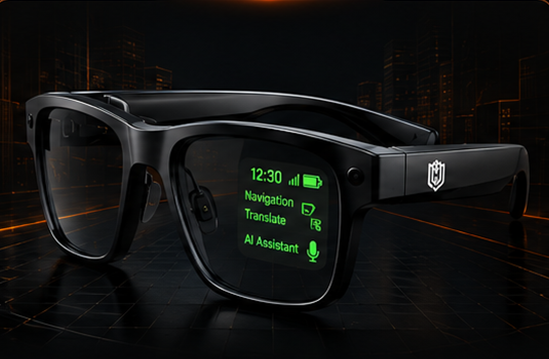
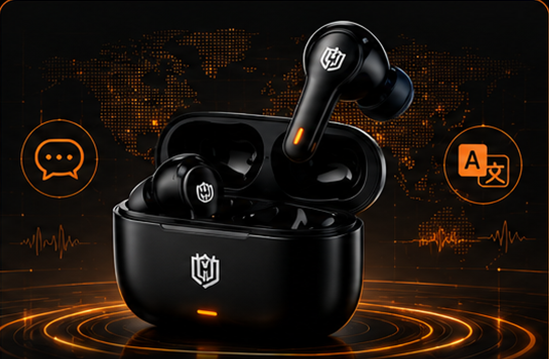
AI optical waveguide smart glasses and audio wearable device
Next-Generation Spatial Computing

AI Smart Glasses & Neural Audio Wearables

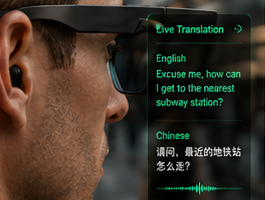
Real-time low-latency neural translation, dual-beamforming ENC voice pickup, and lightweight diffractive waveguide optics for enterprise workflows.

Certifications ISO 9001 CE (RED/EMC/LVD) FCC Part 15 RoHS & REACH UKCA UN38.3 & IEC 62133
Established Year
2009
Engineering Since
Proprietary IP Patents
50+
Proprietary Patents
R&D Engineering Experts
5
Chief R&D Directors
Production Infrastructure
8 + 2
Assembly + High-Speed SMT
Monthly Production Capacity
300,000+
Units Monthly Output
Certified Assembly Technicians
100+
Precision Technicians
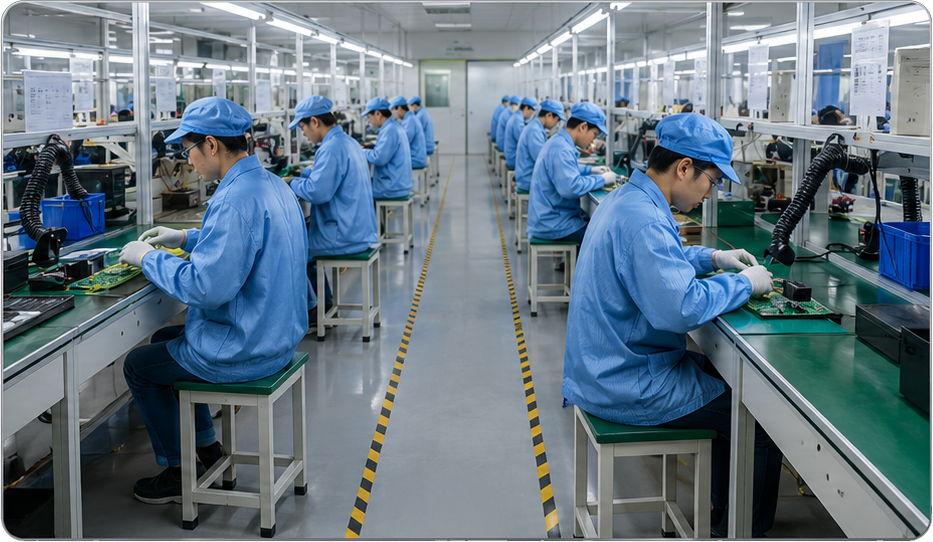
Integrated Wearable Device Manufacturing Facility of Shenzhen Yt Technology Co.,Ltc.
15+Years Continuous
Hardware Innovation
Enterprise Manufacturing Authority

Pioneering High-Precision Wearable Device Solutions From Concept to Volume Delivery

Modern enterprise procurement leaders, healthcare innovators, and consumer brand directors operate in an era where consumers and clinical partners demand clinical accuracy, uncompromising industrial durability, and seamless connectivity from every wearable device. Shenzhen Yt Technology Co.,Ltc. has stood at the core of Shenzhen's high-technology manufacturing cluster since 2009, eliminating typical sub-assembly bottlenecks by providing a vertically integrated hardware and software engineering house.

Where broker agencies and fragmented workshops fail to maintain consistent signal-to-noise ratio (SNR) calibration across mass runs, our 8 lean assembly lines and 2 automated Yamaha/Panasonic high-speed SMT surface-mount lines ensure complete in-house control. From multi-layer flexible rigid-flex circuit design, antenna impedance matching (BLE 5.3/5.4 & NFC), low-power MCU firmware architecture, to medical biocompatibility compliance, we de-risk the complete product lifecycle for global B2B buyers.

  • Biosensor R&D

    Precision Sensor Integration

  • OEM ODM Tooling

    Turnkey OEM/ODM Tooling

  • Global Supply Chain Delivery

    Tier-1 Compliance Ecosystem

Get Catalog Factory Tour Details
Technology Evolution Roadmap

The Next Horizon: Where Wearable Hardware Architecture Is Heading

Understanding the technological trajectory of the wearable device domain allows procurement managers and consumer brands to design products that remain competitive through multi-year shelf-life cycles rather than facing premature obsolescence.

1. Next-Generation Solid-State Micro-Batteries: Traditional liquid-electrolyte lithium-polymer pouch cells present swelling risks and geometric constraints. Next-gen wearable designs are adopting ceramic solid-state lithium cells that offer up to 40% higher volumetric energy density, enabling ergonomic curved profiles in smart rings and featherlight smart glasses temples without thermal runaway risks.

2. Multimodal Sensor Fusion Algorithms: Modern hardware synchronizes disparate sensor signals simultaneously. In YT Smart Wear devices, real-time data from 6-axis inertial measurement units (IMU), green/infrared photoplethysmography, skin impedance galvanic response (GSR), and micro-temperature arrays are synthesized through proprietary Kalman filtering algorithms to eliminate motion artifacts during intensive motion or high-vibration sports activities.

3. Diffractive Waveguides & Spatial Voice AI: Smart eyewear is rapidly discarding heavy prism optics in favor of surface relief gratings (SRG) etched on high refractive index glass wafers. Coupled with on-board Large Language Model (LLM) agents, the wearable device acts as a continuous personal contextual intelligence engine for navigation, contextual reminders, and simultaneous voice translation.

Advanced Wearable Device Firmware and Reliability Testing
Engineering Methodology

Full-Chain Turnkey Wearable Device OEM/ODM Workflow

Every development milestone is audited by our dedicated engineering team to safeguard intellectual property, mitigate tooling tolerances, and guarantee mass-production repeatability.

  1. 01
    Architecture Scoping

    System Architecture

    BOM budget modeling, sensor component selection, and structural feasibility audits.

  2. 02
    Ergonomic Industrial Design

    Ergonomic ID & CMF

    Aerodynamic ID rendering, hypoallergenic finishing, and human-anatomy mockups.

  3. 03
    Mechanical Engineering

    Structural DFM Review

    Sub-micron mold engineering, ultrasonic welding tolerances, and IP68 sealing simulations.

  4. 04
    Hardware & Firmware Co-development

    Hardware & Firmware

    Multi-layer rigid-flex PCBA layout, antenna tuning, and custom companion mobile APP/cloud SDKs.

  5. 05
    EVT DVT Tooling

    EVT / DVT Prototypes

    Rapid functional prototypes, thermal stress tests, and automated optical sensor calibration.
  6. 06
    Volume Mass Production

    Mass SMT & Assembly

    PVT run, high-speed automated placement, 100% waterproof testing, and worldwide logistics.

Enterprise Sourcing Advantages

Why Global Wearable Brands Rely on Shenzhen Yt Technology Co.,Ltc.

Over 15 years of factory-based precision engineering, mature ISO 9001 management, and verified mass-production discipline provide our global clients with a clear competitive advantage.

In-House R&D Mastery

Vertically Integrated R&D

Led by 5 chief engineering directors with over 50 registered patents. We develop all hardware schematics, multilayer PCB layouts, RF antenna simulations, and embedded firmware in-house to protect design integrity.

Rapid Time to Market

Accelerated Time-to-Market

Working prototypes delivered in 7 to 10 days utilizing pre-certified base platforms. Standard custom tooling and mass production delivery cycles are completed in approximately 35 days, accelerating shelf placement.

Dedicated Account Management

Single Point of Accountability

Direct communication with dedicated bilingual project managers and senior hardware engineers. Transparent DFM analysis, weekly progress reports, and real-time EVT/DVT milestone tracking ensure clear visibility.

Global Compliance Standards

Global Market Certification Support

Complete regulatory documentation and compliance execution for CE, FCC, RoHS, UKCA, REACH, TELEC, and UN38.3. We ensure zero delays across European, North American, and Asia-Pacific customs checkpoints.

Zero-Defect Quality Engineering

Rigorous 5-Stage Quality Control Matrix

A wearable device operates in direct contact with human sweat, mechanical friction, and constant movement. Our factory applies strict test protocols across 28 checkpoints to maintain mass defect rates below 5‰.

Incoming Quality Control
IQC Inspection
In-Process Quality Control
IPQC Real-Time
100% Function Testing
100% Optical Test
Environmental Stress Aging
Reliability Lab
Outgoing Quality Assurance
OQC Audit
  • Automated Optical Inspection (AOI) SMT verification
  • High-pressure 5ATM waterproof chamber immersion
  • Continuous 72-hour battery charge/discharge cycling
  • Drop, tumble, and micro-vibration mechanical testing
  • 48-hour artificial sweat and salt spray corrosion test
  • Individual serial-number batch component traceability
In-line Wearable Device Production Testing and Sensor Calibration
Enterprise Applications

High-Growth Verticals for Wearable Device Deployment

Our OEM/ODM platforms are deployed across a broad range of consumer, health-tech, and industrial environments worldwide.

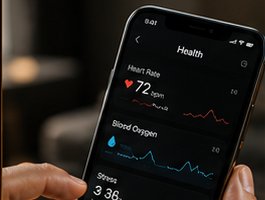
Cardiovascular and SpO2 Health Monitoring Wearable Device

Preventative Healthcare & RPM

Sports Performance and High Motion Wearable Device

Athletic Performance & VO2 Max

Circadian Rhythm and Sleep Stage Analysis Wearable Device

Clinical Sleep Diagnostics

Multi-language AI Neural Audio Translation Wearable Device

Simultaneous Enterprise Translation

Hands-Free Remote Field Telecommunications Wearable Device

Enterprise Field Operations

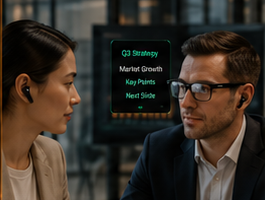
Hands-Free AI Smart Glasses Teleprompter and Vision HUD

Spatial Computing & Voice HUD

International Scale

Engineering Trusted by Wearable Brands in Over 40 Countries

Delivering consistent engineering and volume shipments across the European Union, North America, Japan, and the Middle East.

Worldwide Export Network of Shenzhen Yt Technology Co.,Ltc.
Countries Served40+Tier-1 Export Markets
Sales Hubs60+Global Partner Channels
Client Retention5+Years Average Client Retention
Engineering Support24/7Direct Technical Support
IP SecurityStrict NDAProprietary Tooling Protection
Procurement Knowledge Base

Common Wearable Device Sourcing FAQs Asked by Procurement Teams

Key technical, financial, and logistical insights addressing common questions raised by procurement managers during OEM/ODM evaluations.

What is the typical Minimum Order Quantity (MOQ) for custom wearable device development?

For custom private-label branding on established, fully-certified base hardware platforms (including custom laser-etched logos, branded packaging boxes, and customized companion APP firmware splash screens), our MOQ starts at 500 to 1,000 units. For full ODM hardware projects—involving exclusive proprietary industrial designs, custom-tooled plastic/titanium injection molds, unique multi-layer PCBA layouts, and bespoke firmware architectures—the baseline MOQ begins at 3,000 to 5,000 units across production runs to balance non-recurring engineering (NRE) costs.

How does your engineering team validate biosensor clinical accuracy in smart rings?

Our smart rings integrate multi-spectral dual-wavelength photoplethysmography (PPG) optical sensor arrays (combining green, red, and infrared LEDs) with high dynamic range analog front-ends (AFE). We test and calibrate signal response against medical reference monitors across varying perfusion indices, ambient lighting, and diverse skin phototypes (Fitzpatrick scales I–VI). Furthermore, high-frequency 3-axis accelerometers filter motion artifacts in real time through proprietary firmware algorithms, achieving high correlation benchmarks for resting heart rate (RHR), SpO2 blood oxygen saturation, and HRV sleep architecture data.

What wireless certifications and international compliance testing do you support?

Shenzhen Yt Technology Co.,Ltc. manages end-to-end laboratory qualification workflows. We deliver compliant hardware certified under CE (covering Radio Equipment Directive RED, Electromagnetic Compatibility EMC, and Low Voltage Directive LVD for the European Union), FCC Part 15 subpart C for the United States, and UKCA for the United Kingdom. All physical contact housing materials undergo strict RoHS, REACH, and ISO 10993 cytotoxicity testing. For air freight logistics, we supply complete battery documentation portfolios, including UN38.3 vibration/shock test reports, material safety data sheets (MSDS), and IEC 62133 safety declarations.

Can your software team customize private-label companion applications and cloud SDKs?

Yes. We offer fully branded native iOS and Android mobile software suites configured under your corporate developer accounts. Our team handles private-label UI/UX skinning, account authentication setups, localized multi-language database configuration, and secure API cloud integration. Additionally, we provide comprehensive Bluetooth Low Energy (BLE) peripheral communication protocol documentation and mobile SDKs, allowing clients with proprietary healthcare, sports analytics, or enterprise SaaS ecosystems to read raw data packets directly into their existing cloud backends.

How is intellectual property and proprietary industrial design protected during ODM development?

We execute legally binding bilateral Non-Disclosure Agreements (NDAs) prior to reviewing any customer technical briefs, STEP 3D CAD files, or functional specifications. Project data is strictly isolated within a secure project engineering cell. Any client-funded physical injection molds, custom mechanical tooling fixtures, and customer-specific firmware codebases remain the exclusive, proprietary intellectual property of the sourcing client. We never display or cross-utilize private tooling assets with external clients.

What are your typical sampling, prototyping, and mass production lead times?

For existing, validated platform architectures requiring custom packaging, pad-printed or laser logos, and firmware splash customizations, evaluation samples are dispatched within 5 to 7 business days. For turnkey custom ODM projects, the design-to-sample pipeline typically requires 15 to 20 business days for functional engineering validation (EVT) units. Once final design validation test (DVT) units are signed off by the client, standard mass production runs are completed and packed for air or ocean transit in approximately 35 days.

Initiate Direct Sourcing

Launch Your Next-Generation Wearable Device Program

Whether you are defining a proprietary health tracking smart ring, developing enterprise AI smart glasses, or scaling volume production for translation hearables, Shenzhen Yt Technology Co.,Ltc. provides the engineering rigour, ISO 9001 quality discipline, and production scale required for market leadership.

Submit your architectural requirements, estimated annual quantities, and target compliance specifications. Our senior hardware engineering team will provide a comprehensive technical and financial feasibility proposal within one business day.

Get Catalog

Technical Requirements Checklist for Rapid Engineering Review

Supplying the following technical variables accelerates initial DFM feasibility and accurate BOM modeling:

  1. 01Form Factor & Primary Mechanical TargetSmart ring, AI eyewear, audio wearable, or custom casing geometry
  2. 02Target Biosensor & Optical IntegrationMulti-wavelength PPG, ECG electrodes, 6-axis IMU, temperature, or display HUD
  3. 03Target Wireless Certification ScopeCE (RED/EMC/LVD), FCC Part 15, UKCA, RoHS/REACH, or UN38.3 battery flight
  4. 04Estimated Pilot & Annual Production VolumesInitial pilot sample order vs. 12-month commercial rollout projection
  5. 05Companion Software & Cloud IntegrationTurnkey white-label iOS/Android app or raw BLE protocol SDK integration
Get Catalog