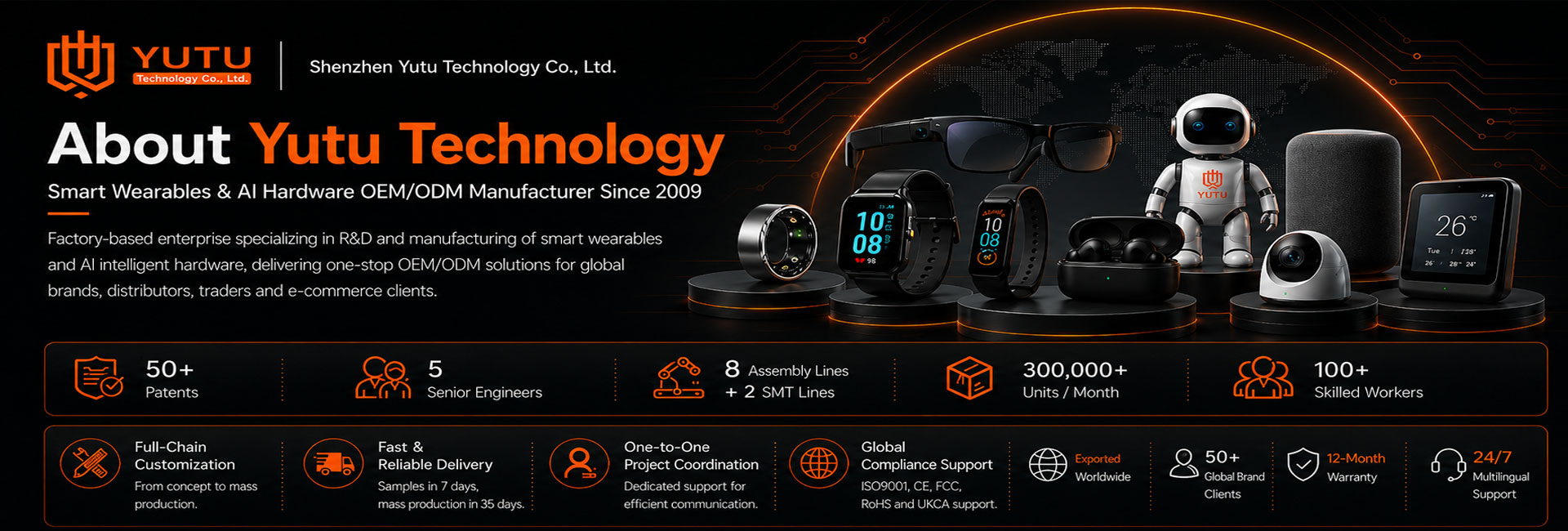
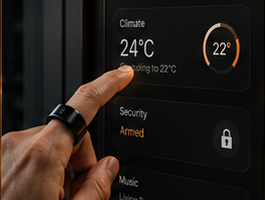
Smart wearable ID engineering and mass production by Shenzhen Yt Technology Co.,Ltc.
Strategic Sourcing Guide

Smart Wearable ID (Industrial Design) Engineering & OEM/ODM Feasibility: How Global Brands Source Next-Gen AI Hardware

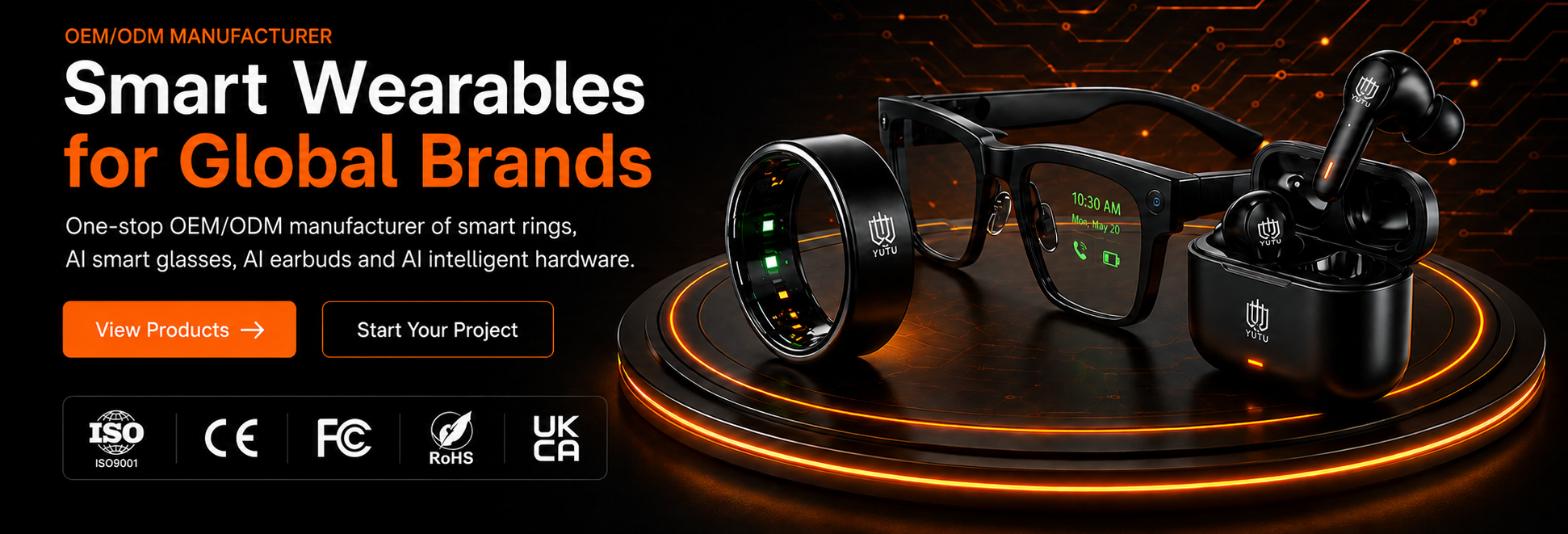
Bridging aesthetic product architecture, microminiaturized biometric electronics, and high-yield factory tooling since 2009 in Shenzhen.

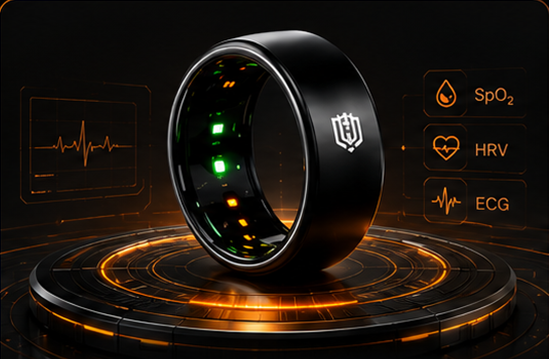
Smart ring industrial design micro-architecture
Smart Ring ID Innovation

Ultra-Compact Titanium ID with Medical-Grade Sensor Windows

Sub-2.5mm thickness profiles engineered for continuous PPG, SpO2, and ECG skin contact.

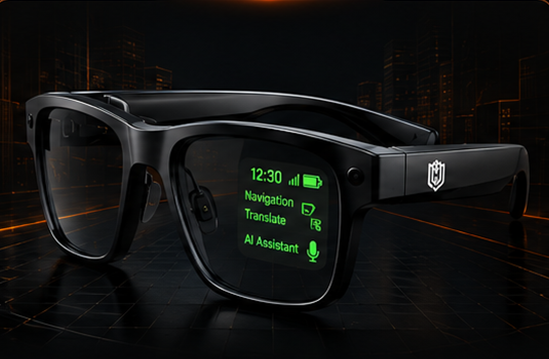
AI smart glasses optical waveguide ID design
AI Optics ID Architecture

Sub-45g AI Glasses ID: Thermal & Acoustic Co-Design

Lightweight eyewear balancing MicroLED waveguides, multi-microphone ENC, and all-day ergonomics.

Factory Compliance ISO 9001 CE (RED) FCC ID RoHS / REACH UKCA
Year Established
2009
Engineering Since
Intellectual Property Patents
50+
ID & Utility Patents
Senior Engineers
5
Principal R&D Directors
Lines
8 + 2
Assembly & SMT Lines
Monthly Production Capacity
300,000+
Units Monthly Run
Skilled Staff
100+
Cleanroom Technicians
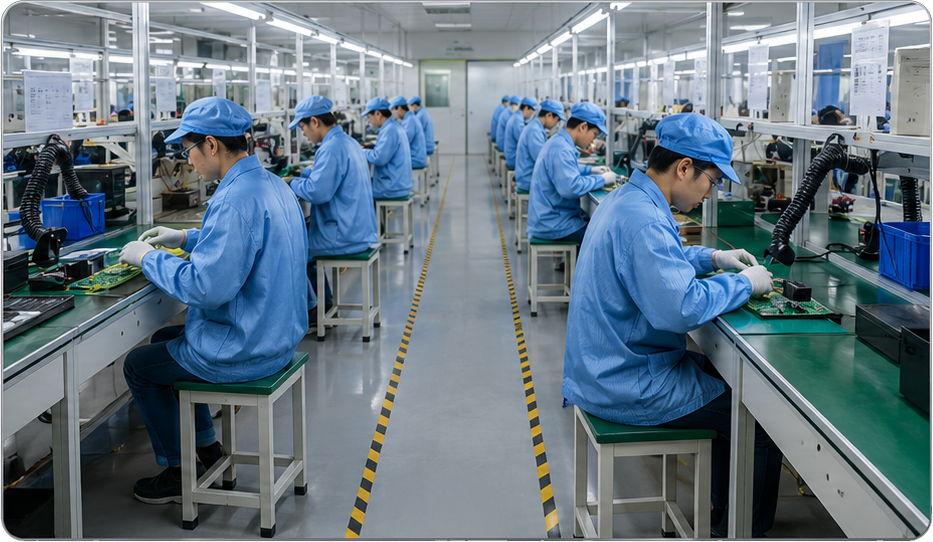
Shenzhen Yt Technology Co.,Ltc. Wearable ID Engineering and Prototyping Laboratory
15+Years Perfecting
Wearable Hardware ID
Procurement Strategy & EEAT Insight

Why Smart Wearable ID (Industrial Design) Is the Primary Predictor of Market ROI

In modern AI hardware procurement, **ID (Industrial Design)** has ceased to be mere exterior styling. For global category leaders, brand procurement teams, and hardware startups, the ID directly dictates optical sensor signal-to-noise ratio (SNR), antenna efficiency, thermal dissipation, battery capacity ceiling, and IPX8 hermetic sealing.

At **Shenzhen Yt Technology Co.,Ltc.**, our 15+ years of factory-based manufacturing confirm that over 78% of late-stage tooling failures or regulatory compliance rejects originate from detached ID concepts that ignore Design for Manufacturability (DFM). When an industrial design team works independently from SMT lines and structural tooling engineers, cosmetic elegance invariably compromises battery volume or creates Bluetooth attenuation.

By uniting ID conceptualization, 3D CAD mechanical modeling, SMT printed circuit board assembly, and CNC/die-casting under one roof in Shenzhen, we shorten custom wearable validation from the conventional 6 months down to 35 days.

Send an Inquiry
Enterprise Product Recommendations

Production-Validated Wearable ID Platforms Ready for Private Label

Engineered for high mass-production yields, premium hand-feel, and seamless integration with custom firmware and proprietary algorithms.

Smart ring industrial design and internal multi-sensor stack

Smart Ring ID: Aero-Grade Titanium & Biocompatible Resin

A flagship ID profile built for 24/7 continuous health tracking. Features an ultra-slim 2.5mm profile, aviation-grade titanium alloy outer ring with PVD carbon coating, and an inner medical-grade epoxy resin shell with molded optical lenses.

  • Outer ID: TC4 Titanium / Ceramic
  • Inner ID: Medical Resin Lenses
  • Hermetic Sealing: 5ATM / IP68
  • Integrated: PPG, NTC, ECG, Accelerometer

OEM/ODM Scope: Custom laser engraving, PVD shades (Rose Gold, Obsidian, Brushed Titanium), custom optical window geometry, and personalized magnetic contact pitch.

AI smart glasses industrial design with MicroLED waveguide module

AI Smart Glasses ID: Dual-Core Acoustic & Waveguide Architecture

Engineered to overcome the "bulky gadget" stigma. This sub-48g frame integrates dual open-ear directional acoustic speakers, 4-microphone beamforming arrays, capacitive touch temples, and high-transmission optical display cavities.

  • Frame Material: EMS TR90 & Magnesium
  • Weight: <48g (Balanced 50:50)
  • Acoustics: Directional Sound Shielding
  • Battery ID: Dual-Cell Hinge Integration

OEM/ODM Scope: Interchangeable front rims (Wayfarer, Round, Aviator), prescription lens compatibility, custom temple hinge tensioning, and tactile switch placement.

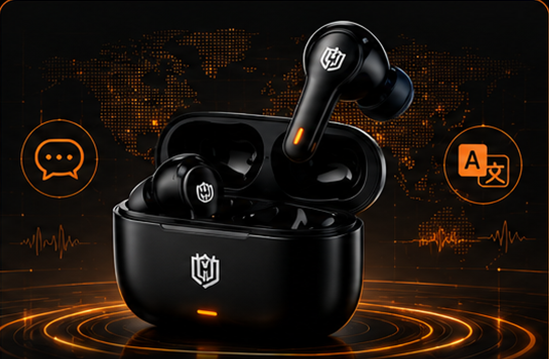
AI translation earbud ergonomic industrial design

AI Translation Earbuds ID: Ergo-Acoustic Concha Lock Architecture

Optimized for extended cross-border conversations, conference interpretation, and sports listening. The ergonomic shell distributes pressure evenly across the tragus and antihelix while ensuring acoustic isolation.

  • Form Factor: In-Ear & Semi-Open Options
  • Acoustic Cavity: 10mm Dynamic Titanium
  • Microphone Porting: Wind-Deflecting Slits
  • Charging Case ID: OLED Status Window

OEM/ODM Scope: Custom ear tip silicon durometer, metallic PVD stem finishes, bespoke battery case form factors, and smart touch sensor zone customization.

Engineering Precision Matrix

Wearable ID Engineering: Architectural Constraints vs. Feasibility

How Shenzhen Yt Technology Co.,Ltc. solves the critical engineering friction between aesthetic vision and factory production yields.

ID Architecture Domain Industrial Design (ID) Goal Structural & Electrical Friction Yt Technology In-House Solution
Smart Ring Thickness Outer thickness ≤ 2.5mm, width ≤ 8mm Battery volumetric density, rigid-flex PCB bending radius, sensor lens focal depth Custom ultra-thin curved battery cell (17-22mAh) + custom flex PCB laminate with micro-bump optical encapsulation.
Smart Ring Waterproofing Seamless unibody aesthetic, no mechanical fasteners 5ATM water immersion, epoxy resin bubble formation, thermal cycling crack risk Dual-shot ultrasonic fusion combined with vacuum resin-potting in an automated class-10,000 cleanroom.
AI Glasses Weight Profile Total frame weight < 50g, appearance identical to luxury eyewear Heat buildup from AI processors, hinge flex-wiring durability, front-heavy nose fatigue Magnesium-aluminum internal skeleton with TR90 overmolding; split batteries in temple tips to achieve a 50/50 center of mass.
AI Glasses Acoustic Leaks Private calls without sound leaking to bystanders within 0.5m Open-ear acoustic dispersion, miniature driver diaphragm constraints Opposing dual-phase dipole speaker ID enclosure canceling ambient reverse sound waves by up to 18dB.
AI Earbud Ergonomics Universal ear canal fit (>95% population) without ear hook Sensor array crowding, Bluetooth antenna ground plane shielding by skin tissue Database of 12,000+ 3D human ear scans guiding 45° angled sound bores with laser direct structuring (LDS) 3D antenna routing.
R&D Roadmap & Engineering Paradigms

Engineering Evolution: Where Wearable ID Is Heading

Detailed technical intelligence from Shenzhen Yt Technology Co.,Ltc.'s senior engineering lab.

From Static Form Factors to Active Ergonomic Enclosures

Historically, consumer electronics industrial design followed the "circuit board first, plastic shell second" convention. In next-generation smart wearables—specifically smart rings, smart eyeglasses, and AI acoustic hearables—this sequential process is obsolete. Today, the ID constitutes the mechanical chassis, the sensor measurement datum, and the thermal sink simultaneously.

1. Micro-MIM (Metal Injection Molding) & CNC Precision

For smart ring outer shells, conventional stamped metal or cast zinc creates excessive internal voids and poor wall-thickness uniformity. **Shenzhen Yt Technology Co.,Ltc.** uses high-precision Metal Injection Molding (MIM) using Grade 5 Titanium and 316L medical stainless steel, post-machined with 5-axis CNC cutters down to ±0.01mm tolerances. This provides exact internal clearances for our circular multi-layer flex circuits without cosmetic exterior blemishes.

2. LDS (Laser Direct Structuring) Antenna Embedment

Integrating Bluetooth 5.4 Low Energy, 2.4GHz proprietary low-latency audio, and NFC into compact eyewear temples or ring circumferences poses extreme RF challenges. Human skin is an RF absorption dielectric. By utilizing LDS 3D laser patterning, our engineers plate the antenna traces directly onto the inner walls of the structural TR90 polymer or resin casing, eliminating bulky copper patch antennas and optimizing antenna radiation efficiency (TRP > -3dBm).

3. Biometric Optical Cavity Micro-Lensing

Accurate heart rate, SpO2, and HRV algorithms depend on consistent optical skin contact without pinching capillary vessels. Our industrial design team designs raised optical lenses (bump height between 0.35mm and 0.50mm) that gently depress dermal tissue to reduce ambient light interference while maximizing photodiode signal capture during sleep and dynamic physical exercise.

Procurement Director Takeaway: When reviewing ID mockups from any prospective ODM partner, always demand structural simulation finite element analysis (FEA) and RF clearance validation reports before authorizing steel tooling fabrication.
Send an Inquiry
Industrial design stress testing, CMF validation, and dimensional metrology
Turnkey Factory Workflow

From Concept ID Rendering to Mass Production in 6 Controlled Stages

Every milestone has rigorous stage-gate criteria, eliminating late-stage re-tooling surprises and protecting client delivery schedules.

  1. 01
    Product Definition

    Product Definition & Target BOM

    Target retail price, target weight, biometric sensors, battery life targets, and global compliance roadmap.

  2. 02
    ID Design and CMF

    ID Design & CMF Specifications

    Ergonomic sketches, 3D photorealistic renderings, physical color swatches, and material hardness definition.

  3. 03
    Mechanical Engineering and DFM

    Mechanical & DFM Engineering

    3D CAD internal stacking, mold draft analysis, sealing gasket channels, and RF keep-out simulation.

  4. 04
    Hardware and Firmware Integration

    Hardware, SMT & Firmware

    Custom PCB layout, sensor integration, battery charging IC calibration, BLE stacks, and companion APP.

  5. 05
    Tooling and Reliability Testing

    Tooling, EVT & DVT Validation

    Steel injection molds, CNC prototypes, drop testing, salt-spray corrosion, 5ATM waterproofing, and temp shocks.

  6. 06
    Mass Production and Quality Control

    PVT & High-Yield Mass Production

    Automated SMT placement, ultrasonic assembly, 100% cosmetic and functional QA, laser serializing, and shipment.

Enterprise Sourcing Advantages

Factory-Direct Wearable ID & Manufacturing Leadership in Shenzhen

**Shenzhen Yt Technology Co.,Ltc.** has been driving wearable device engineering since 2009. We bridge the critical gap between overseas industrial designers who imagine creative concepts and the gritty reality of high-volume electronics assembly.

  • In-House R&D and ID Engineering

    5 Senior Principal R&D Directors

    Average 12+ years experience in micro-optics, RF design, and biometric algorithms.

  • SMT Lines and Automation

    8 Assembly + 2 High-Speed SMT Lines

    Equipped with Yamaha high-precision pick-and-place systems handling 0201 micro-passives.

  • Capacity

    300,000+ Units Monthly Run

    Proven scale to support global retail shelf distribution, Amazon brand leaders, and telecom carriers.

  • NDA and IP Protection

    Strict NDA & IP Protection

    Client ID files, proprietary toolings, and firmware code are isolated behind secure firewalls.

Send an Inquiry
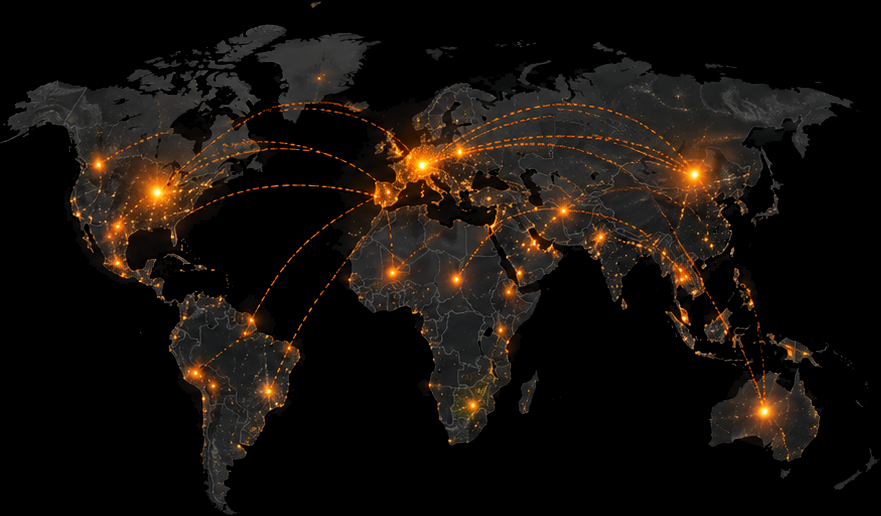
Shenzhen Yt Technology Co.,Ltc. Worldwide Distribution and Sourcing Footprint
40+Countries Served with
Zero Tooling IP Leaks
Quality Governance (ISO 9001)

5-Gate ID Quality Verification & Reliability Lab

Wearables undergo intense daily friction, human sweat exposure, drop impacts, and skin contact. Our factory operates a comprehensive reliability laboratory to qualify every ID and mechanical housing.

Incoming Inspection
IQC Raw CMF
Process Control
IPQC Assembly
Full Inspection
100% Optical/Acoustic
Reliability Testing
Reliability Lab
Final Outgoing Inspection
OQA Pre-Shipment
  • Artificial Perspiration Corrosion Test (96 hrs)
  • 5ATM Pressure Vessel Immersion Chamber
  • Thermal Shock Cycling (-20°C to +60°C)
  • 1.5m Tumble & Multi-Angle Drop Fixtures
  • PVD Scratch & RCA Abrasion Resistance
  • Batch-Level Total Quality Traceability
Send an Inquiry
Smart wearable optical testing and biometric inspection
End-User Touchpoints

Market Categories Driven by Advanced Wearable ID

Where precision industrial design directly converts into higher consumer retail retention, fewer product returns, and strong brand equity.

Smart ring sports and athletic ID styling

Sports & High-Impact Fitness

Ultra-light sleep management smart ring ID

Unobtrusive Sleep Management

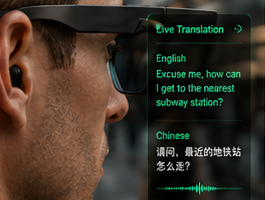
AI glasses real time translation in enterprise meetings

Enterprise AI Live Translation

AI earbuds for executive telecommunications

C-Level Executive Communication

Smart audio glasses discreet voice assistant ID

Voice AI Natural Interaction

Medical-grade wearable preventive health tracking

Continuous Clinical & Wellness Monitoring

International Procurement Footprint

Supporting Wearable & AI Hardware Brands Across 40+ Countries

From North American consumer health startups to European luxury fashion brands and Asia-Pacific telecommunication providers.

Global client distribution map of Shenzhen Yt Technology Co.,Ltc.
Countries Served40+Countries & Regions
Sales Zones60+Global Partner Brands
Partnerships5+Years Average Client Retention
Engineering Support24/7Engineering Escalation
IP Agreement100%Confidentiality Guarantee
Procurement Due Diligence

Frequently Asked Questions: Wearable ID & ODM Sourcing

Realistic answers addressing engineering friction, tooling budgets, lead times, and regulatory clearances.

What is the typical tooling investment (NRE) and lead time for a custom smart wearable ID?

For a completely bespoke smart ring or AI eyewear ID, tooling NRE typically ranges between $18,000 and $45,000 depending on complexity, precision level (±0.01mm for titanium MIM or multi-cavity hardened steel injection), and surface finishing specifications. Standard tooling fabrication takes 25 to 35 calendar days. Alternatively, clients can leverage Shenzhen Yt Technology Co.,Ltc.'s existing open-tooling platforms, modifying only the exterior CMF, color palette, branding, and optical window design—reducing NRE to near zero and achieving mass production readiness in under 20 days.

Can our design agency provide conceptual ID CAD files, and how do you handle DFM modifications?

Yes. Over 60% of our global OEM/ODM clients submit Rhino, Alias, or STEP files created by external industrial design studios. Our R&D engineering team conducts a thorough DFM (Design for Manufacturability) review within 48 hours. We identify critical issues such as insufficient draft angles, wall thickness variations causing sink marks, inadequate clearance for lithium-polymer battery swelling (typically requiring 8-10% volumetric allowance), and RF keep-out restrictions for BLE antennas. We provide constructive structural adjustments while strictly maintaining your core aesthetic intent.

How do you solve antenna attenuation when using titanium or metallic alloys in smart ring ID?

Metals act as a Faraday cage, attenuating 2.4GHz Bluetooth signals significantly. In our smart ring ID designs, we employ two proven architectures: (1) A hybrid composite construction where the inner chassis is high-transmittance medical epoxy resin with an exterior micro-gap ceramic or non-conductive PVD ring acting as an RF window; or (2) Slotted antenna tuning where micro-slits in the titanium outer shell are laser-filled with structural polymer to create a resonance loop. This achieves reliable 10-meter phone synchronization through clothing and bedding.

What certifications (CE, FCC, RoHS, UKCA, REACH) apply to wearable ID, and do you handle them?

Every wearable product touching human skin must comply with strict physical and electrical regulations: FCC ID (US EMC and intentional radiator compliance), CE RED (EU Radio Equipment Directive), RoHS / REACH (hazardous substances and heavy metals), ISO 10993 (biological evaluation of medical devices for cytotoxicity and skin irritation), and UN38.3 / IEC 62133 for battery transport safety. Shenzhen Yt Technology Co.,Ltc. manages end-to-end pre-testing and coordinates directly with certified testing laboratories (SGS, TUV, Intertek) to issue official compliance certificates in your company's name.

How does Shenzhen Yt Technology Co.,Ltc. protect our design patents and proprietary ID assets?

Intellectual Property integrity is our company's cornerstone since 2009. Prior to receiving any 3D models or product specifications, we execute a comprehensive, bilingual Non-Disclosure Agreement (NDA) with jurisdiction under international trade law. Dedicated tooling molds are stamped with unique client identification, locked in secure tooling warehouses, and never used for open-market supply or third-party orders. Your custom ID remains your exclusive commercial property.

What is your Minimum Order Quantity (MOQ) for custom ID versus private-label OEM?

For existing platform OEM orders (custom logo, custom PVD color, private-label packaging, and customized companion APP branding), our MOQ starts at 500 to 1,000 units. For fully bespoke ODM projects involving dedicated injection tooling or specialized titanium micro-casting, our initial pilot MOQ is 3,000 units. We offer staged volume agreements to accommodate pilot market testing before full-scale commercial manufacturing.

Accelerate Time to Market

Request an Engineering Feasibility & ID DFM Review

Whether you have preliminary 2D sketches, completed 3D CAD files, or an RFP for an upcoming product line, our 5 Principal R&D Directors are ready to evaluate your hardware architecture.

Work directly with an established Shenzhen factory with 8 assembly lines, 2 SMT lines, and 300,000+ monthly capacity. We eliminate intermediary markups, shorten iteration cycles, and ensure smooth mass production.

Send an Inquiry

Prepare These 5 Project Data Points for Instant Feasibility

Submissions containing these parameters receive a comprehensive engineering review within 24 business hours.

  1. 01Wearable Category & Form FactorSmart Ring, AI Glasses (MicroLED/Audio), or AI Earbuds
  2. 02Target CMF & MaterialsTitanium TC4, Ceramic, TR90, Optical Resins, or Eco-Polymers
  3. 03Sensor & Algorithm RequirementsPPG, SpO2, Skin Temp, ECG, 6-Axis IMU, Microphone Array
  4. 04Compliance MarketsNorth America (FCC/FDA), European Union (CE/MDR), UK, Japan
  5. 05Production Volume & Target LaunchInitial pilot batch size and target retail release window
Send an Inquiry