CE Certified Full Color Display Smart Glasses Manufacturers & Factories
Core Smart Wearable & Display Platforms
From CE-compliant biometrics to smart eyewear interfaces, explore our production-ready OEM/ODM hardware ecosystems ready for custom private labeling.
The Paradigm Shift: From Monochromatic HUDs to CE-Certified Full Color AR Displays
The wearable computing sector has reached a defining inflection point. For several years, smart glasses remained tethered to monochrome green Micro-OLED or monochromatic diffractive waveguide architectures. While suitable for simple teleprompting, text-based navigation, and basic status notifications, these early configurations failed to satisfy contemporary consumer visual expectations and enterprise spatial-computing requirements. Today, tier-one global brands demand full-color binocular display capabilities capable of rendering rich graphical user interfaces, video streams, contextual translation with visual nuance, and dynamic augmented reality mapping under broad daylight.
Achieving full-color optical engine integration within an ergonomic form factor weighing below 50 grams introduces immense engineering hurdles. Micro-LED and full-color Micro-OLED projection units must generate peak luminous intensities exceeding 1,500 to 3,000 nits to compensate for waveguide optical efficiency losses, which can exceed 80% depending on grating structures. Shenzhen Yt Technology Co., Ltc. (operating as YT Smart Wear) addresses these photonic constraints through precision proprietary collimation optics, high-index resin surface relief gratings (SRG), and advanced dual-chip synchronization engines. Our optical design balances transmittance, eye-box volume (exceeding 12mm x 10mm), and peripheral field-of-view (FOV 30°–45°), ensuring users experience immersive visual augmentation without chromatic aberration, rainbow flare, or visual fatigue.
Moreover, regulatory scrutiny across destination markets has escalated significantly. Deploying visual computing apparatus near sensitive ocular tissue necessitates rigorous verification under the European CE Directive framework. This mandates complete adherence to the Radio Equipment Directive (RED 2014/53/EU) for dual-band Wi-Fi and Bluetooth Low Energy (BLE 5.4), EN 62471 Photobiological Safety of Lamps and Lamp Systems to guarantee zero retinal blue-light hazard, EN 50663 SAR (Specific Absorption Rate) limits for head-worn RF emissions, and RoHS (2011/65/EU / 2015/863) material safety protocols. Partnering with a proven factory equipped with in-house cleanroom assembly, automated collimation testers, and end-to-end CE-testing verification is the only viable method for brands to eliminate customs seizure risks and product recalls in the European Union.
Optimized Hardware Archetypes for Strategic Procurement
Tailored mechanical, optical, and sensor configurations engineered to match specific B2B target applications and regulatory standards.
AI Translation & Audio-Visual AR Glasses
Engineered for international business travel, multinational conferencing, and bilateral tourism. This platform synthesizes full-color visual speech subtitling directly within the user's line of sight alongside directional open-ear acoustics.
Equipped with low-latency bilingual AI engines, dual ENC (Environmental Noise Cancellation) silicon microphones, and full-color Micro-LED waveguide lenses, it transforms cross-language dialogues into instantaneous visual prompts.
- Real-time translation for 138+ languages & regional accents
- Dual beamforming noise-isolating microphones
- CE RED / EN 62471 photobiological safety compliant
- Private-label app SDK for Android and iOS systems
Industrial Tele-Support & Enterprise Vision
Built for field maintenance, warehouse logistics, and medical tele-consultation. Features high-transmittance, full-color binocular waveguides that overlay critical schematics, telemetry data, and remote expert video feeds.
Incorporates an ultra-wide dynamic range 4K camera module with electronic image stabilization (EIS), long battery life via hot-swappable temple cell packs, and reinforced drop-proof frames rated to IP65 industrial standards.
- Hands-free 1080p/4K POV video streaming and recording
- Ultra-bright 2000-nit outdoor optical engines
- Secure encrypted Wi-Fi 6 & BLE 5.3 enterprise networking
- Full integration with standard ERP and MDM platforms
Continuous Biometric & Health Wearables
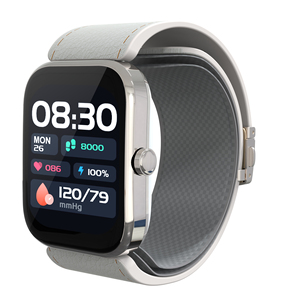
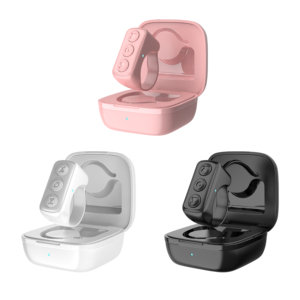
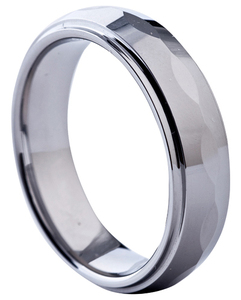
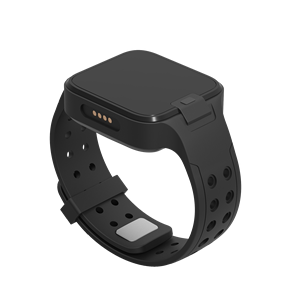
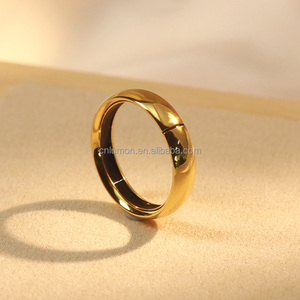
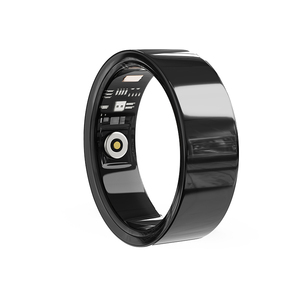
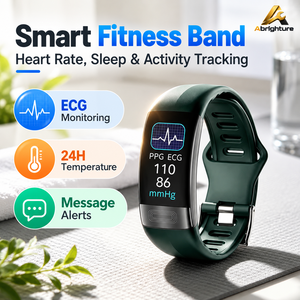
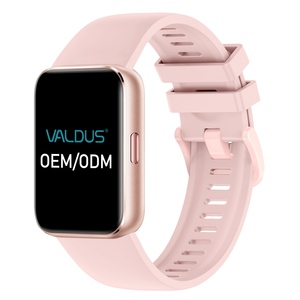
Complementary multi-sensor ecosystems bridging micro-scale form factors—such as smart rings, medical-grade airbag blood pressure wristwear, and precision PPG tracking instruments—with smart glasses dashboards.
Enables unified health ecosystems where real-time cardiovascular metrics, sleep stage dynamics, SpO2 blood oxygenation, and physiological stress telemetry are displayed instantly on the user’s ocular field.
- Titanium alloy, ceramic bezel & skin-safe medical resins
- Micro-PPG, optical ECG, and piezo-airbag pressure arrays
- IP68 waterproofing with inductive magnetic fast charging
- CE Medical Directive readiness & encrypted cloud API
Future Procurement Trends: Where the Smart Eyewear Supply Chain is Heading (2025–2030)
Procurement directors and product definers must align hardware roadmaps with rapid technological shifts. The global market is transitioning through three seismic procurement phases that directly impact sourcing feasibility, unit bill-of-materials (BOM) costs, and supply chain resiliency:
1. The Micro-LED + Diffractive Waveguide Consolidation: While birdbath optics provided early commercial viability, they suffer from unacceptable forward light leakage (the "glow" visible to onlookers) and heavy form factors. Procurement contracts are overwhelmingly shifting toward Micro-LED coupled with surface-relief or holographic volume gratings. Micro-LED arrays deliver pixel pitches below 3.5μm and brightness thresholds exceeding 100,000 nits at the engine level, allowing thin, transparent prescription-ready lenses. Factories that have not invested in Class 1000 optical cleanrooms and automated sub-micron lens active alignment machines will be rendered obsolete.
2. On-Device Edge-AI Acceleration: Early smart glasses functioned purely as dumb display peripherals requiring continuous tethering to smartphone compute nodes. Contemporary procurement demand dictates dual-core architectures pairing ultra-low power microcontrollers (such as Nordic nRF or Ambiq Apollo platforms) with dedicated Neural Processing Units (NPUs). This enables on-device wake-word detection, conversational offline NLP, and low-latency acoustic noise separation, preserving frame battery life while dramatically slashing API bandwidth overhead.
3. Rigorous ESG, Battery Chemistry, and Repairability Mandates: European procurement directives (including upcoming EU Battery Regulations and right-to-repair mandates) are compelling manufacturers to pivot away from permanently glued lithium-pouch configurations. Next-generation smart eyewear frames must feature modular temples, non-destructive battery replacement mechanisms, and biocompatible eco-resins (such as bio-based cellulose acetates and lightweight TR90 composites). Factories must prove full cradle-to-gate traceability for all rare-earth components and conflict minerals used in PCBA production.
Why Tier-1 Brands Rely on Shenzhen Yt Technology Co., Ltc.
Since 2009, YT Smart Wear has transformed complex optoelectronic and biometric concepts into over 300,000 reliable monthly units delivered across 40+ countries.
Vertical In-House Integration
Unlike trading entities or outsourced assemblers, our engineering campus in Shenzhen houses complete industrial design (ID), mechanical CAD modeling, multi-layer high-density interconnect (HDI) PCBA layout, firmware architecture, tooling fabrication, and ISO 9001 SMT surface mount lines under one roof.
This closed loop prevents intellectual property slippage, reduces communication friction, and accelerates rapid prototyping from initial concept CAD to first functional EVT samples within 14 days.
Comprehensive CE Compliance
We take full accountability for international certification. Every production model is audited against EU directives, passing CE RED, FCC Part 15, RoHS 2.0, REACH, and UKCA validation. We conduct pre-compliance EMC emissions, RF radiated power, and electro-static discharge (ESD) tests on-site.
Clients receive comprehensive test reports, certified DoCs (Declarations of Conformity), and full technical construction files ready for immediate customs clearance and channel audits.
IP Protection & OEM/ODM Governance
We protect proprietary client assets through bilateral non-disclosure agreements (NDAs) enforced across all tiers of our engineering staff. Custom industrial molds, tooling cores, ASIC firmware binaries, and proprietary companion applications remain strictly isolated.
Our dedicated account structure assigns senior optoelectronic project managers, providing weekly milestone reports, production video feeds, and transparent DFM (Design for Manufacturing) insights.
Five-Gate Precision QC Protocol: Maintaining Defect Rates Below 5‰
Wearables worn against the face, temples, or skin require unrelenting quality consistency. We govern all manufacturing processes across 28 rigorous checkpoints divided into five structural quality gates:
Incoming Inspection (IQC)
Micro-LED spectral radiance, battery cell C-rate cycles, PCB plating thickness, optical waveguide surface flatness test.
Surface Mount SMT (IPQC)
Automated Optical Inspection (AOI), 3D X-ray BGA solder joint verification, dynamic RF impedance matching.
Active Optical Assembly
Sub-micron 6-axis optical axis collimation, binocular parallax alignment, cleanroom particulate exclusion.
Stress & Aging (ORT)
100% 72-hour thermal cycling (-20°C to +60°C), hinge flexure endurance (20,000 cycles), sweat corrosion testing.
Final Inspection (OQC)
Full CE/FCC RF power sweep, acoustic spectrum sweep, photobiological retinal output verification, retail packaging seal.
All batches maintain complete electronic lot traceability down to component reel numbers, ensuring lifetime auditability across global retail networks.
Frequently Asked Questions for B2B Smart Eyewear Buyers
Addressing essential technical, certification, commercial, and operational queries from global sourcing professionals.
What specific CE directives apply to full-color display smart glasses entering the European market?
What is the difference between Micro-OLED and Micro-LED displays in full-color optical waveguides?
What are your Minimum Order Quantities (MOQ) and production turnaround timelines?
How is thermal dissipation and battery safety managed in temple frames worn on the face?
Do you offer customized firmware, companion applications, and cloud API integration?
Partner with an Established Wearables & Display Manufacturer
Accelerate your time-to-market with proven optoelectronic hardware platforms, factory-direct pricing, complete CE/FCC/RoHS compliance, and end-to-end engineering accountability. Contact our Shenzhen technical sales office today to review technical datasheets, order evaluation prototypes, or schedule a formal factory audit.