Enterprise Whitepaper & Procurement Hub

CE Certified Smart Wearable Supplier, Manufacturer & Exporters

Engineering-led turnkey OEM/ODM solutions, biomedical sensor integration, and regulatory-compliant connected wearables built to strict European and international standards.

2009
Established Year
50+
Patents Held
8+2
Assembly + SMT Lines
300k+
Monthly Capacity
<5‰
Defect Acceptance Rate
40+
Export Territories
Precision Hardware Catalog

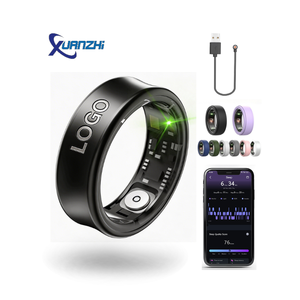
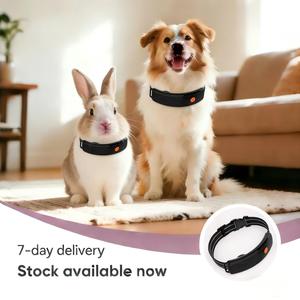
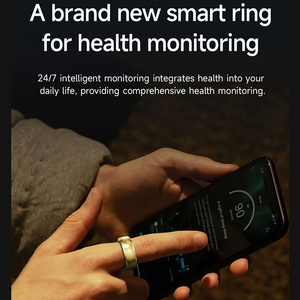
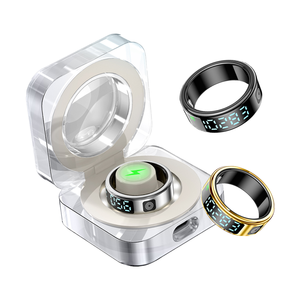
Engineered For Scale: Featured OEM/ODM Wearable Platforms

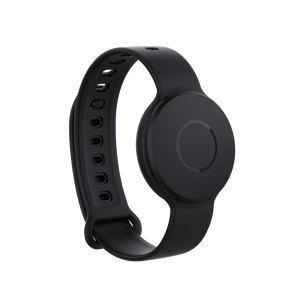
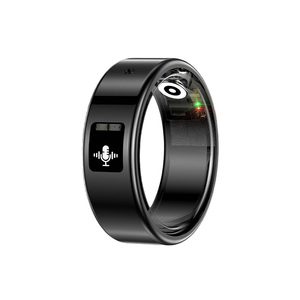
Every hardware solution is pre-validated for European CE-RED (Radio Equipment Directive), RoHS, and FCC compliance, drastically shortening the time-to-market cycle for brand licensees and enterprise distributors.
Industrial Excellence

Shenzhen YT Technology: The Engineering Backbone of Smart Hardware

Operating under an ISO 9001 certified framework since 2009, we consolidate ID design, micro-electronics packaging, embedded firmware, and precision SMT under one synchronized roof.

The smart wearable industry has transitioned from speculative consumer tech into a rigorous sector dictated by biomedical sensor reliability, deterministic battery management, and stringent international compliance. Headquartered in Shenzhen’s premier hardware corridor, Shenzhen Yt Technology Co., Ltd. (YT Smart Wear) bridges the gap between pure engineering execution and scalable manufacturing output. With 8 specialized assembly lines, 2 automated high-speed SMT lines, and over 100 trained manufacturing technicians, we mitigate common supply-chain fragmentations that usually compromise OEM projects.

Vertical R&D Integration

In-house structural, optical, and RF engineering teams ensure antenna matching (attenuation control) and sensor calibration perform accurately through resin, ceramic, and titanium enclosures.

Medical & RF Compliance

Our hardware is designed from schematic stages to conform directly with CE-RED (EN 300 328, EN 301 489), FCC Part 15C, RoHS environmental safety, and UKCA commercial requirements.

Confidentiality & IP Escrow

Strict mutual non-disclosure agreements (NDAs) govern every OEM/ODM collaboration. We segregate source code repositories, hardware tooling assets, and ID aesthetic blueprints.

Deterministic Lead Times

Standard prototype units are delivered within 7 business days. Full custom tooling, structural mold adjustments, EVT/DVT, and 35-day mass production dispatch curves keep retail schedules intact.

Comprehensive Traceability

The 5-Gate Quality Infrastructure & Lifecycle Protocol

Wearables sit continuously against human epidermal tissue. Our 28 inspection checkpoints maintain scrap and field defect metrics well below 5‰ across all mass production batches.

Stage 01: Incoming Quality Control (IQC)

Spectrographic analysis of biocompatible resins, lithium-polymer battery batch cycle testing (UN38.3 validation), and AQL 0.4 optical inspection of SMT microchips, MCU chipsets, and PPG crystals.

Stage 02: In-Process Quality Control (IPQC)

Automated Optical Inspection (AOI) post-reflow soldering on dual SMT lines, checking solder paste volume, bridge short-circuits, micro-crack risks, and sensor alignment down to micrometric tolerances.

Stage 03: Full Function Validation (FQC)

100% individual testing: Bluetooth Received Signal Strength Indication (RSSI), current leakage under deep sleep mode, sensor acquisition precision (PPG, SpO2, skin temperature, 3-axis accelerometer).

Stage 04: Environmental & Reliability Stresstesting

Thermal shock runs (-20°C to 60°C), salt spray anti-corrosion exposure for skin contact pins, 1.2-meter drop tests, and high-pressure water immersion chambers verifying 5ATM and IP68 integrity.

Stage 05: Outgoing Quality Assurance (OQA)

Final cosmetic grading, laser-engraving alignment verification, CE/RoHS certification marking compliance, packaging integrity checks, and serial-number traceable batch database archival.

Post-Sale Warranty & Firmware Maintenance

All exported wearables ship with a comprehensive 12-month factory-backed global warranty, including OTA (Over-The-Air) firmware update maintenance and dedicated 24/7 technical advisory.

Enterprise Reliability Guarantee: We do not outsource firmware or algorithmic calibration. By maintaining direct ownership over BLE stack integration, proprietary sleep-staging algorithms, and hardware microcode, our products exhibit industry-leading connectivity stability across iOS and Android ecosystems.
Market Intelligence

Future Procurement & Sourcing Trends: Strategic Directives for Buyers

As international retail brands, tele-health operators, and consumer electronics distributors navigate the evolving wearable ecosystem, sourcing protocols are shifting from purely low-BOM evaluations to multidimensional compliance, materials science, and AI interoperability. The smart wearable market is forecast to expand significantly, driven by form-factor miniaturization (smart rings displacing bulky bands) and specialized edge-computing solutions. Procurement managers must recalibrate their vendor evaluation vectors based on four emerging industry dynamics:

1. Sensor Fusion Miniaturization

Buyers are phasing out single-parameter health trackers. Procurement mandates now demand composite sensor arrays where photoplethysmography (dual-wavelength PPG), skin impedance, peripheral temperature, and MEMS accelerometry correlate into actionable biomarkers without enlarging ring thicknesses beyond 2.8mm.

2. Decoupled Architecture & Private Cloud

Enterprise brands are rejecting closed "walled-garden" platforms. There is a surging demand for white-label firmware architectures capable of pushing raw hex telemetry directly to private AWS/Azure customer databases, ensuring adherence to GDPR in the European Union and HIPAA guidelines in the United States.

3. Low-Carbon Materials & Circularity

Driven by upcoming EU Battery Regulations and carbon border adjustments, global importers are standardizing on hypoallergenic ceramic (zirconia), medical-grade bio-compatible titanium grade 5, nickel-free charging contact pins, and easily disassembled cobalt-recyclable micro-batteries.

4. Edge AI & Generative Health Staging

Next-generation wearables are shifting algorithmic workloads from smartphones directly to the edge. Microcontrollers featuring ultra-low-power neural processing units (NPUs) enable on-ring sleep architecture classification, arrhythmia detection, and real-time voice feature extraction during meetings.

Technological Trajectory

Technological Evolution: Smart Rings, AI Audio & Healthcare Bracelets

The wearable sector is transitioning rapidly away from wrist-dominant form factors toward non-invasive, lifestyle-blended alternatives. Smart rings, in particular, provide superior signal-to-noise ratio (SNR) for vascular monitoring due to the dense capillary networks present in the digital arteries of the finger compared to the dorsal surface of the wrist. Below is an engineering evaluation comparison table outlining current design standards versus next-generation platform benchmarks produced by YT Smart Wear:
Technology Metric Legacy Generation (2020-2023) Current Production Benchmark (2024-2025) Next-Gen R&D Roadmap (2026+)
Biometric Processing Basic Threshold Heart Rate, Step Count Continuous HRV, SpO2, Sleep Stages, Peripheral Temp Non-invasive Blood Glucose trend estimation, Hydration Index
Structural Enclosure Molded Polycarbonate / Epoxy potting Ultra-hard Zirconia Ceramic, Titanium Grade 5 Liquid Metal composites, Self-healing scratch coatings
Energy Storage & PMIC Standard Li-Ion (3-4 days runtime) High-density micro-cells (5-7 days), Low-drain BLE 5.2 Solid-state micro-batteries (10+ days), RF wireless harvesting
Interactivity Modality Passive tracking, app-tethered only Capacitive tap sensors, SOS tactile beacon, NFC Micro-gesture recognition, Sub-vocal interface, Bone conduction
Regulatory Preparedness Generic consumer CE mark CE-RED, EN 62479 (SAR), RoHS, IP68 (5ATM) certified MDR Class IIa compliance pipelines, ISO 13485 full validation
Send an Inquiry
Procurement Knowledgebase

Frequently Asked Questions for Sourcing & Compliance Officers

Clear, authoritative technical answers addressing common certification, tooling, intellectual property, and supply chain questions.

What specific test reports are included under your CE Certification for Smart Wearables?
Our CE certifications comply comprehensively with the European Radio Equipment Directive (RED) 2014/53/EU. This covers health and safety according to EN 62368-1 and EN 62479 (SAR assessment), Electromagnetic Compatibility (EMC) testing under EN 301 489-1 and EN 301 489-17, and effective radio spectrum utilization under EN 300 328 for 2.4GHz BLE transmissions. Additionally, all components are accompanied by RoHS (2011/65/EU and amendment 2015/863) full substance analysis test reports issued by accredited notified testing bodies.
What is the standard OEM/ODM workflow, and what are the milestone timelines?
Projects proceed through 6 formalized stages: (1) Product Definition & BOM budget freeze (1-3 days); (2) Industrial Design (ID) & CMF selection (3-5 days); (3) Mechanical/Structural DFM (7 days); (4) Hardware schematic, PCBA layout & firmware architecture (10-14 days); (5) Rapid tooling & EVT/DVT testing (15-20 days); and (6) Mass Production & QC dispatch (approx. 35 days). Ready-to-brand platform samples can be dispatched within 7 days.
Can we develop a fully customized private-label application (iOS & Android) with our own UI/UX?
Yes. We provide complete software development kits (SDKs), Bluetooth communication protocols (API/BLE command dictionaries), or complete turnkey app re-skinning and customization. This includes custom branding assets, unique color palettes, specialized health metric algorithms, multi-language localization, and assistance with Google Play Store and Apple App Store compliance submissions.
How do you manage battery logistics, shipping regulations, and safe storage?
All integrated lithium-polymer batteries undergo UN38.3 testing, including altitude simulation, thermal cycling, vibration, shock, external short circuit, impact, overcharge, and forced discharge. Goods ship with official MSDS (Material Safety Data Sheets) and meet IATA Section II (PI967) packing instructions for airborne cargo or sea container freight.
What Minimum Order Quantities (MOQs) apply for custom hardware versus branding existing tooling?
For white-label private branding using our mature internal tooling (custom laser etching, branded packaging, custom firmware BLE broadcast name, and private-label app skinning), the MOQ typically starts at 500 to 1,000 units. For full ODM bespoke projects requiring dedicated injection or CNC tooling, custom PCBA form-factors, and proprietary casing designs, the standard initial development run starts at 3,000 to 5,000 units.
How are intellectual property (IP) rights and proprietary algorithms legally protected?
We operate under strict bilingual (English/Chinese) Non-Disclosure Agreements with robust non-circumvention provisions. The physical tooling molds paid for by the client remain the exclusive legal property of the client and are sequestered strictly for their production runs. All customer-commissioned firmware code, API libraries, and cloud architecture remain the confidential property of the commissioning brand.
Accelerate Production

Consult with Our Wearable Hardware Engineering Team

Whether you are expanding an existing consumer electronics line, establishing an enterprise remote patient monitoring system, or launching a revolutionary AI-assisted smart ring, our factory infrastructure delivers precision, reliability, and full CE/FCC compliance.

Send an Inquiry