Curated Intelligent Hardware & Display Audio Ecosystem
Precision-engineered smart hardware platforms optimized for enterprise OEM/ODM integration, multi-sensor algorithmic fusion, and low-latency interaction.
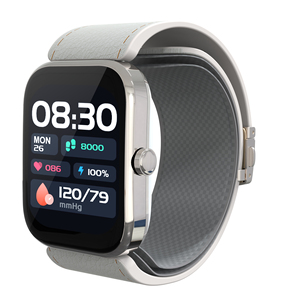
Blood Pressure Monitor Watch with Heart Rate & Sleep Tracking BP Airbag Pressure
Explore Details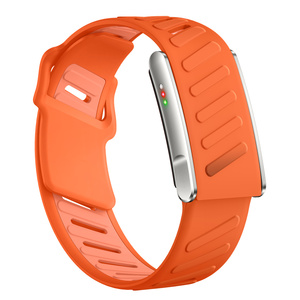
OEM Screenless Smart Bracelet 24H Heart Rate BP Monitor AI Health Report KR96
Explore Details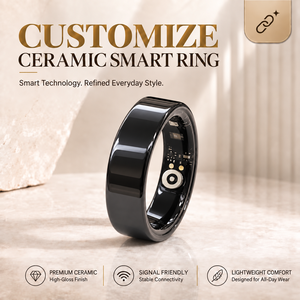
Waterproof Ceramic Smart Ring Health Tracker Fitness Sleep Heart Rate Monitor
Explore Details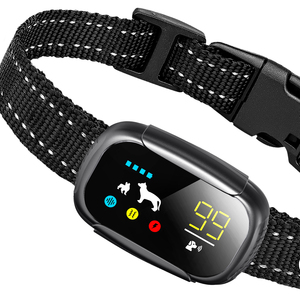
Advanced AI Barking History Record Smart Anti-Barking Dog Collar Rechargeable
Explore Details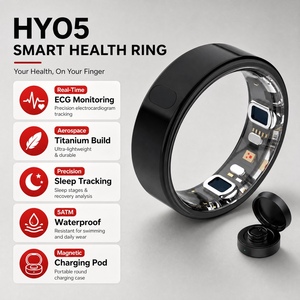
HY05 Titanium Alloy ECG Heart Rate SpO2 Blood Pressure HRV Sleep Ring 5.3
Explore Details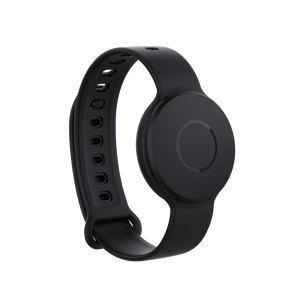
Programmable Smart Adjustable W6 Bracelet BLE Button Beacon Wristband
Explore Details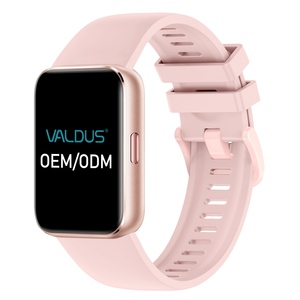
ODM/OEM 2025 Smart Watch Blood Pressure Monitor 5-10 Days Battery Life
Explore Details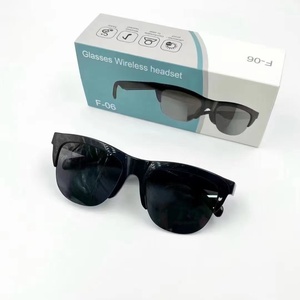
Smart Glasses With Bluetooth Stereo Talking Sunglasses Wireless Audio Eyewear
Explore DetailsEngineering Authority: AI Glasses with Display Architectural Paradigm
Semantic evaluation, micro-optical physics, and spatial AI integration defining modern Shenzhen manufacturing.
Strategic Procurement Trends: Smart Eyewear Sourcing Roadmap
Critical engineering considerations procurement executives must audit when negotiating smart glass contracts.
Diffractive Optical Waveguides vs. Birdbath
While traditional birdbath optics offer high color fidelity, their bulky depth profile restricts lifestyle adoption. Leading OEM buyers are systematically transitioning toward surface relief grating (SRG) diffractive waveguides coupled with monochrome or full-color Micro-LED light engines. This architecture yields lens thickness under 2.2mm and ambient light transmission exceeding 85%, ensuring unobtrusive outdoor readability.
Edge AI Co-Processing & Multi-Modal Vision
Modern enterprise procurement mandates low-latency real-time inference. Modern AI display glasses combine Bluetooth 5.3/5.4 low-power states with dedicated neural coprocessors. This allows instantaneous on-lens transcription, zero-lag dynamic subtitle projection, computer-vision landmark detection, and context-aware live translation without excessive smartphone tethering draw or high cloud latency.
Ultralight Ergonomics & Split Battery Balancing
B2B wearability hinges on weight conservation below 48 grams. Sourcing leaders are enforcing bilateral weight-distribution engineering, placing flexible high-density lithium polymer cells symmetrically within both temples. Combined with titanium alloy hinges and biocompatible TR90 memory polymers, our frames mitigate localized mastoid pressure, supporting continuous 8-hour shift operations.
Technological Horizons: Evolution of Display-Driven AI Eyewear
How Micro-LED, silicon photonic integration, and localized LLMs redefine industrial hardware milestones.
Photonic Luminance Scaling
Micro-LED projection engines now achieve peak luminance exceeding 3,000,000 nits at the source chip. Coupled with diffractive optical waveguides, the eye-side luminance reaches 1,500+ nits, guaranteeing crisp text projection and telemetry visibility even under direct, unshaded sunlight.
Sub-Micron Packaging Precision
Utilizing high-precision automated die bonders and surface mount placement (SMT) with placement tolerance inside ±15μm, optical drivers and sensory nodes are condensed into temple envelopes narrower than standard premium acetate eyeglasses.
Spatial Acoustic Phase Reversal
Integrated directional acoustic cavities utilize inverse phase wave cancellation algorithms to project sound toward the ear canal while suppressing ambient sound radiation, ensuring corporate confidentiality during confidential executive interactions.
Autonomous Contextual UX
Next-generation firmware builds incorporate lightweight SLAM algorithms with minimal sensor suites. The display interface automatically anchors notifications to situational triggers, such as teleprompter scrolling or route navigation, without obtrusive head drift.

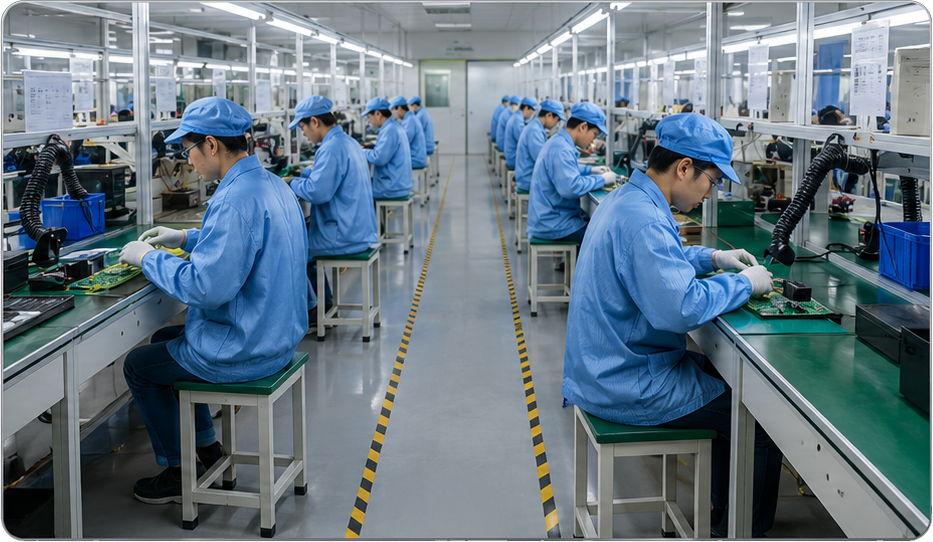
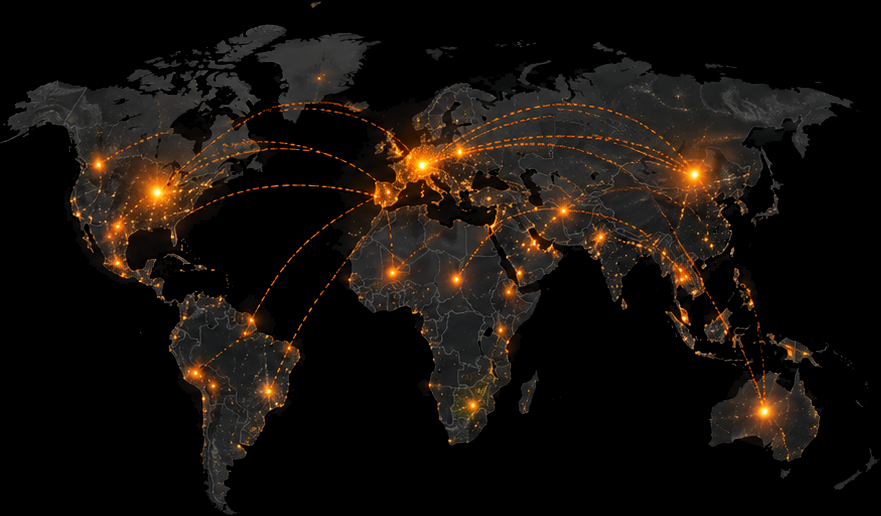
Factory Pedigree: Shenzhen Yt Technology Co., Ltd. Advantage
Vertical in-house manufacturing, rigorous quality gates, and seamless cross-border supply chain control.
The Turnkey Pipeline: 6-Phase Production Lifecycle
Systematic phase-gate reviews ensuring zero ambiguity from conceptual sketch to global maritime distribution.
System Architecture
BOM optimization, optical engine review, optical waveguide feasibility, and compliance roadmapping.
ID & CMF Engineering
Ergonomic balancing, aesthetic temple modeling, titanium/TR90 materials, and 3D precision mockups.
Mechanical Integration
Hermetic IP67 optical ingress sealing, heat dissipation pathways, and hinge drop dynamics.
Firmware & OS Stack
Micro-display kernel coding, Bluetooth low-energy synchronization, and native iOS/Android white-label SDKs.
EVT / DVT Verification
Precision mold manufacturing, environmental chamber validation, drop tests, and optical aberration analysis.
Mass Production & QA
High-yield automated SMT fabrication, 28-point final optical alignment, and direct worldwide fulfillment.
Procurement Intelligence: Frequently Asked Questions
Direct technical answers addressing lead times, optical calibration, firmware customization, and IP protection.
What optical display options are available for customized AI glasses?
We provide two industrial platforms: ultra-compact monochrome green diffractive optical waveguides designed for teleprompting, turn-by-turn navigation, and micro-text notifications; and full-color Micro-LED/Micro-OLED systems for rich multi-media playback and contextual enterprise computing applications.
What are standard sample timelines and mass manufacturing lead times?
Functional baseline proof-of-concept prototypes and standard evaluation samples are dispatched within 7 working days. Custom ODM projects spanning tailored injection molds, bespoke PCB layout, and custom optical housing require approximately 60 days to initial T1 trial molds, followed by a 35-day mass manufacturing cycle.
How do you safeguard client intellectual property and proprietary trade secrets?
We execute strict, jurisdictionally enforceable non-disclosure agreements prior to reviewing project schematics. Engineering workflows are compartmentalized on air-gapped development servers. Tooling molds and firmware codebases remain the exclusive, non-transferable property of the contracting client.
Do your smart glasses systems support tailored enterprise software stacks?
Yes. Our in-house software team provides white-label mobile companion applications for iOS and Android, custom Bluetooth AT-command sets, and modular SDKs. This enables client-side engineering teams to easily integrate proprietary Large Language Models (LLMs), internal ERP systems, or live voice APIs.
What QA testing protocols ensure product durability during consumer use?
Every device passes our 28-point quality gate: optical modulation transfer function (MTF) analysis, 20,000-cycle temple flex stress tests, environmental thermal cycling (-20°C to 60°C), IP65/IP67 water spray validation, salt spray corrosion testing, and 1.2-meter multi-axis kinetic drop tests.
Which international certifications do you assist in securing?
Our production environment is certified to ISO 9001 standards. We directly facilitate third-party laboratory certifications including CE, FCC, RoHS, UKCA, REACH, TELEC, and UN38.3 lithium battery transport safety declarations, ensuring immediate customs clearance across Western markets.
Accelerate Your AI Eyewear Deployment With China's Top Tier Factory
Bridge the gap between optical concept and commercial reality. Contact our chief hardware engineering group today to schedule an in-depth technical DFM review, review reference optical waveguide designs, and receive an itemized manufacturing quotation within 24 hours.
Contact Us