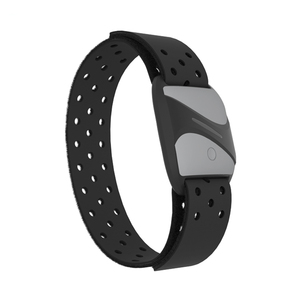
Engineering Portfolio & Wearable Solutions
Direct factory manufacturing for commercial biometric rings, wireless optical telemetry, and AI wearable hardware.

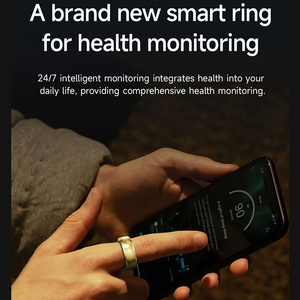
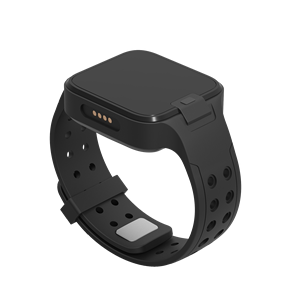
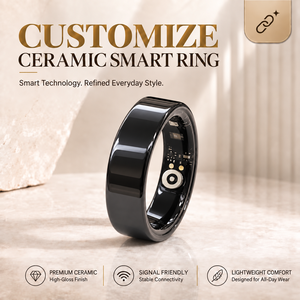
2009
Founded In Shenzhen
50+
Hardware & Algorithm Patents
8+2
Assembly + SMT Production Lines
300K+
Monthly Unit Capacity
<5‰
Batch Defect Rate
40+
Export Markets Served
Industrial Architecture of Heart Rate Monitoring Rings
A B2B Engineering Guide for Hardware Brands, Clinical Integrators, and Consumer Tech Distributors
The global wearable landscape is undergoing an unprecedented architectural migration from wrist-worn form factors (smartwatches and fitness bands) toward sub-gram miniaturized finger-worn rings. This transition is not merely cosmetic; it is fundamentally driven by hemodynamic physiology. The palmar digital arteries running laterally along human phalanges offer significantly higher capillary perfusion and thinner stratum corneum compared to the dorsal radial artery of the wrist. As a result, photoplethysmography (PPG) signal-to-noise ratio (SNR) captured by a dedicated smart ring surpasses wrist wearables by up to 300% during periods of peripheral vasoconstriction, rapid heart rate transitions, and micro-movements during deep sleep cycles.
However, engineering a medical-grade PPG heart rate monitoring ring presents extreme mechanical, electrical, and firmware trade-offs. B2B brand owners sourcing from China must discern between rudimentary toy-grade step counters and calibrated biosensing devices. In our specialized Shenzhen manufacturing complex—operating continuously since 2009 with over 8 dedicated assembly lines and 2 automated Surface Mount Technology (SMT) high-speed placement lines—we systematically address these constraints through closed-loop engineering, spanning custom flexible PCB (FPCB) designs, proprietary PPG ambient light cancellation, and hermetic resin potting.
1. Anatomical Signal Acquisition: The Optical Engine Breakdown
Precision heart rate (HR) and heart rate variability (HRV) detection within a ring requires balancing emitter wavelength penetration with ultra-low battery consumption. In our cleanroom assembly facilities, smart rings are engineered with multi-wavelength optical clusters:
525nm Green LED Cluster
Optimized for baseline resting heart rate (RHR) and active heart rate tracking. Green light exhibits maximum absorption peaks in oxyhemoglobin and deoxyhemoglobin, mitigating motion artifacts caused by epidermal sliding during athletic activities or daytime routine.
660nm Red & 940nm Infrared (IR)
Essential for SpO2 pulse oximetry and circadian sleep staging. Infrared light penetrates deeper into the subcutaneous vascular bed, reading microvascular dilation with minimal luminous intensity, preserving battery capacity during 8-hour continuous night cycles.
Dual PIN Photodiode Layout
Differential photodiode reception paired with an ultra-low-noise Analog Front End (AFE). By measuring optical differential signals across opposing phalangeal vectors, ambient optical bleed from sunlight or domestic lamps is cancelled prior to algorithmic digitization.
Each biometric pulse wave is processed through our embedded MCU running dynamic filtering algorithms that isolate the systolic peak from baseline motion baseline drifts. This ensures that root-mean-square of successive differences (RMSSD) and Standard Deviation of NN intervals (SDNN)—the gold standards for autonomic nervous system monitoring—remain clinically actionable.
2. Structural Miniaturization: Micro-Molding & Bio-Compatible Metallurgy
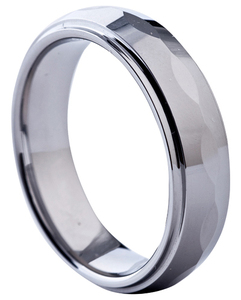
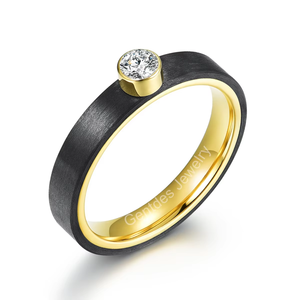
A smart ring is worn 24 hours a day, demanding materials that are completely hypoallergenic, impervious to sweat, detergent, and sea water, yet electrically transparent to 2.4 GHz Bluetooth Low Energy (BLE 5.2/5.3) protocols. As a direct manufacturer, our tooling and production infrastructure encompasses multiple material combinations:
Microcrystalline Zirconia Ceramic (ZrO2): Sintered at 1500°C, zirconia offers exceptional diamond-like hardness (Vickers >1200 HV), skin-friendly non-reactive biocompatibility, and near-zero electromagnetic shielding, allowing our internally tuned RF trace antennas to broadcast effortlessly without signal attenuation.
Aero-Grade Titanium Alloy (Grade 5 Ti-6Al-4V): Engineered for ultra-lightweight structural frames. Titanium shells provide unmatched tensile strength-to-weight ratios, protecting the ultra-thin curved lithium pouch cell and sensor stack against compressive finger forces up to 100 kg.
Medical Epoxy Potting & Seamless Encapsulation: We utilize low-temperature, low-pressure resin injection molding. This completely encases the inner circumference, eliminating air gaps, achieving true IP68 and 5ATM diving-grade waterproofing, and ensuring optical lenses sit flush against the skin without irritating the epidermal dermis.
3. Enterprise Manufacturing Process: From Silicon to Private Label
Sourcing smart rings from our Shenzhen manufacturing center eliminates middle-tier brokers and ensures total supply-chain transparency. Our production workflow follows a rigid six-stage development pipeline designed to bring OEM/ODM concepts from raw silicon to certified shelf-ready retail boxes:
GATE 01
IQC Analysis
Spectrometric verification of raw ceramic/titanium, battery capacity cycling, and optical AFE incoming batch testing.
GATE 02
High-Speed SMT
0.35mm pitch BGA placement on multi-layer flexible substrates with automated 3D optical inspection (AOI).
GATE 03
Curved Bending
Rigid-flex PCB ring forming, laser micro-welding of battery safety IC tabs, and internal chassis alignment.
GATE 04
Potting & Vacuum
Bubble-free medical polymer curing under cleanroom temperature controls, achieving continuous 5ATM sealing.
GATE 05
Calibrated QA
100% optical simulator calibration against standardized blood flow waveforms and simulated arrhythmia pulses.
4. Strategic Procurement Trends: 2025–2030 Smart Ring Roadmap
Procurement directors and consumer health brands must align their product roadmaps with rapid technological shifts. The following four macro-trends are actively redefining wholesale procurement specifications:
Medical-Grade Blood Pressure (Cuffless PTT)
Transitioning from pulse counting to continuous blood pressure trending via Pulse Transit Time (PTT) calculations. Integrating high-speed PPG sampling with 6-axis IMU ballistocardiography allows algorithmic estimation of arterial stiffness.
NFC Contactless & Secure Access
Merging wellness hardware with digital lifestyle convenience. Modern procurement increasingly mandates embedded secure elements (SE) supporting EMVCo contactless payments, automotive digital key unlocking (CCC standard), and building access.
Energy Harvesting & 10-Day Battery
Silicon node transitions to 22nm and sub-threshold processors reduce standby power draw below 8μA. Coupled with high-density solid-state batteries, future smart rings will sustain 7 to 10 days of continuous telemetry on a single 25-minute wireless charge.
5. The Regulatory & Compliance Landscape (CE, FCC, RoHS, UKCA)
One of the most catastrophic failures for overseas brands is importing wearables that fail regional telecommunications or chemical compliance. Operating under an accredited ISO 9001 quality management framework, our factory guarantees full turnkey compliance assistance:
Radio Equipment Directive (RED - CE) & FCC Part 15C: Comprehensive RF spectral emission and SAR (Specific Absorption Rate) testing ensuring Bluetooth transmissions remain well within international safety boundaries.
RoHS & REACH Annex XVII: Stringent heavy-metal testing verifying that metallic coatings, internal solders, and skin-contact ceramics are completely free of nickel release, lead, cadmium, and cytotoxic plasticizers.
UN38.3 & IEC 62133: Stringent drop, vibration, overcharge, and thermal shock certifications for miniature high-energy lithium batteries, permitting seamless air-cargo transport and global fulfillment center storage.
Procurement & Technical FAQ
Clear, direct answers for supply chain directors, brand product managers, and hardware engineers.
What is the minimum order quantity (MOQ) for custom private label smart rings?
For standard platform custom branding (laser-engraved logo on inner band, customized BLE broadcast name, and private-label retail packaging), our baseline MOQ starts at 500 units. For complete ODM bespoke industrial design tooling (unique ring dimensions, custom outer metallurgy, proprietary sensor layout), the program MOQ is typically 3,000 units with amortized tooling fees.
How do you solve smart ring sizing challenges for global retail distribution?
Finger geometries vary widely across international markets. We produce standardized sizing shells ranging from US Size 6 to Size 13. We support turnkey private-label sizing kit manufacturing (plastic ring gauge sets shipped to end-consumers beforehand) to mitigate sizing-related return rates down to less than 1.8%.
Can our software team access raw sensor data, or do you provide SDKs?
Yes. We support three tiers of software integration: (1) Turnkey white-label iOS and Android applications with custom brand assets; (2) Mobile Client SDKs providing processed HR, SpO2, HRV, and sleep score parameters; and (3) Low-level Bluetooth API documentation granting direct access to raw PPG optical waveforms and 3D accelerometer data streams.
How is IP68 and 5ATM waterproof reliability validated during mass production?
Every single manufactured ring undergoes two-tier pressure testing: first, dry vacuum decay chamber testing to detect microscopic shell pores, followed by positive hydrostatic chamber immersion testing calibrated to 50 meters (5 bar) equivalent pressure. We guarantee full water resistance for swimming, handwashing, and bathing.
What is the average production lead time from prototype to shipment?
Engineering sample verification (EVT) typically takes 7 business days for existing platforms. Custom mold fabrication and design verification testing (DVT) requires 25 to 30 days. Once pre-production samples are signed off, standard mass production runs are delivered within 30 to 35 calendar days supported by our 300,000 unit monthly capacity.
How do you protect client intellectual property (IP) and proprietary designs?
We execute legally binding bilateral Non-Disclosure Agreements (NDAs) prior to receiving any CAD files or product specs. Design files are segregated in isolated network drives accessible only by the assigned R&D engineering cell. Custom mold tooling remains the exclusive property of the buyer and is never repurposed for secondary market clients.
Launch Your Heart Rate Ring Project with Shenzhen's Direct OEM/ODM Factory
Whether you are scaling an established wellness brand, developing clinical telemetry software, or launching a revolutionary private-label consumer wearable, our direct factory engineering team is ready to accelerate your speed-to-market.