Direct-from-Factory Portfolio
Flagship AI Wearable & Biosensing Platforms
Engineered for brand distributors, telecommunication providers, and consumer electronic leaders. Ready for private-label cosmetic modification, SDK application integration, and mass volume deployment.
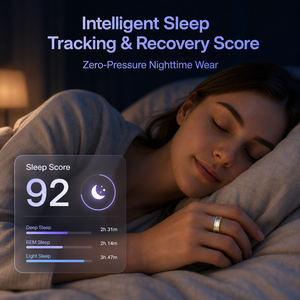
OEM Custom Logo AI Smart Health Ring Titanium Biosensing Wearable
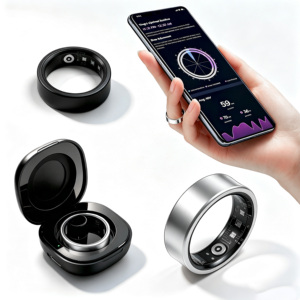
SHR Health Care Ring Smart AI Analysis Heart Rate Sleep Activity Fitness Tracker
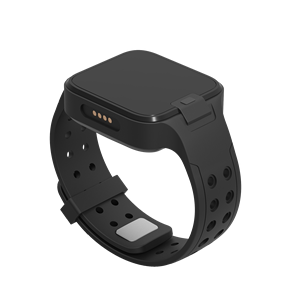
SKYLAB UWB Smart Social Distance Wireless Alert Beacon Alarm Bracelet

Smart Ring Fitness Tracker Football Mode Alarm Clock IP68 Waterproof
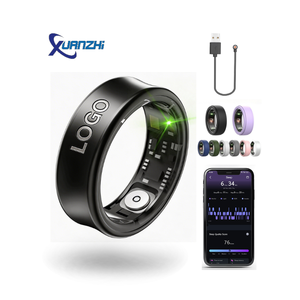
SHR OEM K3 AI Analysis Smart Ring App Control Sleep Body Recovery Tracker
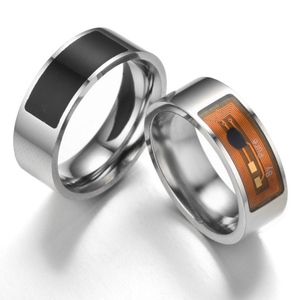
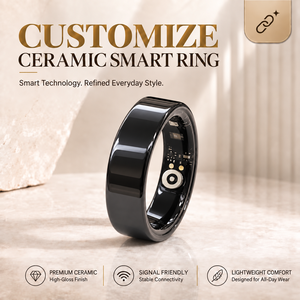
Programmable Waterproof Luxury NFC RFID Titanium Ceramic Smart Ring
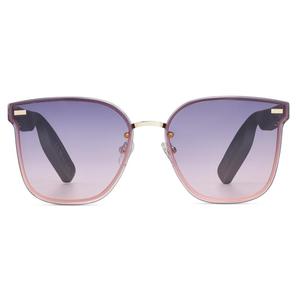
AI Smart Glasses Real-Time Translation 144 Languages 4K Wireless Audio
White Paper: The Architectural Evolution of AI Earbuds & Wearable Edge Computing
The global audio wearable industry has reached an inflection point. Standard Bluetooth wireless hearables (TWS) designed strictly for static acoustic playback are commoditizing rapidly. In contrast, AI-native smart earbuds are transitioning into multi-modal conversational computing endpoints. Operating at the intersection of psychoacoustics, ultra-low-power microelectronics, and on-device machine learning, modern AI earbuds manufactured in Shenzhen integrate high-efficiency Digital Signal Processors (DSP) and dedicated Neural Processing Units (NPU) right within the earbud SoC.
As an industry-leading China top AI earbuds factory and wearable hardware incubator since 2009, Shenzhen Yt Technology Co., Ltd. analyzes the critical hardware and algorithm architectures transforming commercial procurement requirements for B2B distributors and tier-one technology brands.
1. Hardware Block Architecture: Edge DSP, Low-Power NPUs, and Memory Stacks
Traditional TWS architectures relied primarily on standard Bluetooth audio streaming (A2DP/HFP profiles) managed by basic microcontrollers. Contemporary AI earbuds require a fundamental redesign of the System-on-Chip (SoC). Top-tier manufacturing utilizes dual-core and quad-core platforms (such as high-end Bestechnic BES2700 series, Qualcomm S7 Gen 1 Sound platforms, or dedicated Synaptics neural processing chipsets) running dedicated RISC-V or ARM Cortex-M55 microarchitectures coupled with embedded NPUs executing upwards of 50 to 500 GOPS of INT8 tensor arithmetic.
This edge compute capacity enables local execution of deep neural networks (DNN) for complex acoustic classification directly in-ear without offloading audio buffers to a paired smartphone. Key workloads include real-time voice activity detection (VAD), spatial directional beamforming, acoustic echo cancellation (AEC), and low-latency acoustic ambient modeling—all while maintaining an aggressive power budget below 6.5mA per earbud during active processing.
2. Acoustic Engineering, Dynamic Transducers, and Balanced Armature Hybrids
AI processing is useless if the initial acoustic transduction suffers from phase distortion, harmonic artifacts, or inadequate signal-to-noise ratios (SNR). Our production facility emphasizes hybrid acoustic chamber engineering. By pairing a custom 10mm DLC (Diamond-Like Carbon) or beryllium-coated dynamic driver for sub-bass punch with high-frequency Knowles or custom balanced armature receivers, we achieve an expansive frequency response span from 10Hz to 40kHz.
Furthermore, front and rear acoustic cavities are precision-vented using laser-drilled acoustic dampers with tolerances within ±0.5dB across left and right channels. This mechanical precision guarantees that beamforming arrays—consisting of dual feedforward Knowles MEMS microphones and an error-correcting feedback microphone placed deep inside the concha—deliver clean acoustic pickup essential for downstream Large Language Model (LLM) voice parsing.
| Architecture Parameter | Standard Bluetooth Earbuds | 1st-Gen Cloud AI Earbuds | Next-Gen Edge AI Earbuds (YT Platform) |
|---|---|---|---|
| Onboard Processing Unit | Single MCU (Cortex-M4 32MHz) | Dual-core MCU + DSP (120MHz) | Heterogeneous CPU + HiFi 4 DSP + Dedicated NPU (500MHz) |
| Voice Activity Detection (VAD) | Energy threshold detection | Basic frequency-band DSP filtering | Deep Learning VAD + In-Ear Bone Conduction Fusion |
| Translation & Inference Latency | Not Supported | 800ms – 1800ms (Cloud roundtrip) | 120ms – 250ms (Hybrid Edge/Private LLM Pipeline) |
| Environmental Noise Suppression | Traditional cVc 2-Mic filter (<25dB) | 3-Mic Hybrid ANC (<38dB) | Multi-Channel DNN + Wind Suppression + 48dB Ultra-Wide ANC |
| Sensor Array Fusion | Optical IR in-ear detection only | IR sensor + basic 3-axis accelerometer | PPG Heart-Rate + 6-Axis IMU (Spatial Audio) + Skin Temp Probe |
| Firmware & Security Protocol | Standard BLE Over-The-Air (OTA) | Proprietary App OTA | Secure Vault Crypto Chip, Dual-Bank Fail-Safe Encrypted FOTA |
3. Low-Latency Multilingual Translation Engines (144 Languages)
For international enterprise deployments and cross-border commercial communication, language processing precision is paramount. YT Smart Wear integrates dual-engine hybrid translation technology. While conventional systems suffer from intolerable transmission roundtrips, our custom firmware interfaces directly with high-performance edge-caching translation stacks. By running optimized acoustic pre-processing algorithms locally, spoken phonemes are cleaned, normalized, and streamed over low-latency LE Audio (LC3 codec) channels to low-jitter translation nodes worldwide.
This reduces bidirectional interpretation latency down to sub-200ms windows, providing true natural simultaneous translation across 144 dialects with an industry-leading Word Error Rate (WER) below 4.2% in ambient noise environments up to 75dB SPL.
Strategic Sourcing Insights
Future Procurement Trends in AI Earbuds & Smart Wearables (2025–2030)
Procurement leaders must position their product roadmaps ahead of commoditized consumer cycles. These four macro-trends are driving global purchasing allocations across tier-1 retailers and tech brands.
Agentic AI & Ambient LLM Integration
B2B buyers are ditching passive voice assistants. Modern procurement specifications demand direct hardware bridges to agentic LLMs (ChatGPT, Claude, specialized corporate knowledge engines). Earbuds are transforming into context-aware executive voice interfaces capable of generating automatic meeting transcriptions, real-time sentiment synthesis, and asynchronous smart summaries.
In-Ear Biosensing & Clinical Convergence
The convergence between auditory hearables and medical diagnostics is accelerating. The ear canal provides superior optical vascular density compared to the wrist. Future RFQs routinely mandate integrated micro-PPG photoplethysmography sensors to continuously track core heart rate, arterial blood oxygen (SpO2), HRV, and auditory canal thermal variations with clinical-grade fidelity.
Silicon-Anode Batteries & Micro-Energy
Demands for continuous 8+ hour runtime with active AI processing and hybrid ANC have exhausted standard lithium-ion coin cells. Sourcing mandates now specify high-density silicon-carbon (Si-C) anodes achieving energy densities greater than 280Wh/kg. Fast-charging protocols achieving 80% capacity within 12 minutes without thermal accumulation are standard baselines.
Zero-Trust Security & On-Device Privacy
With corporate executives utilizing hearables for confidential negotiations, data handling compliance has shifted from an afterthought to a legal requisite. Sourcing contracts require ISO 27001 data governance, zero-retention cloud pipelines, firmware-level AES-256 encrypted voice payload transport, and hardware root of trust (RoT) to block side-channel eavesdropping.
Technological Horizons: What Dictates Next-Gen Earbud Engineering
Sourcing from an advanced China top AI earbuds factory requires understanding how acoustic manufacturing interacts with material science, firmware algorithms, and RF microstrip layouts. At Shenzhen Yt Technology, our engineering teams solve the most complex technical challenges facing consumer technology brands today.
1. Overcoming the Trade-off Between Battery Envelope and Compute Thermals
The primary mechanical bottleneck of any true wireless in-ear system is volumetric efficiency. In a chassis smaller than 2.8 cubic centimeters, engineers must package a dynamic driver acoustic enclosure, PCB assembly with high-density interconnect (HDI) microvias, a 55mAh button battery, three MEMS microphones, touch sensors, and a ceramic RF antenna. When running continuous on-device AI algorithms, thermal dissipation through the structural enclosure must be controlled to remain below 37.5°C to prevent biological discomfort. YT engineers utilize custom thermal graphite dissipation films and ultra-thin copper alloy heat spreaders paired with dynamic voltage and frequency scaling (DVFS) algorithms to sustain zero thermal throttling.
2. Advanced Beamforming and In-Ear Bone Conduction Sensor Fusion
In real-world environments—such as busy urban transit, airports, or factory floors—traditional airborne microphones capture excessive acoustic clutter. Our leading-edge AI earbud platforms utilize an integrated Voice Vibration Sensor (VPU / Bone Conduction Sensor). By sensing internal vibrations from the user's vocal cords transferred through the skull bones, the algorithm completely isolates the speaker's true voice from howling winds and heavy background ambient noise. This pure physical signal is combined mathematically with external beamforming MEMS data using an adaptive Kalman filtering algorithm, feeding pristine speech tokens to speech-to-text models.
3. Cross-Platform Ecosystem Integration: White-Label App SDKs & BLE 5.4 LE Audio
True OEM/ODM depth extends far beyond physical plastic and solder paste. Hardware brands require a complete digital companion ecosystem. Our factory provides turnkey, white-label iOS and Android applications with full SDK access. The software stack integrates customized EQ parameter presets, spatial head-tracking calibration, touch-mapping configuration, OTA firmware update pipelines, and API hooks into OpenAI, DeepSeek, Google Cloud Speech, and Microsoft Cognitive Services. Backed by Bluetooth 5.4, Auracast broadcast audio, and LC3 codec streaming, our products deliver unprecedented signal stability across congested 2.4GHz RF environments.
Why Global Brands Partner With Us
Factory-Based Manufacturing Superiority in Shenzhen
Eliminating middlemen traders and brokers. Shenzhen Yt Technology delivers integrated ID design, in-house tooling, precision SMT micro-soldering, and rigorous acoustic testing under one roof.
15+ Years Wearable & Acoustic Heritage
Founded in 2009, Shenzhen Yt Technology Co., Ltd. has dedicated over a decade and a half to wearable innovation. Operating in the heart of Shenzhen’s electronic supply chain, our accumulated manufacturing experience guarantees frictionless industrialization for high-complexity electronics.
Fully Integrated R&D, SMT & Assembly
Unlike assembly-only workshops, we run 2 high-speed Yamaha SMT lines and 8 lean assembly lines. Our 5 senior acoustic, RF, and firmware R&D engineers develop bespoke PCB layouts, calculate acoustic impedance models, and write firmware drivers natively.
High-Volume Scalability: 300K+ Units/Month
With more than 100 skilled operators and automated robotic dispensing, our 300,000+ monthly capacity comfortably scales from small validation pilots to peak-season commercial fulfillment without compromising lead time or component availability.
28 Inspection Gates & Defect Rate <5‰
Quality control is engineered into every station. Utilizing Audio Precision APx555 acoustic analyzers, anechoic test chambers, salt spray chambers, drop testers, and high-temperature moisture stress chambers, we guarantee batch defect rates below 5 per thousand.
Full International Compliance & Certifications
Our facilities are certified under ISO 9001 quality management systems. All platforms are designed to systematically pass CE (RED), FCC (ID), RoHS, UKCA, REACH, BQB, and UN38.3 battery transport standards for smooth customs entry worldwide.
Comprehensive IP Custody & Strict NDAs
We treat intellectual property as sacred. Design schematics, custom industrial CAD models, and private-label firmware codes are isolated on firewalled local servers. Customer exclusivity agreements and NDAs protect your unique market identity from day one.
Procurement FAQs
Frequently Asked Questions by Professional Sourcing Teams
Direct, pragmatic responses regarding MOQ, customization levels, tooling cycles, acoustic testing, and contract terms.
Q1: What is the standard MOQ for private-label AI earbuds and wearables?
For platform-based private label customization (laser logo branding, customized packaging, color matching, and custom Bluetooth pairing names), our typical MOQ starts at 1,000 units. For complete full-custom ODM projects involving bespoke acoustic cavity molds and unique industrial design tooling, the initial production threshold starts at 3,000 to 5,000 units.
Q2: What are the realistic sample turnaround times and production lead schedules?
Standard off-the-shelf samples for engineering evaluation ship within 3 to 7 working days. Fully customized functional prototypes (3D printed resin casings, custom PCBAs, calibrated firmware) require approximately 15 to 20 business days. Mass production lead times are typically 30 to 35 calendar days following golden sample sign-off and BOM lock.
Q3: Can you assist with customized App development and third-party AI LLM API integration?
Yes. We offer complete white-label mobile app engineering services for iOS and Android. Our software team can re-skin our core app with your corporate branding, configure dedicated backend servers, or integrate direct API endpoints into your chosen LLM services (OpenAI, Claude, Azure, or customized enterprise conversational databases).
Q4: How does your factory verify RF performance and acoustic sound quality?
Every single production batch undergoes 100% automated acoustic testing inside isolated anechoic sound chambers using industry-standard Audio Precision analyzers to map frequency response, total harmonic distortion (THD), and ANC phase cancellation. RF sensitivity is tested using comprehensive wireless communication test sets to guarantee active OTA TRP/TIS consistency.
Q5: What warranty and RMA compensation protocols are standard?
Shenzhen Yt Technology provides a comprehensive 12-month manufacturer warranty on all production lots. We offer a 1% spare units allowance with shipments for immediate on-site replacement needs or execute full credit/replacement for confirmed component-level manufacturing defects tracked via unique laser-etched PCB serial barcodes.
Q6: How do we ensure compliance with European and North American regulatory mandates?
We design and test from day one to comply with CE, FCC, RoHS, UKCA, REACH, and California Proposition 65 regulations. We work directly with international accredited testing bodies (SGS, TÜV, Intertek) to provide official compliance test reports, DoCs, and certification certificates bearing your company's registered brand entity.
Transform Your AI Audio & Wearable Roadmap Today
Partner directly with an ISO 9001 certified Chinese manufacturing power. Whether you are scaling an existing brand, drafting an RFQ for enterprise simultaneous translation earbuds, or developing an innovative health-monitoring smart ring, our senior engineering team is ready to evaluate your bill of materials (BOM), mechanical feasibility, and production timelines.