Smart Ring
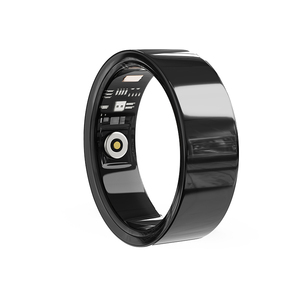
Turnkey OEM/ODM engineering solutions with complete hardware, custom firmware, low-power edge compute, and white-label mobile app integration.
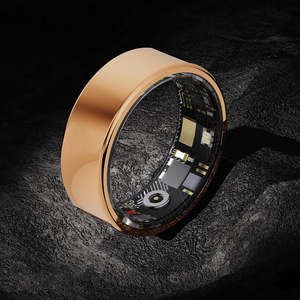
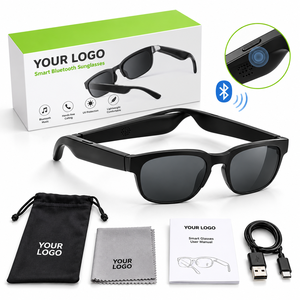
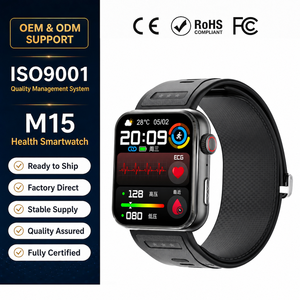
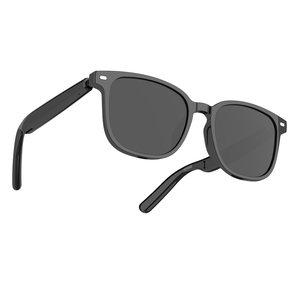
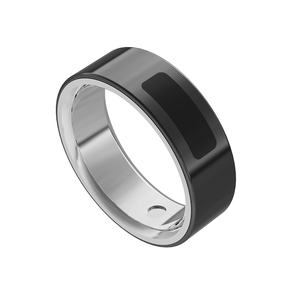
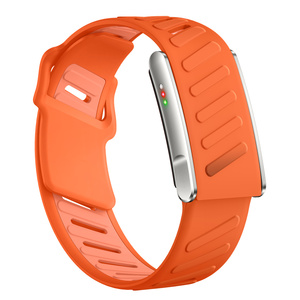
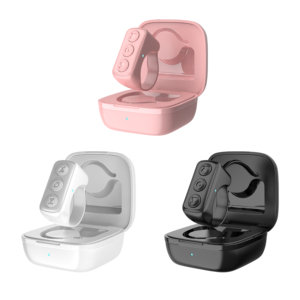
As the consumer electronics landscape transitions from handheld terminal interfaces to ambient spatial computing, AI smart glasses have emerged as the foundational hardware substrate for physical-world perception and contextual computing. Operating at the intersection of micro-display physics, edge computing algorithms, low-latency telecommunication protocols, and industrial ergonomic design, the commercial realization of high-yield AI smart glasses demands a radical departure from traditional smart wearable manufacturing. Shenzhen Yt Technology Co.,Ltc. leads this industrial transition through deep vertical integration, combining proprietary optical bench test protocols with automated high-precision SMT placement and advanced firmware engineering.
Moving beyond bulky prisms and curved combiner optics, modern AI glasses adopt surface relief gratings (SRG) etched on high-refractive-index glass wafers. This achieves over 85% ambient light transmittance, zero chromatic dispersion aberration, and eye-box illumination exceeding 2,000 nits for outdoor readability.
By coupling ultra-low-power neural processing units (NPUs) with low-quiescent-current Bluetooth 5.4 SoCs, modern systems perform on-device voice wake-up, real-time beamforming noise suppression, and preliminary tokenization before piping visual frames to cloud-hosted Large Language Models (LLMs).
Achieving ergonomic parity with traditional eyewear requires keeping mass under 45 grams. Our engineering integrates structural magnesium-aluminum alloys, high-density anisotropic conductive adhesive bonding, and distributed dual-battery architectures within the frame temples for optimal center-of-gravity balancing.
| Evaluation Parameter | Legacy Audio Smart Frames (Gen-1) | Monochrome Green Waveguide Glasses (Gen-2) | Multimodal AI Vision & Display Glasses (Next-Gen) |
|---|---|---|---|
| Optical Engine | None (Audio-Only Transducers) | Micro-LED + Diffractive Monocular Waveguide | Micro-OLED / Micro-LED Full-Color Binocular Waveguide |
| Luminance & Transmittance | Standard Lens Clear/Tint (100% / 15%) | >1,000 Nits / 80% Transmittance | >3,000 Nits Ambient Eye-Box / 85% Transmittance |
| Sensors & Input Methods | Capacitive Touch / MEMS Dual Mic | MEMS Microphones + 6-Axis IMU | Ultra-Wide FOV Camera + 9-Axis IMU + ToF Proximity |
| AI Computational Workflow | Passthrough Smartphone Voice Assistant | Edge Telemetry Tokenization + Basic Speech Prompt | Multimodal Vision-Language Model (VLM) + Cloud Orchestration |
| Battery Life & Weight | 8-10 Hours Audio / 35g-40g | 4-6 Hours Display / 42g-48g | Active Duty Cycle 3.5h, Standby 48h / 44g-52g |
Strategic risk mitigation, component lifecycle management, and localization benchmarks required for global consumer brand deployment.
Global procurement teams now reject locked proprietary ecosystems. Enterprise buyers demand fully documented Bluetooth SDKs, open Android/iOS libraries, and direct hooks into commercial AI backends (OpenAI GPT-4o, Anthropic Claude, and custom local models).
Procuring smart glasses embedded with visual sensors requires stringent compliance. Western enterprise and retail channels mandate hardware-level LED recording indicators, local memory ephemeral caching, and complete separation of raw biometrics from cloud telemetry.
To avoid massive tooling capital expenditure, procurement channels select proven internal PCBA and hinge architecture templates while completely customizing the outer front frame aesthetics, prescription lens adapters, and materials (TR90, titanium, or acetate).
Global consumer electronics distributors mandate rigorous reliability testing: salt-spray corrosion resistance, temple hinge 20,000-cycle endurance, drop impacts at 1.5m, thermal shock from -20°C to +60°C, and acoustic IPX4/IPX5 water ingress validation.
A battle-tested wearable hardware manufacturer with integrated research, automated manufacturing, and ISO 9001 certified quality control systems.
From initial industrial design (ID) and mechanical structural engineering (MD) to firmware logic, PCB layout, algorithm integration, and cloud-compatible mobile apps, our senior R&D engineering department handles every milestone under one roof.
Operating 8 modern assembly lines coupled with 2 high-precision automated SMT lines and over 100 skilled technicians, our Shenzhen facility reliably produces 300,000+ wearable units per month, supporting pilot runs to mass retail scaling.
We implement 28 rigorous inspection checkpoints across Incoming Quality Control (IQC), In-Process Control (IPQC), 100% Functional Testing (FQC), Environmental Stress Screening (OQC), and Final Outgoing Audit, suppressing defective output below 5‰.
Full compliance with CE (RED), FCC ID, RoHS, UKCA, REACH, and UN38.3 battery transport standards. Mutual Non-Disclosure Agreements (NDA) guarantee strict protection of all client-exclusive molds, tooling, and firmware.
Practical, engineering-grade clarity on production lead times, minimum order quantities (MOQ), intellectual property, and customization scopes.