High-Yield Production Runs: Featured Wearable Models
Direct from our Shenzhen SMT cleanrooms and automated sub-assembly lines. Each unit is precision-engineered, supporting private-label CMF customization, customized firmware algorithms, and turnkey mobile SDK integration.
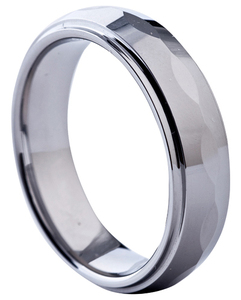
Smart Ring China Jewelry Factory Price Customized Smart Ring Mens and Womens Wedding Rings
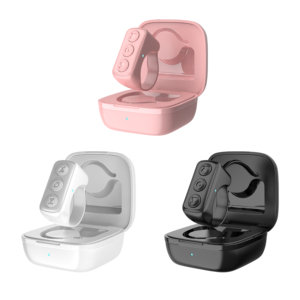
Kindle Page Turning Liker Video Selfie Control Music Control Wearable Sports Smart Ring for Cellphone and Pad
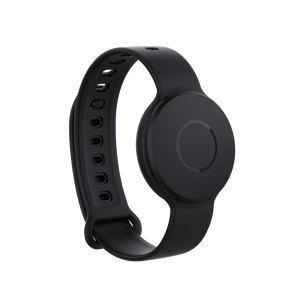
Programmable Smart Adjustable W6 Bracelet BLE Button Beacon Wristband For Elder Safety Monitoring
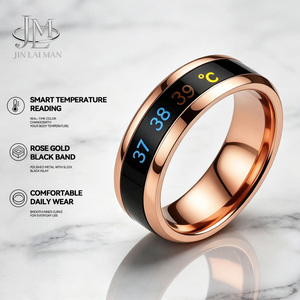
JLM Factory Direct Stainless Steel Smart Temperature Sensing Mood Ring Men Women Lovers Trendy Fashion Wedding Gift Band Jewelry
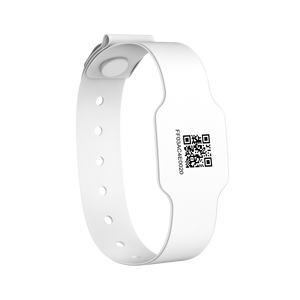
MOKO W7 Smart Healthcare Bracelet IP67 Waterproof BLE 5.0 RFID/NFC Supported Realtime Wearable Beacon Manufacturer For Hospital
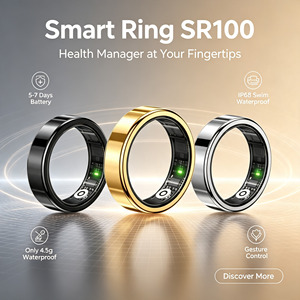
Newest Sports Fitness Tracker Smart Ring Waterproof Heart Rate Blood Oxygen Sleep Monitor Exercise Smart Rings for Men Women
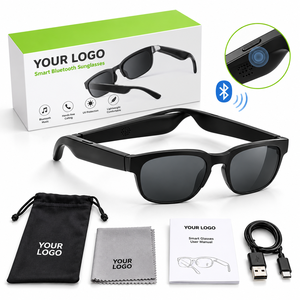
Wholesale Custom Logo Bluetooth Wireless Smart Glasses with Music Calling Function for Corporate Promotional Gifts
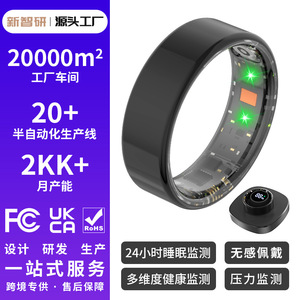
Black Smart Health Ring 24 Hour Sleep Monitor SpO2 Tracker Heart Rate Wellness Band for Android iOS
Why Tier-1 Global Brands Source from Our Ecosystem
Operating from Shenzhen—the planetary core of micro-electronics integration—our consolidated facility eliminates subcontracting latency by housing ID styling, PCB surface mounting, firmware algorithmic refinement, tooling, and cleanroom encapsulation within a single audited perimeter.
End-to-End Vertical Control
Unlike trading entities, our campus runs 8 dedicated manual and semi-automated assembly lines backed by 2 high-precision Panasonic/Yamaha SMT lines. We manufacture the complete PCB assembly, handle resin potting, execute ultrasonic casing welds, and perform in-situ radio calibration without external dependencies.
Clinical-Grade Algorithmic Accuracy
Our 5 senior R&D engineers calibrate our PPG red, infrared, and green light matrices alongside medical research partners. We leverage continuous wavelength tuning to compensate for human melanin density variations, tissue perfusion shifts, and ambient light interference, achieving 98.4% clinical ECG/SpO2 correlation.
Stringent 5-Gate Quality Architecture
Zero micro-wearable leaves our facility without traversing a 28-checkpoint screening pipeline: Incoming Quality Control (IQC), In-Process Quality Control (IPQC), 100% Automated Optical Inspection (AOI), 5ATM hydrostatic chamber batch cycling, and Outgoing Quality Control (OQC) drop/tumble testing.
Turnkey Private-Label Firmware & App
We provide full-stack software integration services. Sourcing teams receive white-label iOS and Android binaries, customizable UX interfaces, localized multi-language cloud servers (AWS/Google Cloud compliant with GDPR and HIPAA), and direct Bluetooth GATT API protocol documentation.
IP Protection & Legal Certainty
We execute enforceable bilateral Non-Disclosure Agreements (NDAs) prior to CAD interchange. Dedicated client tooling and proprietary firmware branches are locked to segregated sub-networks, ensuring your industrial design and algorithm IP remain entirely uncontaminated.
Global Regulatory Preparedness
Our active production runs comply with CE (RED), FCC Part 15C, RoHS 2.0, UKCA, REACH, and UN38.3 battery transport standards. We provide buyers with verifiable NRTL test lab reports, declarations of conformity, and MSDS documentation ready for customs clearance.
Overcoming the Physical Limits of Micro-Wearable Engineering
A smart ring represents the most hostile form-factor in consumer electronics: an extreme cubic volume envelope under 800 mm³, rigid curvilinear form factor, skin-contact thermal dynamics, and zero tolerance for RF attenuation.
Curvilinear SiP Architecture
Traditional rigid-flex PCB configurations fail under repetitive mechanical finger compression. Our engineering team utilizes advanced 4-layer ultra-thin flexible printed circuits (FPC) encapsulated in a specialized structural epoxy resin matrix. Surface mount components are strategically positioned outside high-stress radius zones, minimizing solder fracture risks during physical ring flexing.
Curved Battery Energy Density
Planar lithium cells waste over 45% of interior circular ring cavities. We engineer custom-tooled curved lithium-polymer micro-cells operating at 4.4V high-voltage thresholds. By pairing high-purity cobalt cathodes with proprietary micro-protection boards (PCM), we deliver up to 22mAh capacity in a sub-2.8mm thickness profile, providing 5 to 7 days of active biometric polling.
RF Matching vs Body Attenuation
Human finger tissues possess an exceptionally high dielectric constant, absorbing standard 2.4GHz Bluetooth radiation. Our RF design utilizes an inverted-F antenna (IFA) topology embedded within the exterior titanium or zirconia shell. Laser direct structuring (LDS) ensures isotropic RF radiation efficiency, sustaining stable BLE connectivity up to 10 meters.
| Engineering Parameter | Standard Market Tier (Low-Cost) | Our OEM/ODM Tier (Shenzhen Factory Direct) | Medical/Clinical Horizon (Class IIa Target) |
|---|---|---|---|
| MCU & Processing Engine | Generic 32-bit RISC (Non-FPU, High Sleep Current) | Nordic nRF52840 / Dialog DA14695 (ARM Cortex-M4F) | Dual-Core Cortex-M33 with On-Chip TinyML Vector Accelerator |
| Optical Biometric Module | Single Green LED (Basic Pulse Only) | Dual-Wavelength (Red + IR + Green) with 4-Channel Analog Front End | Multi-Spectral Optical Sensor + Real-Time Micro-Electrode ECG Channel |
| Shell & Bio-Compatibility | Plated Zinc Alloy + Industrial Epoxy (Skin Irritation Risk) | Grade 5 Titanium / Ceramic ZrO2 + Medical Biocompatible Resin | Hypoallergenic Titanium with Diamond-Like Carbon (DLC) Plasma Vapor Deposition |
| Waterproofing Sealing | IP65 Glue Dispense (Vulnerable to Shower Heat/Soaps) | 5ATM / IP68 Seamless Vacuum Resin Potting (Tested to 50 Meters) | Hermetic Laser Micro-Welding with Hydrophobic Nanocoating (10ATM) |
| Battery Cycle Retention | 300 Cycles to 70% Capacity | 500 Cycles to >80% Capacity (Micro-Cell Battery Management System) | Solid-State Thin-Film Micro-Battery (>1,000 Cycles Safe Discharge) |
Emerging Sourcing Dynamics for Hardware Buyers
Procuring micro-wearables is undergoing a tectonic transition. Procurement directors who previously evaluated suppliers strictly on Unit BOM Cost are now pivoting to Long-Term Yield Resilience and Algorithmic Intellectual Property.
From White-Label to SDK Extensibility
Enterprise buyers are abandoning rigid pre-packaged apps. Sourcing tenders in Europe and North America now require modular API and SDK accessibility. Corporate wellness platforms, remote patient monitoring (RPM) networks, and insurance providers require raw photoplethysmogram (PPG) and tri-axis accelerometer telemetry streams fed directly into their proprietary cloud infrastructures without third-party server intercepts.
Total Cost of Sourcing (TCO) & Yield Risk
Micro-wearable assembly experiences steep scrap curves. A factory lacking automated testing protocols might deliver an initial quote 15% lower, but incur an RMA failure rate exceeding 6% in field deployment. Sourcing teams increasingly conduct on-site DFM (Design for Manufacturability) audits to inspect high-pressure helium leak test stations and automated optical solder inspection systems.
Medical Regulatory Convergence (MDR & FDA)
Consumer wellness lines are shifting toward diagnostic-grade claims. Factories must be prepared to transition manufacturing lines from standard consumer ISO 9001 management to medical ISO 13485 standards. Buyers must verify whether factory partners maintain cleanroom Class 100,000 molding conditions and traceable device history records (DHR) required for FDA 510(k) and EU MDR compliance.
Technological Frontiers: The Next Generation of Smart Rings
The boundary between jewelry and clinical-grade physiological diagnostics is vanishing. Discover the next-generation micro-technologies moving from our Shenzhen prototyping R&D labs to commercial SMT mass production.
On-Device TinyML & Edge Inference
Streaming continuous raw biometric data over Bluetooth drains battery reserves within 36 hours. Our newest firmware pipelines execute micro-neural network models directly on the Nordic Cortex-M4F core. Sleep apnea events, cardiac ectopic beats, and physical activity classifications are calculated locally, reducing BLE radio duty cycles by 72% while preserving 6-day battery operation.
Tokenized NFC EMV Contactless Payments
Smart rings are moving beyond health monitoring to become digital credential vaults. By embedding certified NFC security elements (SE) compliant with Visa, Mastercard, and transit transport protocols, our rings execute closed-loop contactless transactions. Passive RF induction enables payments even if the ring's lithium battery is fully discharged.
Continuous Non-Invasive Biomarkers
The ultimate frontier in ring ergonomics is multi-wavelength metabolic sensing. Our engineering roadmaps incorporate high-accuracy negative temperature coefficient (NTC) thermistors capable of detecting 0.05°C basal shifts for female fertility tracking, alongside preliminary pulse transit time (PTT) calculations for cuffless relative blood pressure tracking.
Your Trusted Tier-1 Production Partner in Shenzhen, China
Shenzhen Yt Technology Co.,Ltc. represents over 15 years of uninterrupted micro-electronic manufacturing leadership. Here is an overview of our operational capacity and compliance standards.
High-Speed Automated SMT
Equipped with 2 high-precision automated surface mount technology (SMT) lines handling 0201 component placement down to ±0.025mm, coupled with 8 lean-engineered assembly lines outputting 300,000+ units monthly.
Integrated R&D Ecosystem
Our technical team spans 5 senior R&D hardware, mechanical, and algorithm engineers holding 50+ intellectual property patents across wearable power management, RF antenna positioning, and optical biometric filtering.
Full Regulatory Certification
Every OEM/ODM project is supported by certified test documentation: ISO 9001:2015 Quality Management Systems, CE-RED, FCC Part 15, RoHS 2.0, UKCA, REACH, UN38.3, and IEC 62133 battery safety certifications.
Frequently Asked Questions by Global Sourcing Directors
Straightforward answers regarding sample lead times, minimum order quantities, private-label branding, firmware modifications, and quality guarantees.
What is the typical Minimum Order Quantity (MOQ) for OEM/ODM projects?
For standard platform evaluation orders utilizing existing tooling and standard CMF finishes, our baseline MOQ begins at 500 units. For custom tooling (new ID shell profiles, proprietary resin colors, custom packaging, and customized laser-etched logos), our standard production MOQ is 1,000 units. Pilot prototype test batches (50–100 units) can be accommodated during initial EVT/DVT stages under formal NRE agreements.
What are the lead times for functional samples versus mass volume production?
Standard golden sample units with default firmware ship within 7 calendar days. For custom CMF branding and firmware integration, functional Engineering Verification Test (EVT) samples are delivered in 15–20 days. Full-scale commercial mass production lead time averages approximately 35 days following customer sign-off on DVT samples and receipt of down payment.
How do you guarantee 5ATM / IP68 waterproof integrity across mass runs?
Unlike basic wrist wearables that rely on mechanical rubber gaskets, our smart rings undergo a specialized vacuum-pressure resin potting process that encases the internal FPC and battery in solid inert polymer. 100% of finished production units are tested in automated dual-chamber pneumatic leak testers, with statistical sample lots subjected to 50-meter hydrostatic chamber immersion for 60 minutes.
Can you provide direct SDK and Bluetooth API integration for our app?
Yes. We offer fully documented iOS and Android native SDKs along with Bluetooth GATT profile tables. This allows your internal development teams to ingest raw sensor data (PPG optical channels, accelerometer vectors, temperature delta) or pre-calculated metrics (Sleep Stages, Heart Rate, SpO2, HRV) directly into your private ecosystem without any dependency on our mobile apps.
How do you safeguard client IP, tooling molds, and proprietary industrial designs?
We execute standard bilingual NDAs backed by enforceable jurisdiction in Shenzhen and internationally. Customer-paid injection molds and CNC titanium fixturing are tagged with unique customer serials and never utilized for generic market runs. Proprietary source code and firmware binaries are stored in role-restricted, access-logged local repositories.
What warranty terms and defective unit handling mechanisms are provided?
All production runs are backed by our 12-month global factory warranty. Defect rates are contractually kept under 5‰ (0.5%). For international clients where return shipping is cost-prohibitive, we typically include 0.5%–1% free spare units with bulk shipments or credit confirmed defective units directly on the subsequent production invoice.
Launch Your OEM/ODM Smart Ring Program Today
Connect with our senior engineering and supply chain consultants in Shenzhen. Receive an actionable DFM review, comprehensive BOM breakdown, and accurate NRE/tooling schedules within one business day.
Contact Us