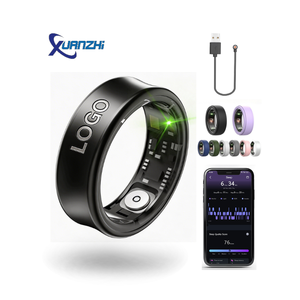
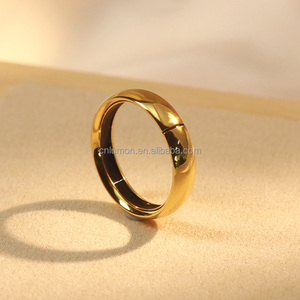
SHR OEM K3 AI Analysis Smart Ring
- AI Recovery & Stress Telemetry
- IP67 Structural Waterproofing
- Low-Power Microchip Integration
Direct production platforms customizable via full-stack ID/MD re-engineering, proprietary firmware injection, custom app SDKs, and global wireless certification.
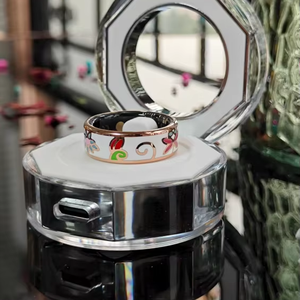
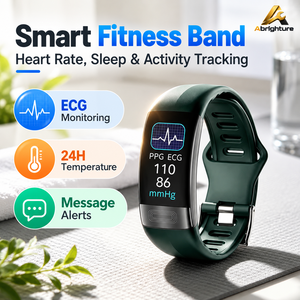
Strategic analysis for hardware product directors, consumer brand owners, and medical IoT procurement teams targeting the 2025–2030 manufacturing cycle.
The global wearable device procurement paradigm is moving rapidly from passive raw-data forwarding to On-Device Edge Computing. Procurement managers must evaluate factories not merely by casing assembly, but by their ability to deploy Neural Processing Units (NPUs) into ultra-low-power microcontrollers.
With localized deep learning models directly on STM32 or Nordic nRF5340 chipsets, devices execute real-time arrhythmia detection, sleep stage classification, and voice command isolation without relying on constant cloud connectivity, cutting latency and conserving battery life.
Smart ring architectures present the industry's most challenging mechanical and thermal constraints. Leading brands are prioritizing Tier-1 Chinese manufacturers with proven 3D Molded Interconnect Device (MID) and Rigid-Flex PCB micro-packaging capabilities.
Current sourcing demands require integrating red, green, and infrared optical sensors, peripheral skin temperature thermistors, and dual dry-contact ECG electrodes into a sub-2.8mm cross-sectional titanium or ceramic ring profile, all while maintaining skin contact integrity and IP68 waterproof ratings.
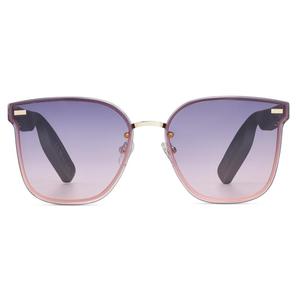
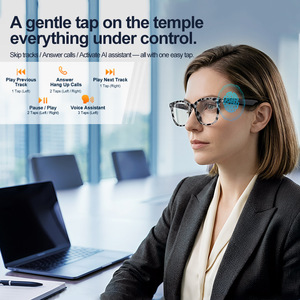
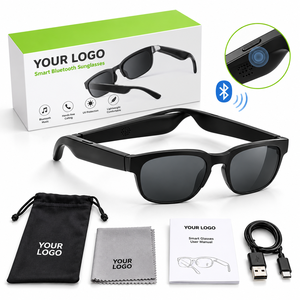
Audio-visual wearable hardware is replacing traditional eyewear lines. Enterprise buyers require factory-calibrated Waveguide Displays (MicroLED/MicroOLED) balanced with dual-cell temple batteries ensuring sub-45g total frame weight.
Advanced procurement mandates specialized microphone array calibration. We implement multi-axis directional acoustic beamforming with neural wind-noise suppression, enabling crystal-clear conversational translation across 144 languages even in 75dB noisy outdoor conditions.
How advanced material science, solid-state chemistries, and security layers are shifting the manufacturing competitive landscape.
Transitioning from traditional lithium pouch cells to curved solid-state batteries provides higher volumetric energy density, prevents thermal runaway, and unlocks reliable 10–14 day operational lifespans for ultra-thin wearables.
With HIPAA, GDPR, and ISO/IEC 27001 driving health data governance, our PCBA designs feature hardware Root of Trust (RoT), encrypted BLE 5.4 channels, and secure on-chip bootloaders protecting client data from intercept.
Next-gen development programs focus on photoplethysmography (PPG) algorithms detecting blood glucose index trends, continuous blood pressure (PWA method), and lactic acid exertion tracking without invasive transdermal punctures.
Integrating Grade 5 titanium, medical PEEK polymer, and hypoallergenic diamond-like carbon (DLC) coatings eliminates skin sensitization while delivering extreme tensile resilience against mechanical drops and saltwater corrosion.
Addressing core technical, compliance, production scale, and intellectual property queries for international B2B buyers.
For established architecture samples (functional white-label units), dispatch occurs in 5 to 7 working days. For complete turnkey ODM projects—encompassing ID sketch approval, CNC tooling, DFM verification, EVT/DVT, and customized packaging—initial validation samples require 25–30 days. Scaled mass production runs take approximately 35 days following customer sign-off.
We execute binding, multi-jurisdictional Non-Disclosure Agreements (NDAs) before examining client files. All engineering documentation, Gerber files, and proprietary algorithm firmware are isolated within dedicated project virtual local networks (VLANs). Proprietary tooling dies and injection molds remain the client's exclusive property and are never reused or shared.
Our facilities maintain full ISO 9001:2015 certification. Production hardware undergoes testing to secure CE (RED), FCC ID, RoHS, UKCA, REACH, and battery safety documentation (UN38.3, MSDS, IEC 62133). We collaborate directly with accredited laboratories like SGS and TÜV Rheinland to ensure compliant market clearance.
We offer comprehensive software stacks: low-level BLE/WiFi firmware protocol customization, OTA cloud update server integration, and full white-label or bespoke mobile applications (iOS/Android) published under your enterprise developer accounts. We also supply raw Bluetooth data communication SDKs for proprietary corporate platforms.
Our 28-checkpoint quality assurance protocol includes 100% Automated Optical Inspection (AOI) for all SMT PCBA runs, micro-X-ray inspection of BGA solder points, salt-fog corrosion testing, high/low-temperature thermal cycling (-20°C to 60°C), multi-axis drop reliability rigs, and waterproof helium pressure decay decay testing on each sealed ring and chassis.
Pilot trial runs with laser-etched custom logos and tailored master cartons begin at 500 units. Deep customization—including custom anodized shell colors, modified circuit layouts (PCBA), unique sensor arrays, and bespoke mobile apps—typically starts at 1,000 to 2,000 units, backed by an aggregate monthly capacity exceeding 300,000 units.
A transparent, milestone-driven development path from initial product definition to final global logistics.
Product requirement definition (PRD), microchip platform selection, component BOM costing, thermal tolerance mapping, antenna radiation pattern simulations, and target certification analysis.
Rapid CNC prototyping, precision PCB routing, surface mount high-speed pick-and-place, driver layer integration, biosensor tuning, and initial EVT (Engineering Validation Test) builds.
Hardened steel injection tooling, ultrasonic welding, IP68 environmental validation, DVT/PVT reliability runs, laser serial engraving, automated QC screening, and worldwide fulfillment.
Ready to initiate your custom smart wearable hardware program?
Contact Us