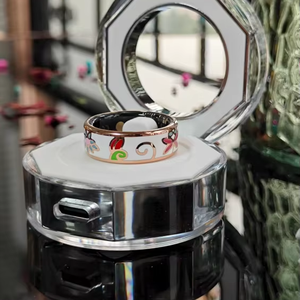
Product Catalog
Next-Generation Intelligent Wearable Platforms
Direct factory access to commercialized voice-enabled wearable hardware, health telemetry rings, and AI transcription gear engineered to ISO 9001 and CE/FCC/RoHS compliance standards.
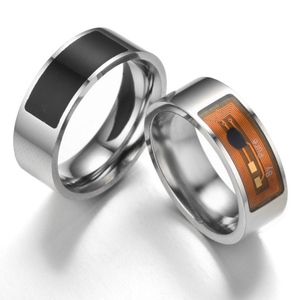
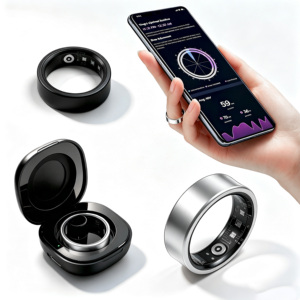
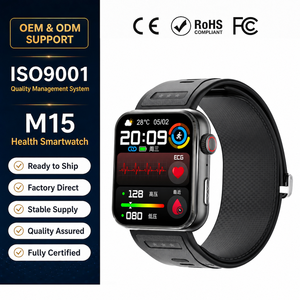
2009
Founded Year
50+
Active Patents
8+2
Assembly + SMT
300K+
Monthly Capacity
<5‰
Defect Rate
40+
Export Markets
Engineering Whitepaper
The Architecture of Voice Assistant Smart Glasses: Factory Insights
Analyzing acoustic waveguide design, contextual beamforming, near-zero latency wireless protocols, and AI large language model (LLM) edge computing in consumer smart eyewear.
Dual-Mic Acoustic Beamforming & ENC
Voice-driven smart glasses require exceptional Signal-to-Noise Ratios (SNR) in high-wind and crowded urban environments. Our Shenzhen SMT facility embeds dual-MEMS microphone arrays paired with environmental noise cancellation (ENC) algorithms running on ultra-low power DSPs. Acoustic chambers feature reverse phase leakage channels to eliminate private voice bleed-out while preserving natural stereophonic feedback.
Multimodal LLM & Edge Audio Inference
The convergence of on-device wake-word detection with cloud-tethered Generative AI transforms traditional audio glasses into contextual assistants. Through deep Bluetooth Low Energy (BLE 5.4) pipelines, our hardware bridges client apps with OpenAI GPT-4o, Anthropic Claude, or proprietary LLMs, supporting real-time cross-language whisper translation, dynamic meeting summaries, and spontaneous visual query parsing.
Power Density & Thermal Dissipation
Designing wearable audio temples under 38 grams necessitates strict structural thermoregulation. YT Smart Wear integrates split dual-battery configurations (110mAh to 180mAh per temple) enclosed in thermally conductive resin. Our custom power-management ICs (PMICs) ensure over 6.5 hours of continuous two-way voice streaming and up to 14 days of ultra-deep sleep with immediate tactile wake triggers.
Industry Forecast 2025-2030
Emerging Procurement Trends in Voice & AI Eyewear
Critical market shifts procurement officers, OEM brand developers, and consumer tech distributors must anticipate when negotiating contract manufacturing specifications in Southern China.
Convergence of Weight and Aesthetics (CMF)
B2B buyers are abandoning bulky, industrial plastic frames in favor of ultra-lightweight Swiss EMS TR90 memory plastics, aerospace-grade titanium inlays, and hypoallergenic ceramic bridges. Market success relies on the frame being visually indistinguishable from non-smart optical wear while concealing high-density micro-electronics.
Micro-Optical Heads-Up Display Hybridization
Voice-only smart glasses are increasingly functioning as modular platforms ready to upgrade to Micro-OLED and diffractive optical waveguides. Brands are securing flexible tooling capable of supporting monocular green text displays or full-color micro-projectors without redesigning fundamental temple molds and audio chambers.
Localized Privacy Compliance (GDPR & CCPA)
Procurement teams demand robust hardware-level killswitches for microphones, explicit LED recording indicators, and encrypted local memory. Hardware suppliers must deliver firmware compatible with independent cloud tenants, ensuring customer voice snippets are never parsed on untrusted external infrastructure.
Factory Credibility & Scale
Shenzhen Yt Technology: Your Trusted OEM/ODM Partner
Combining 15+ years of smart wearable production with vertically integrated SMT assembly, firmware algorithmic tuning, and end-to-end certification assurance.
01 / SMT & TOOLING
In-House Production
Operating 8 modern assembly lines and 2 dedicated high-speed SMT lines. Complete mechanical mold opening, DFM validation, and ultrasonic welding under single-roof supervision.
02 / PROTOCOL AGILITY
Turnkey App & Cloud SDK
We supply white-label iOS and Android client applications, complete with Bluetooth stack customization, custom audio wake-word flashing, and private server API integration.
03 / QC BENCHMARK
28-Gate Quality Assurance
From Incoming Material Inspection (IQC) to salt spray, optical alignment, drop testing, and RF anechoic chamber tuning, every batch preserves our verified defect rate below 5‰.
04 / GLOBAL ENTRY
Full Regulatory Clearance
Accelerate import turnaround with pre-tested CE, FCC, RoHS, and UKCA certifiable hardware layouts, backed by signed non-disclosure agreements (NDAs) to safeguard your IP.
Procurement FAQ
Frequently Asked Questions on Smart Glasses Sourcing
Real-world engineering, pricing, and fulfillment answers compiled by our international OEM sales and technical support divisions.
What is your standard Minimum Order Quantity (MOQ) for custom voice assistant smart glasses?
For existing, market-validated platforms with custom silkscreen logos and customized retail packaging, our MOQ starts at 500 units. For comprehensive ODM projects involving completely new industrial design (ID) molds, custom optical waveguide geometries, or proprietary PCB layouts, the standard initial run is 2,000 to 3,000 units following EVT/DVT sample sign-off.
How do you mitigate acoustic sound leakage in open-ear directional audio glasses?
We use dipole acoustic cancellation architectures. Micro-speaker transducers generate inverted phase audio signals routed via millimeter-precise relief vents situated on the outer temple. This significantly cancels acoustic pressure waves traveling outward into public surroundings while keeping the user's direct listening field crisp, rich, and confidential even at 70% volume.
Can your firmware directly support OpenAI GPT-4o voice APIs or custom enterprise cloud servers?
Yes. Our in-house software team provides full-stack SDK integration. The Bluetooth audio streams can be channeled via our companion app directly into WebSocket connections communicating with OpenAI Realtime API, Google Gemini, or your private cloud endpoints, delivering fluid speech-to-text, low-latency reasoning, and synthesized voice return.
What is the typical development cycle from CAD conceptualization to PVT mass production?
Standard functional prototypes on existing tooling take approximately 7 business days. Custom ground-up ODM projects require 25 days for ID/MD design and 3D mockups, 35 to 45 days for precision steel injection tooling and PCBA layout, and approximately 30 to 35 days for pilot production, reliability qualification, and final shipment clearance.
How do you ensure IP protection and firmware confidentiality for overseas brand clients?
We operate under strict bilateral Non-Disclosure Agreements (NDAs). Design files, optical configurations, and customized binary code repositories are segregated on secured internal networks accessible only by assigned project engineering leads. Proprietary mold tooling remains your company's exclusive property and is never shared, repurposed, or cataloged for public sale.
Launch Your AI Wearable Line Today
Connect with our Shenzhen engineering lead and commercial procurement teams for tailored BOM quotations, optical samples, and firmware customization consultation.