Industrial-Grade Smart Ring Hardware Portfolio
Explore our certified hardware architectures designed for high-end consumer wellness, biometric tracking, enterprise identity management, and ambient AI recording. All models support complete OEM/ODM branding.
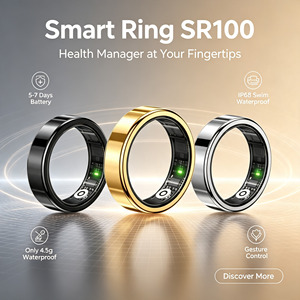
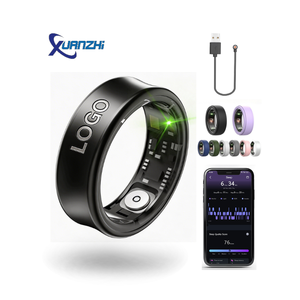
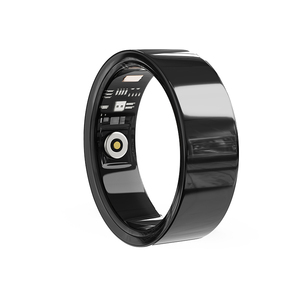
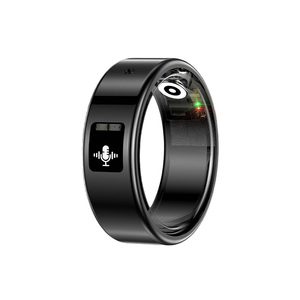
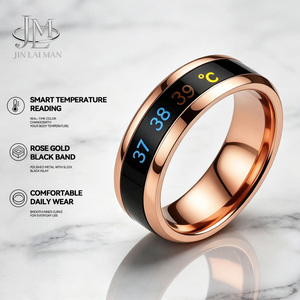
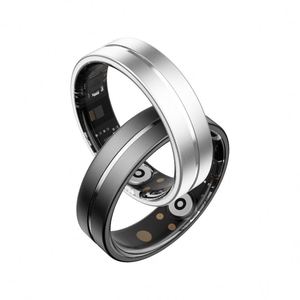
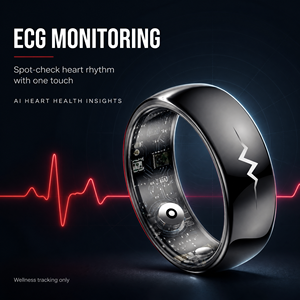
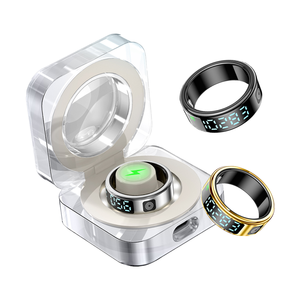
Waterproof Smart Ring Architecture: The Engineering Whitepaper
A rigorous examination of micro-hermetic sealing, low-pressure resin potting, dynamic fluid resistance, and biomedical-grade sensor integration for enterprise OEM/ODM sourcing.
The Hydrostatic Dilemma: Why Conventional Enclosures Fail in Smart Rings
In wrist-worn wearable electronics such as smartwatches and fitness bands, mechanical water resistance is traditionally achieved via elastomeric O-rings, liquid silicon rubber (LSR) overmolding, and sonic-welded ABS/polycarbonate bezels. However, in the ultra-compact circular envelope of a smart finger ring—where the total radial wall thickness rarely exceeds 2.5mm to 3.0mm—mechanical gaskets are unviable. Human fingers subject the chassis to constant multidirectional compressive torsion, skin-flexing forces, and direct thermal expansion from body heat. Under dynamic immersion (e.g., swimming strokes or pressurized shower streams), gasket seals experience microscopic shear displacement, leading to capillary water migration and catastrophic short-circuits across the lithium-polymer cell and ultra-dense printed circuit boards.
As a premier China top waterproof smart ring manufacturer, Shenzhen Yt Technology Co., Ltd. (YT Smart Wear) has resolved this core physics challenge by transitioning from legacy mechanical closures to advanced monolithic vacuum resin micro-potting. By embedding the 4-layer flexible printed circuit (FPC), optical photoplethysmography (PPG) sensors, Nordic or Ambiq low-power MCUs, and battery cell inside a solid matrix of medical-grade optical epoxy resin, micro-air voids are completely eliminated. This architecture withstands static hydrostatic pressures up to 50 meters (5ATM / ~0.5 MPa) and conforms to ISO 22810 standards, rendering the device entirely impervious to salt water, chlorine, sweat acidity, and high-velocity water ingress.
Vacuum Centrifugal Potting
Utilizing high-purity transparent epoxy cured under negative pressure (-0.098 MPa) inside a vacuum degassing chamber. This removes sub-micron air bubbles adjacent to optical lenses, preventing light refraction anomalies and structural failure under 5ATM pressure.
Dual-Shield Nanocoating
Application of a conformal pulsed plasma Parylene fluoropolymer nanocoating (50nm to 100nm thickness) directly onto the bare PCBA components prior to encapsulation. Delivers secondary chemical and moisture defense against galvanic oxidation.
ISO 10993 Biocompatibility
The inner potting resin and exterior chassis contact human skin 24 hours a day. All materials undergo cytotoxic, sensitization, and intracutaneous reactivity testing to guarantee 100% hypoallergenic compliance across varied global demographic profiles.
Waterproof Sealing Standards: Technical Verification Matrix
When evaluating suppliers in China for smart wearable procurement, brand engineers must differentiate between static water splash standards (IPX7/IPX8) and genuine dynamic hydrostatic resilience (5ATM). The table below outlines the testing protocols applied on our automated manufacturing lines in Shenzhen:
| Evaluation Parameter | Commercial Grade (IP67) | Advanced Fitness (IP68) | YT Smart Wear 5ATM Standard |
|---|---|---|---|
| Hydrostatic Pressure Rating | 1 meter (0.1 bar static) | 3 meters (0.3 bar static) | ✓ 50 meters (5.0 bar static) |
| Dynamic Water Movement | Unsuitable for submersion | Shallow pool immersion only | ✓ High-velocity swimming & surfing |
| Chassis Sealing Mechanism | UV Glue dispensing / Snap-fit | Perimeter ultrasonic welding | ✓ Monolithic vacuum resin potting |
| Charging Terminal Sealing | Exposed pogo pins with gasket | PVD coated pins + localized seal | ✓ Hermetic pogo / Qi wireless resonant coil |
| Helium Mass Spectrometer Leak Test | Random audit (1:500) | Batch AQL Level II sampling | ✓ 100% inline production testing |
| Thermal Shock Resistance | 0°C to 40°C (Rapid degradation) | -10°C to 50°C (Minor delta) | ✓ -20°C to 60°C (1,000 thermal cycles) |
Strategic Procurement & Technology Trends (2025–2030)
Where the global smart ring category is heading, and how hardware sourcing teams must adapt their BOM budgets, sensor roadmaps, and compliance protocols.
1. Sub-Millimeter Edge AI & PPG Array Integration
Legacy rings utilized single-wavelength green LEDs. The 2025–2027 procurement wave mandates multi-spectral sensor clusters (green, red, infrared, and ambient photodetectors) driven by neural processing unit (NPU) micro-cores. This yields continuous blood pressure trend detection, clinical sleep stage classification, and arterial stiffness indices directly on edge firmware without cloud dependency.
2. Contactless NFC & Digital Identity Tokens
Smart rings are moving beyond health monitoring into secure access tokens. Buyers are prioritizing integration of ultra-low profile NFC antennas embedded beneath micro-crystalline zirconia or titanium ceramic outer rings. This enables dynamic EMVCo-compliant payment handshakes, smart automotive entry (BLE + NFC CCC protocols), and enterprise dual-factor biometric access.
3. Aerospace Titanium & Liquidmetal Alloys
Consumer durability demands have driven alloy engineering. Pure stainless steel is giving way to Grade 5 Ti-6Al-4V titanium and amorphous liquid metal ceramics. These offer 300% higher strength-to-weight ratios, extreme scratch resistance via physical vapor deposition (PVD) diamond-like carbon (DLC), and zero magnetic interference with high-sensitivity magnetic charging docks.
Supply Chain Resilience & Component Lead Times: Sourcing directors must recognize that smart rings utilize curved solid-state lithium polymer batteries with micro-protective circuit modules (PCMs). These specialized cells possess narrow lead times and stringent shipping regulations under UN38.3, MSDS, and IATA Chapter 9 DGR. Partnering with a vertically integrated factory like YT Smart Wear ensures stable cell allotments, mitigating global supply crunches while guaranteeing verified UL1642 and IEC62133 battery safety compliance.
Enterprise Factory Strengths: Shenzhen YT Technology
Founded in 2009, Shenzhen Yt Technology Co., Ltd. operates state-of-the-art SMT and cleanroom assembly facilities designed specifically for miniaturized wearable electronics.
8 Assembly & 2 SMT Lines
Equipped with high-precision Panasonic and Yamaha surface-mount chip placers capable of handling 01005 passives and 0.35mm pitch ultra-fine BGA micro-controllers.
300,000 Units Monthly
Scalable manufacturing capacity across 100+ highly trained technicians, capable of rapidly transitioning from 500-unit pilot runs to massive volume deliveries.
50+ Proprietary Patents
Continuous investment in intellectual property covering structural waterproofing, low-power optical sensor calibration, antenna layout, and sleep algorithms.
Global Compliance Ready
Certified ISO 9001 quality infrastructure. Full compliance documentation provided for CE-RED, FCC ID, RoHS, UKCA, REACH, and California Prop 65.
End-to-End One-Stop OEM/ODM Customization Pipeline
Unlike trading intermediaries or assembly-only workshops, Shenzhen Yt Technology oversees every milestone in-house:
1. Industrial & Mechanical Definition: We assist brand clients in drafting tooling-ready 3D CAD models, ergonomic inner comfort bevels, and resin-flow gates.
2. Turnkey PCBA & Firmware Development: Customized algorithm integration for continuous heart rate, heart rate variability (HRV), blood oxygen saturation (SpO2), galvanic skin response, and circadian temperature rhythm mapping.
3. White-Label iOS & Android Ecosystem: Providing turnkey, fully customizable mobile applications with complete API/SDK data-bridge capabilities for private healthcare cloud integration.
4. Ironclad NDA IP Protection: Every project runs under confidential bilateral non-disclosure agreements with restricted internal network access and segregated production cells.
Waterproof Smart Ring Sourcing: Procurement FAQ
Direct technical and commercial answers addressing common engineering queries, quality metrics, and supply chain timelines.
Q1: What is the standard minimum order quantity (MOQ) for custom OEM/ODM rings?
For standard platform evaluation with customized laser logo branding and retail packaging, our MOQ starts at 500 units. For fully customized industrial design (new mold tooling, unique alloy housings, custom resin pigmentation, and bespoke PCBA layout), the typical pilot batch starts at 1,000 to 3,000 units depending on mechanical complexity.
Q2: How do you verify 5ATM waterproof capability during mass production?
We deploy a 100% two-tier inline verification method. First, every encapsulated core undergoes non-destructive dry air pressure differential decay testing to detect micro-channel leaks. Second, statistical batch lots undergo hydrostatic chamber testing submerged in pressurized water at 0.5 MPa (50m equivalent) for 60 minutes, followed by condensation thermal testing.
Q3: Can the smart ring firmware integrate with our proprietary mobile app?
Yes. We provide comprehensive Bluetooth Low Energy (BLE 5.0/5.2) SDKs and API documentation for both iOS (Swift/Objective-C) and Android (Kotlin/Java). We support complete raw data packet streaming (PPG plethysmogram waveforms, 3-axis accelerometer values) or processed biometrics (real-time BPM, SpO2 percentages, sleep cycle stages).
Q4: How does YT Smart Wear prevent battery degradation during storage and transit?
Our smart ring battery cells utilize high-stability electrolyte chemistry with ultra-low self-discharge rates. Firmware includes an automated "deep shipping sleep mode" consuming less than 1.5 microamperes (μA). This safeguards battery longevity, ensuring devices retain operational voltage after up to 9 months in warehouse logistics before initial user charge activation.
Q5: What is the sample lead time and production turnaround schedule?
Functional engineering samples from our standard platforms ship within 5 to 7 business days. For full ODM custom tooling, mold fabrication takes 25 to 30 days, EVT/DVT sample approval requires 10 days, and full-scale mass production is delivered in approximately 30 to 35 days following golden sample sign-off.
Q6: How do you handle ring sizing for international consumer markets?
We produce standardized US sizing from Size 6 through Size 14. We provide turn-key physical ring sizing kits for your retail brand, complete with identical inner circumference and sensor mockups, allowing end customers to identify their optimal ergonomic fit before product fulfillment.
Collaborate with China's Premier Wearable OEM/ODM Factory
Initiate your proprietary smart ring line with Shenzhen Yt Technology Co., Ltd. Speak directly with our hardware engineering team regarding your project definition, BOM pricing, and custom tooling roadmap.