Featured Smart Wearable & AI Optical Platforms
Standard, customizable, and white-label hardware architectures engineered in Shenzhen. Fully customizable PCBA layouts, CMF styling, proprietary firmware, and companion mobile apps.
The Engineering Reality of AI Smart Glasses: Architectural Paradigm Shifts
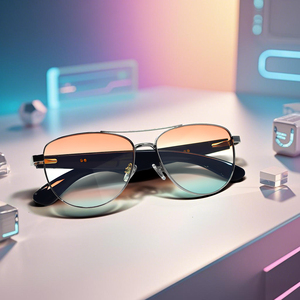
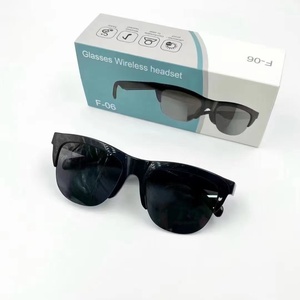
The global smart eyewear market is undergoing an unprecedented architectural migration. For international consumer brands, consumer electronics retailers, and tech startups sourcing through China wholesale channels, smart glasses have decisively evolved beyond rudimentary Bluetooth audio frames. Modern smart eyewear platforms integrate high-density multi-sensor arrays, edge artificial intelligence inference engines, micro-optical diffractive displays, and ultra-compact acoustics into form factors weighing under 45 grams.
As an established OEM/ODM manufacturing factory headquartered in Shenzhen, Shenzhen Yt Technology Co., Ltd. has stood at the center of this industrial evolution since 2009. Developing commercially viable AI smart glasses requires balancing uncompromising physical constraints: optical transmittance, ambient thermal dissipation, computational latency, and real-world battery endurance. Sourcing from genuine Tier-1 original design manufacturers (ODMs) is the single defining determinant between a prototype proof-of-concept and a commercially certified product ready for global distribution.
| Optical Architecture | Luminance & FOV | Power Consumption | Industrial Design Impact | Ideal Target Application |
|---|---|---|---|---|
| Diffractive Waveguide (MicroLED) | 1,500 – 3,500 nits | 25°–30° FOV | Sub-350mW (Monochrome/Bicolor) | Ultra-thin lens (1.6mm), near-standard spectacle profile | Enterprise Teleprompter & HUD AI |
| BirdBath (Micro-OLED) | 500 – 1,800 nits | 45°–52° FOV | 1.2W – 2.0W (Full Color Binocular) | Thicker optical engine; requires tinted outer sunglasses shield | AR Virtual Screen & Multimedia |
| Acoustic Open-Ear (Non-Display) | N/A (Spatial Audio Only) | 80mW – 150mW Continuous Audio | Indistinguishable from designer frames (<38g total weight) | LLM Voice Assistant & Live Translation |
| Camera-Enabled AI Multimodal | Optional Green Monocular / Audio | 500mW (Standby AI) / 2.2W (Encoding) | Bridge/temple integration of 12MP sensor with privacy LED | Visual Q&A, Meeting Minutes & First-Person POV |
Key Sourcing & Procurement Trends (2025–2030)
How global procurement directors and hardware product managers are shifting supply chain criteria to secure defendable margins and market dominance.
1. Edge-AI & Multimodal Cloud LLM Pipeline Integration
Procurement teams no longer source mere Bluetooth slave devices. Current high-growth RFQs demand onboard Whisper-level noise reduction paired with native zero-latency Bluetooth 5.4 LE Audio streaming directly into OpenAI, Anthropic, or DeepSeek cloud APIs via custom white-label iOS and Android client applications.
2. High-Density Dual-Cell Battery Architectures
Weight distribution determines consumer return rates. Modern ODM requirements distribute dual high-energy-density curved lithium cobalt oxide (LiCoO2) micro-cells across both temple arms (110mAh to 180mAh per side), maintaining optical center of gravity while yielding 8+ hours of intermittent speech translation.
3. Privacy Governance & Hardware Kill-Switches
With EU AI Act enforcement and North American consumer privacy standards tightening, enterprise buyers enforce mandatory physical shutter indicators, hardware-interlocked optical privacy LEDs, and zero-storage local RAM buffers to safeguard enterprise confidential discussions.
Technology Evolution: From Component Selection to Micro-Packaging
The smart glasses engineering landscape in China is accelerating toward extreme miniaturization. Silicon-level integration has enabled Bestechnic (e.g., BES2700 series) and Qualcomm (Snapdragon AR2 Gen 1) platforms to achieve sub-nanowatt sleep states alongside rapid-wake hardware voice activity detection (VAD). In our Shenzhen manufacturing plants, Surface Mount Technology (SMT) lines now regularly place 01005 passives alongside high-density 0.35mm pitch BGA microcontrollers on high-density interconnect (HDI) rigid-flex printed circuits.
Acoustically, the traditional challenge of sound leakage—whereby bystanders hear caller conversations—is eradicated via dipole dual-speaker configurations. By creating destructive phase cancellation around the temple perimeter, outward-radiated sound waves drop by over 24dB while direct-to-ear sound pressure levels remain pristine. For overseas private-label distributors, these mechanical refinements translate directly into premium commercial positioning, commanding higher retail price points and significantly lower warranty return rates.
Why Global Brands Partner with Shenzhen Yt Technology
Bridging industrial precision, certified ISO 9001 cleanroom fabrication, and dedicated Western-standard account engineering support since 2009.
Full-Chain Turnkey Engineering
Unlike trading intermediaries, Shenzhen Yt Technology houses Industrial Design (ID), Mechanical Engineering (MD), Hardware PCBA routing, embedded firmware coding, algorithmic noise cancellation, and private-label companion APP compilation under one unified engineering roof.
Strict Intellectual Property Shielding
We execute binding bilateral Non-Disclosure Agreements (NDAs) prior to receiving initial CAD or feature specifications. Engineering databases, CNC tool paths, injection tooling assets, and custom firmware sources remain isolated on compartmentalized private local network servers.
Global Regulatory Pre-Compliance
Every platform architecture is developed to clear rigorous regional regulatory thresholds: FCC Part 15 (USA), CE RED (European Union), RoHS 2.0 hazardous substance limitations, UKCA, REACH, and UN38.3 battery transport standards. Our factory maintains defect rates strictly below 5‰ across volume runs.
5-Gate Closed-Loop Quality Control Protocol
Wearables maintain continuous contact with human facial tissue and ear canals. Our factory enforces a multi-tier quality gate system from raw component warehouse intake to final container palletizing.
IQC Verification
100% incoming optical lens inspection, battery internal resistance matching, and resin purity testing.
SMT AOI & X-Ray
Automated Optical Inspection and 3D X-Ray BGA void analysis across high-speed component placement.
Semi-Assembly FQC
Acoustic frequency response sweep, RF power calibration, and touch-sensor capacitive sensitivity validation.
Reliability Lab
48-hour salt-spray fogging, 20,000-cycle temple hinge torque stress, and -20°C to +60°C thermal shock chambers.
OQC Outgoing Audit
MIL-STD-105E AQL Level II sampling, packaging drop test, and secure master shipping verification.
B2B Smart Eyewear Sourcing FAQ
Critical technical, commercial, and logistical inquiries addressed by our senior engineering directorate.
What is the standard Minimum Order Quantity (MOQ) for custom OEM and ODM smart glasses projects?
For our established tooling platforms (white-label OEM featuring custom laser-etched branding, bespoke CMF colors, customized packaging, and dedicated Bluetooth pairing string names), our baseline MOQ starts at 500 to 1,000 units. For complete custom ODM hardware developments involving proprietary industrial design mold creation, novel optical waveguide integration, and bespoke rigid-flex PCB configurations, the standard tooling threshold typically requires an initial pilot run of 3,000 to 5,000 units across an agreed annual rolling volume commitment.
How does Shenzhen Yt Technology handle AI firmware, API latency, and custom companion mobile apps?
We provide comprehensive full-stack software delivery. For hardware-level firmware, our engineers flash custom Bluetooth protocol stacks (supporting BLE 5.4, aptX Adaptive, LDAC, or AAC) with integrated wake-word detection algorithms. On the software application layer, we deliver turn-key white-label iOS and Android applications published under your developer accounts. Our SDK supports seamless webhook routing to global LLM providers (e.g., OpenAI Realtime API, Microsoft Azure Speech Services, or Google Gemini), delivering sub-800ms speech-to-translation audio output loops.
What are the standard sample development and mass production manufacturing lead times?
Off-the-shelf platform evaluation samples ship within 3 to 7 business days. Rapid 3D-printed aesthetic or functional CMF prototypes require approximately 14 days. For full custom ODM tooling, mold fabrication and T0 injection trials take 35 to 45 calendar days. Once the golden sample (PVT) sign-off is completed, full mass production cycles generally run between 30 to 35 days, depending on SMT schedule allocation and supply chain lead times for specialized micro-optics.
How are optical alignment and display calibration handled during cleanroom mass production?
Waveguide and MicroLED/Micro-OLED engine assembly occurs inside our certified Class 10,000 dust-free cleanrooms. Every unit undergoes automated 6-axis optical collimation, ensuring that optical projection axes precisely align with the human pupil inter-pupillary distance (IPD) baseline. Luminance uniformity, MTF (Modulation Transfer Function) resolution, and chromatic aberration are verified through calibrated high-speed CCD spectrometer measurement systems before temple arm potting.
What warranty, RMA terms, and after-sales support protocols do you offer overseas buyers?
We extend a comprehensive 12-month factory hardware warranty across all production lots. Sourcing partners may elect for either an agreed percentage of free-of-charge spare units (typically 1.0% to 1.5% extra buffer inventory shipped directly inside the commercial container) for immediate regional customer RMA fulfillment, or return-to-factory rework channels. Our dedicated engineering support desk responds within 24 hours to all firmware patching and SDK maintenance requirements.
Request an Engineering Evaluation & Custom OEM/ODM Quote
Connect directly with our senior hardware product directors in Shenzhen. Whether reviewing existing industrial design assets, evaluating optical waveguide feasibility, or requiring a certified BOM breakdown for your 2025 procurement pipeline, our factory engineering team delivers rapid turnaround.