Featured Smart Rings & Intelligent Hardware Series
Engineered for global consumer electronics distributors, telehealth platforms, and private-label fitness ecosystems. Each device platform supports complete CMF personalization, customized sensor configurations, SDK/API handoff, and branded packaging.
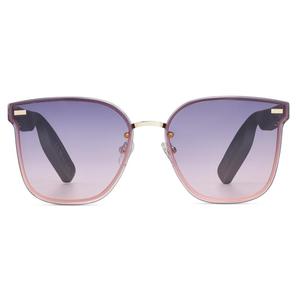
AI Smart Glasses for Shield Real Time Translation 144 Languages 4K Camera Wireless Audio Travel Business Learning
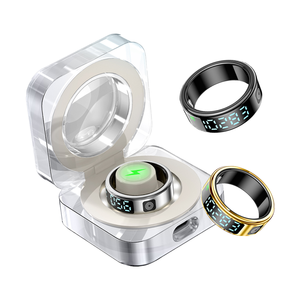
OEM Smart Ring with NFC Heart Rate Tracking Sleep Analysis Wellness Data Waterproof Design HR017
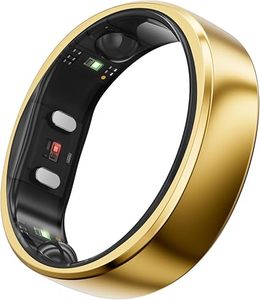
Smart Magnetic Charging Ring Health Fitness Activity Tracker with App Control Sleep Heart Rate Tracker Durable Alloy Case
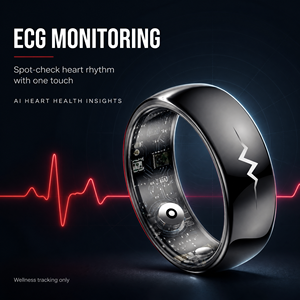
Smart Ring Health Tracker ECG Heart Rate Blood Oxygen Sleep Monitor Body Temperature 5ATM Waterproof Smart Rings
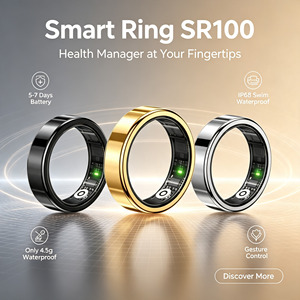
Newest Sports Fitness Tracker Smart Ring Waterproof Heart Rate Blood Oxygen Sleep Monitor Exercise Smart Rings for Men Women
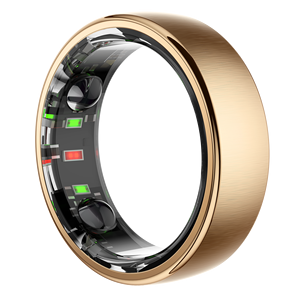
New Arrival Smart Health Ring RZ20 5ATM Waterproof Titanium Alloy App Control Wireless Charging Sleep Tracking Blood Oxygen
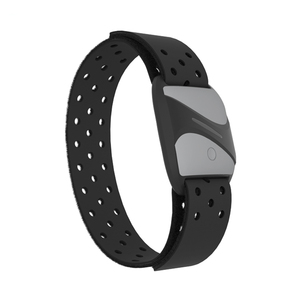
ODIER ODM OEM bluetooth Ant + Optical Armband Heart Rate Monitor Ip67 Waterproof Rechargeable Sensor for Cycling Running
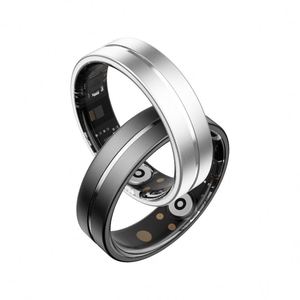
2026 New Trending Smart Ring TK7 Multifunctional Smart Ring Health Tracker Voice Touch Control Vibration Alert Support OEM/ODM
Shenzhen YT Technology: 15+ Years Direct OEM/ODM Manufacturing
Operating directly from the core of Shenzhen's high-density electronics corridor since 2009, Shenzhen Yt Technology Co., Ltd. consolidates embedded hardware development, high-density SMT mounting, custom epoxy resin potting, and certified biocompatible assembly within a single traceable facility.
Rigid-Flex SMT & Cleanroom Assembly
Smart rings demand extreme spatial compaction. Our internal SMT lines handle 01005 passives and ultra-fine-pitch BGA packaging on 4-layer flexible printed circuit boards (FPC) curved into circumferential form factors without trace micro-fractures.
- High-speed automated optical inspection (AOI) with X-ray BGA verification
- Class 10,000 ISO cleanroom sealing preventing sensor lens particulate occlusion
- Robotic dispenser precision for biomedical epoxy underfill and stabilization
5ATM Hermetic Encapsulation
Unlike conventional smartwatches relying on mechanical rubber O-rings, our smart ring manufacturing applies high-vacuum resin infusion and specialized low-temperature ultrasonic curing to achieve full monolithic structural integrity rated to 5ATM / IP68.
- Zero-cavity vacuum potting eliminates micro-bubbles and thermal cold-bridges
- 100% individual pressurized hyperbaric decay testing across all production batches
- Skin-safe, sweat-impervious medical-grade resin inner ring compliant with ISO 10993
Turnkey Algorithm & Private-Label SDK
B2B procurement teams receive complete firmware and mobile application stacks. Our senior embedded software team calibrates photoplethysmography (PPG) baseline compensation, motion artifact rejection, and autonomic nervous system (HRV) metrics.
- Whitelabel iOS and Android companion apps with custom UX, logo, and cloud integration
- Open REST APIs, Bluetooth GATT specifications, and secure Bluetooth pairing SDKs
- GDPR, HIPAA-ready encrypted data packet transit directly from device to cloud
Micro-Optics, Biometrics & Metallurgy Engineering
Understanding the engineering boundaries of micro-wearables is critical for consumer product managers and private-label buyers. Below is an exhaustive breakdown of the architectural layers engineered inside our OEM fitness tracking rings.
| Subsystem | OEM Factory Baseline Architecture | High-Tier Customization Options | Engineering Value & Compliance Target |
|---|---|---|---|
| Optomechanical Core (PPG) | Green (525nm) + Infrared (940nm) Dual-Wavelength Photodiode Array | Triple-Wavelength (Red 660nm + IR 940nm + Green) + Dual PD Differential Channel | Enables clinical-adjacent SpO2 pulse oximetry, continuous resting heart rate, and real-time HRV (RMSSD/SDNN) through dense digital capillaries. |
| Outer Armor Shell (CMF) | Aviation-Grade Titanium Alloy (Grade 5 Ti-6Al-4V) or 316L Surgical Stainless Steel | Nanocrystalline Zirconia Ceramic (ZrO2) with PVD or Diamond-Like Carbon (DLC) coating | Vickers hardness >1200 HV prevents daily abrasion while maintaining extreme RF permeability for internal omnidirectional BLE antennas. |
| Inner Enclosure (Skin Contact) | Medical-Grade Biocompatible Epoxy Resin, non-allergenic, optically transparent | Antimicrobial infused silicone or sculpted optical contour domes for arterial coupling | Complies with ISO 10993 cytotoxicity, sensitization, and skin irritation standards; contoured domes optimize signal-to-noise ratio (SNR). |
| Processing & Wireless SoC | Ultra-Low Power ARM Cortex-M4F MCU with Bluetooth 5.2 Low Energy Stack | Dual-Core Nordic nRF5340 / Dialog DA1469x with hardware cryptographic acceleration | Enables edge-computed sleep scoring, on-chip filtering of motion artifacts, sub-15uA deep sleep draw, and seamless Over-the-Air (OTA) DFU updates. |
| Thermal & Motion Sensors | High-Precision +/-0.05°C NTC Medical Thermistor + 3-Axis MEMS Accelerometer | 6-Axis IMU with dedicated edge pedometer engine + Differential dual-thermistor array | Continuous basal body temperature tracking for illness onset detection, female ovulation cycle prediction, and high-fidelity activity classifications. |
| Power & Energy Density | 14mAh to 22mAh High-Voltage Custom Curved Lithium-Polymer Cell (4.4V) | Fast-charge solid-state chemistry supporting 30-minute quick charge and 7-day runtime | Custom PCM circuit with dual over-voltage and thermal runaway cutoffs. Certified under UN38.3, IEC 62133, and UL 1642. |
Motion Artifact Cancellation (MAC)
The primary point of failure in low-cost smart rings is photoplethysmography noise during physical movement. Because the finger undergoes rapid positional shifts during typing, running, and grasping, raw optical signals degrade severely.
Our proprietary adaptive Kalman filtering algorithms cross-correlate optical deviations with concurrent 3-axis accelerometer vector data at 50Hz, canceling out baseline kinetic drift before data transmission.
Sub-Microamp Power Management
Housing a lithium cell inside an inner diameter between 16.5mm (US size 6) and 22.2mm (US size 13) limits battery capacity to 15–22mAh. Achieving 5 to 7 days of continuous monitoring requires meticulous firmware current budgeting.
By employing dynamic LED pulsing duty-cycles (switching from 25Hz active monitoring to 1Hz resting sleep modes) and deep SoC sleep states, our platforms achieve an average active current draw below 180μA.
Omnidirectional Ring Antenna Tuning
Surrounding a 2.4GHz RF radio with a conductive metal shell (titanium, stainless steel) naturally attenuates electromagnetic radiation. Our proprietary antenna design integrates the trace directly along the inner non-conductive medical resin boundary.
This spatial separation enables an isotropic radiated power efficiency exceeding -3 dBm, preventing Bluetooth disconnects even when the user's hand is inside a pocket or underwater.
Future Sourcing & Technology Trends in Smart Rings (2025–2030)
Global demand for smart rings is undergoing explosive growth, transitioning from a niche tech enthusiast accessory to a multi-billion dollar wellness and connected identity staple. Importers, brand creators, and enterprise procurement officers must align their product roadmaps with key manufacturing inflection points.
1. Screenless Wellness vs. Smartwatch Fatigue
Consumer fatigue regarding relentless wrist notifications, screen glare, and daily charging friction is driving mass consumer adoption toward unobtrusive form factors. The smart ring provides continuous, distraction-free biometric monitoring with an ultra-lightweight profile (under 4 grams).
- Substantially higher user sleep tracking compliance compared to bulky smartwatches
- Discreet form factor suited for formal wear, contact sports, and medical patient cohorts
- Extended battery cycles (5–7 days) dramatically reducing telemetry gaps
2. NFC Tokenization: Payments & Access Control
Next-generation procurement is moving beyond pure fitness telemetry. Leading enterprise buyers are ordering dual-function rings featuring passive secure element NFC chips embedded alongside the active biometric circuit.
- Contactless EMV payment tokenization functioning even when the active battery is depleted
- Encrypted door access control for corporate campuses, smart hotels, and automotive smart entry
- FIDO2 hardware-level authentication replacing SMS two-factor verification
3. Telehealth & Remote Patient Monitoring (RPM)
B2B insurance providers, hospital networks, and clinical trial sponsors are shifting from consumer-tier fitness gadgets to smart rings providing verified raw data feeds (PPG pulse plethysmogram curves, R-R intervals, and skin surface temperature deviations).
- Pre-symptomatic viral illness alerts based on continuous night temperature baselines
- Cardiovascular strain scoring (HRV) for corporate stress resilience and burnout prevention
- Direct FHIR/HL7 cloud compliance enabling instant integration with hospital EHR systems
End-to-End OEM/ODM Project Delivery Lifecycle
Our factory operates with transparent engineering gates. From initial industrial design to mass production ramp-up, buyers receive structured milestones, DFM feedback, sample validation, and strict non-disclosure protections.
Product Definition & DFM
Reviewing customer aesthetic requirements, target CMF (Titanium/Ceramic), sensor suite selection, sizing range matrix (US 6-13), target BOM costs, and international regulatory pathways (FCC/CE/RoHS).
Tooling, SMT & EVT
High-precision injection tooling for the inner medical resin carrier, CNC tooling for metal shells, flexible PCB layout fabrication, and pilot SMT mounting to build Engineering Validation Test (EVT) samples in 7–14 days.
DVT, Software & Compliance
Design Verification Testing (DVT): 5ATM hyperbaric pressure immersion, drop resistance, skin biocompatibility ISO 10993 assays, antenna field calibration, and branded companion app white-label build.
PVT & Mass Production
Production Validation Testing (PVT) on our automated lines, scaling to 300,000 units monthly capacity. 28-point automated QC gating, customized retail packaging assembly, and global freight forwarding.
B2B Procurement & Engineering FAQ
Direct answers to the most critical technical, commercial, and legal questions presented by international procurement directors and smart wearable product teams.
Initiate Your Custom Smart Ring OEM/ODM Project
Direct factory engineering consultation: request rapid physical samples, access our technical white-label application SDK documentation, or submit your industrial design files for comprehensive DFM (Design for Manufacturing) review and BOM cost breakdown.