Flagship Wearable Platforms & Intelligent Hardware
Engineered for international brand ecosystems: medical-grade sensor integration, micro-acoustic precision, and high-yield turnkey delivery.






Architecting Next-Generation Smart Glasses: Strategic OEM & ODM Engineering
The global wearable computing sector has reached an inflection point. Driven by multimodal artificial intelligence, edge speech recognition, and micro-optical breakthroughs, smart glasses are rapidly evolving from niche accessories into essential everyday cognitive computing interfaces. For international brand buyers, retail distributors, consumer electronics importers, and private-label enterprises, selecting a custom OEM private label smart glasses supplier requires moving far beyond basic catalog sourcing. It demands partnering directly with an advanced manufacturing facility capable of executing end-to-end hardware-software integration, precision micro-molding, and stringent thermal and optical quality control.
Operating from Shenzhen—the nucleus of global precision electronics—our facility has specialized in intelligent wearable hardware engineering since 2009. We bridge the critical gap between conceptual industrial design (ID) and high-volume mass production. By bringing Surface Mount Technology (SMT), automated firmware validation, structural tooling, and multi-checkpoint quality assurance under a single ISO 9001-certified roof, we empower global brands to deploy compliant, high-margin, and highly competitive wearable portfolios to international markets.
Product Recommendations: Tailored Platforms for Brand Commercialization
A successful private-label eyewear line depends on choosing the correct underlying architecture tailored to your specific end-market vertical. We recommend three core product configurations:

Ultralight AI Audio Smart Glasses
Engineered for all-day comfort with frames weighing under 36 grams. Features directional open-ear micro-speakers, dual-mic beamforming noise cancellation (ENC), Bluetooth 5.4 ultra-low latency audio, and direct voice trigger support for ChatGPT/Claude multimodal engines.

Monochromatic Waveguide Smart Eyewear
Utilizes ultra-high efficiency green micro-LEDs coupled with diffractive optical waveguides. Delivers crisp heads-up display (HUD) prompts for live bidirectional voice translation, turn-by-turn navigation, and teleprompter workflows without obstructing ambient sight.

Full-Color Binocular AR Smart Frames
Targeted at enterprise maintenance, remote medical consultation, and immersive multimedia. Incorporates dual high-resolution Micro-OLED projection optics, spatial audio tuning, integrated high-framerate image sensors, and hardware-accelerated computer vision processing.
Comparative Technical Specifications Across Platform Tiers
To assist procurement and technical teams during vendor evaluation, the table below highlights standard engineering parameters available across our customizable smart glasses chassis:
| Architecture Module | Voice & Audio Only (Tier 1) | Micro-LED Waveguide (Tier 2) | Binocular Micro-OLED AR (Tier 3) |
|---|---|---|---|
| Optical Engine | Non-optical / Standard Fashion Lenses | Monochrome Green Diffractive Waveguide | Full-Color BirdBath / Freeform Prism Optics |
| Acoustic System | Dual Linear Cavity + Dual ENC Microphones | Directional Waveguide Acoustics + Dual ENC | Spatial Audio Arrays + Quad Beamforming Mics |
| Processor & Connectivity | Ultra-Low Power Dual-Core BLE 5.4 SoC | Multi-Core RISC-V + Dual BLE/Wi-Fi Subsystem | AI Neural Processing Unit (NPU) + High-Speed SoC |
| Battery Life & Charging | 110-180mAh (8-12 hrs talk/play) / Magnetic Dock | 160-220mAh (5-8 hrs mixed usage) / Fast Dock | 280-450mAh (3-5 hrs active AR) / Type-C Charging |
| Target Frame Weight | 32g - 38g (TR90 / Titanium Alloy) | 42g - 48g (Titanium / Acetate Blend) | 58g - 72g (Magnesium-Aluminum Chassis) |
| Custom Software Support | Proprietary iOS/Android SDK & White-label App | HUD Translation Engine + SDK Integration | Custom Android Open Source Project (AOSP) + App |
Future Sourcing & Procurement Trends (2025–2028)
Procurement teams navigating the smart eyewear market must anticipate rapid technological shifts. Sourcing smart glasses today means laying a multi-year foundation for continuous brand growth. Our engineering directors have identified key purchasing and supply chain trends that will shape market leadership over the next 36 months:
- Consolidation of Open-AI Voice Assistants: Hardware is no longer isolated. Leading global buyers are specifying hardware configurations capable of low-latency direct API integration with centralized LLMs. Onboard memory and low-power wake-word DSPs are now mandatory procurement checklist items.
- The Demise of Heavy Industrial Aesthetics: Bulky, overtly computerized frames suffer from high return rates in consumer channels. Current sourcing focuses on hybrid CMF (Color, Material, Finish) combining memory titanium, high-grade Swiss TR90, and Italian bio-acetate to create frames virtually indistinguishable from designer prescription eyewear.
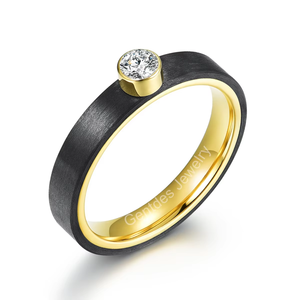
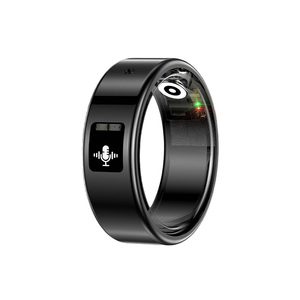
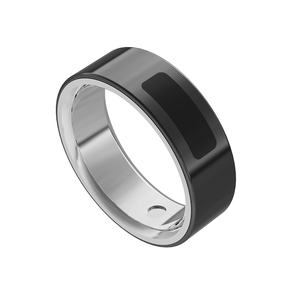
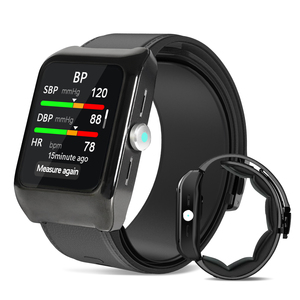
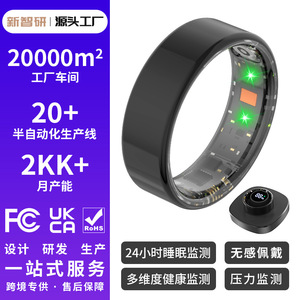
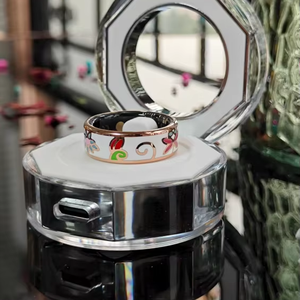
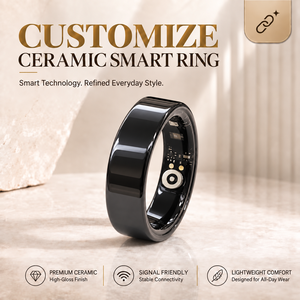
- Unified Sensor Fusion (Eyewear + Rings): Cross-device brand ecosystems are gaining commercial momentum. Enterprise buyers increasingly bundle AI smart glasses with companion health-tracking smart rings or smart earbuds, allowing cross-telemetry sync where eye tracking, heart rate, and ambient audio combine inside a single private-label app.
- Modular Hinge & Battery Replacements: To comply with evolving European Right-to-Repair mandates and eco-design directives, progressive OEMs are requesting modular temple arm connections that allow independent servicing of batteries and micro-optics without discarding the primary chassis.
Evolutionary Roadmap: From Bluetooth Accessories to Cognitive Ambient Nodes
Understanding the technological trajectory of smart glasses is essential to avoid investing in platforms facing imminent obsolescence. Smart eyewear has advanced through three distinct eras:
Generation 1: Passive Audio & Hands-Free Accessories (2018–2021). Initial market iterations were essentially wearable Bluetooth headphones mounted onto eyewear frames. They suffered from substantial acoustic leakage, short battery life, fragile hinge wiring, and poor water resistance.
Generation 2: Connected Sensors & Rudimentary Heads-Up Displays (2022–2024). Hardware began integrating optical waveguides, environmental sensors, and basic pedometer algorithms. However, high power consumption and limited third-party application support restricted use cases to basic notifications.
Generation 3: Context-Aware Multimodal Cognitive Wearables (2025 and Beyond). Today's advanced platforms act as intelligent agents. Integrating ultra-efficient micro-NPU processors, smart glasses analyze ambient audio and visual data locally while maintaining 10+ hours of operational battery life. Anti-sound-leakage reverse phase acoustic cavities guarantee crystal-clear calls and confidential voice queries in public environments.
Our One-Stop OEM/ODM Customization Process
We eliminate supply chain fragmentation by providing a structured 6-stage development process. Each milestone requires technical sign-off before progressing, ensuring total transparency, predictable delivery, and verified quality:
Enterprise Advantages: Why Global Tier-1 Brands Trust Our Supply Chain
With an established production legacy spanning more than 15 years, our factory delivers verified infrastructure capabilities that mitigate overseas sourcing risk:
- Full Vertical In-House Integration: While standard trading houses outsource assembly across disjointed workshops, we run both advanced surface mount lines (SMT) and dust-free assembly lines within our own Shenzhen facility. This unified control minimizes design compromises and speeds up engineering iterations.
- Proprietary Algorithm & Acoustic Engineering: Our audio lab utilizes artificial head simulators, anechoic test chambers, and RF network analyzers to refine directional acoustic waveguides. The result is superior bass performance with a 92% reduction in outward sound leakage compared to standard market offerings.
- Stringent Intellectual Property Protection: We operate under strict bilateral Non-Disclosure Agreements (NDAs). Customer-exclusive frame molds, industrial designs, firmware codebases, and custom application branding are protected in isolated development servers and never shared with third parties.
- End-to-End International Compliance: Every batch is engineered to satisfy global statutory regulations. We provide verified testing support and documentation for CE, FCC, RoHS, UKCA, REACH, and battery transport safety certifications (UN38.3, MSDS).
- Turnkey Private Label Customization: We offer laser-etched hinges, bespoke temple branding, custom audio prompt files (including multi-language voice packs), retail gift box packaging, and fully branded white-label iOS and Android companion applications.
Frequently Asked Questions: Smart Glasses Procurement & Manufacturing
What are the standard Minimum Order Quantities (MOQs) for OEM/ODM projects?
For existing base architectures with custom laser logos and custom packaging, MOQs start as low as 500 to 1,000 units. For complete custom tooling, bespoke frame ID, or custom optical waveguide configurations, our typical entry MOQ is 2,000 to 3,000 units depending on chassis materials.
How do you manage battery life and thermal dissipation in lightweight frames?
We utilize dual high-density lithium cobalt oxide cells distributed evenly across both temple arms, paired with ultra-low-power Bluetooth microcontrollers. Dynamic thermal throttling and copper foil heat-spreading prevent temple arms from exceeding ambient human skin temperature during extended calls.
Can you customize the companion mobile application with our own branding?
Yes. Our in-house software engineering team delivers complete white-label mobile applications for both iOS and Android. This includes your custom app logo, brand design system, cloud data synchronization, localized language packs, and custom firmware OTA (Over-The-Air) update servers.
What is the expected production lead time from prototype sign-off?
Functional EVT/DVT working samples are delivered within 7 to 15 business days. Once final golden samples and tooling are approved, mass production orders are typically completed and tested for final shipment in 30 to 35 calendar days.
Are prescription lenses (Rx) supported on your smart frame designs?
Yes. Our optical chassis designs incorporate standardized lens grooves and screw-fastening mechanisms. They fully support prescription lenses, blue-light blocking filters, polarized sun lenses, and transition photochromic lenses provided by professional opticians.
What reliability and quality testing protocols are applied to each production run?
Units undergo 28 distinct inspection checkpoints, including high/low-temperature operational cycling (-20°C to 60°C), salt spray corrosion testing, 20,000-cycle temple hinge durability tests, micro-drop shock evaluations, and 100% RF antenna calibration on automated test rigs.
Ready to Build Your Private Label Smart Glasses Line?
Consult with our engineering directors today. We review mechanical feasibility, Bill of Materials (BOM), optical options, and deliver a comprehensive OEM/ODM proposal within one business day.