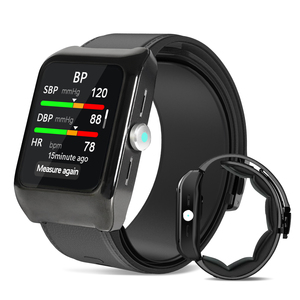
Precision Hardware Portfolio
Engineered Wearable Platforms & AI Vision Devices
Factory-direct turn-key production capabilities spanning micro-optical AR architectures, biomechanical sensory hardware, and smart connected nodes.
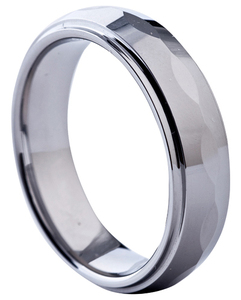
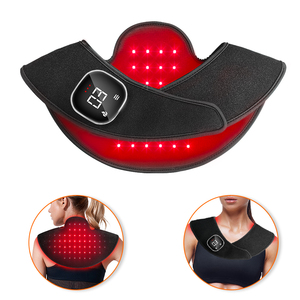
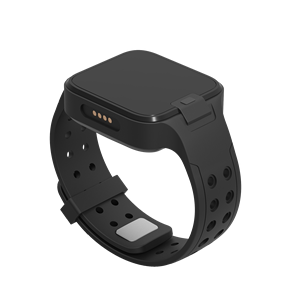
Strategic OEM/ODM Product Architecture for Brand Buyers
As consumer demand shifts from rudimentary audio-only eyewear toward context-aware, multimodal artificial intelligence wearables, Shenzhen Yt Technology delivers integrated hardware-software platforms engineered for extreme miniaturization, thermal equilibrium, and seamless edge-to-cloud telemetry. Our production ecosystem supports two major smart glasses tiers: lightweight daily-wearable AI audio-prompter frames and high-transmittance optical waveguide systems.
For brands targeting high-volume enterprise deployments, field technicians, or international executive consumers, selecting the appropriate sub-system architecture is vital. Our platform delivers ultra-low latency on-device automatic speech recognition (ASR), multi-lingual large language model (LLM) edge handshakes, and proprietary dual-beamforming ENC microphones that guarantee pristine voice acquisition in 85dB+ noisy ambient environments.
- Diffractive Optical Waveguide Modules (>85% Optical Transmittance)
- Dual Micro-OLED / Micro-LED Engines (Up to 3,000 Nits Luminance)
- Ultra-low Power Bluetooth 5.3 & Wi-Fi 6 Coexistence Architectures
- Biocompatible TR90, Aerospace Titanium, & Ceramic Form Factors
- Integrated IMU (6-Axis/9-Axis) for Spatial Head-Tracking UI
- Complete SDK/API for Private Cloud & Localized LLM Workflows
Procurement Intelligence
Future B2B Procurement Trends in AI Smart Glasses
Strategic hardware requirements reshaping OEM/ODM purchase orders through 2026–2030.
Total BOM Optimization via Heterogeneous SoCs
Procurement teams are moving away from multi-chip discrete circuit designs toward integrated ultra-low-power edge AI microcontrollers. This consolidation drastically reduces Bill of Materials (BOM) overhead, mitigates supply chain volatility, and guarantees 18+ hours of intermittent conversational AI operation.
Weight Neutrality Under 45 Grams
Consumer adoption hinges on all-day ergonomic viability. Procurement specifications mandate standard optical frame geometries weighing less than 45 grams, requiring advanced insert molding, flexible PCB (FPCB) routing inside titanium-memory temples, and split-cell battery balancing across both hinges.
Strict Regional Compliance & IP Partitioning
Global distributors demand turnkey certifications upfront. Commercial rollouts require full pre-compliance testing covering CE RED, FCC Part 15, RoHS 2.0, UKCA, and battery transportation safety standards (UN38.3, MSDS), combined with cryptographically secure firmware and non-disclosure IP firewalls.
Technology Horizon
Industry & Technological Evolution of AI Wearables
How the convergence of multimodal foundation models and silicon photonics is redefining intelligent eyewear.
Multimodal On-Device Vision & Semantic Voice
AI glasses are shifting from simple reactive audio devices into contextual prompters. Built-in ultra-miniature low-power camera sensors capture optical cues, feeding real-time visual streams to Vision-Language-Action (VLA) models for live document translation, facial recognition, and industrial telemetry.
Full-Color Geometric Waveguide Miniaturization
Monochrome green Micro-LED displays are transitioning to full-color RGB diffractive and geometric reflective optical waveguides. These advancements provide >85% ambient transparency with minimal light leakage, allowing users to view digital overlays under bright outdoor sunlight conditions.
Decoupled Sensor Fusion & Cross-Device Ecosystems
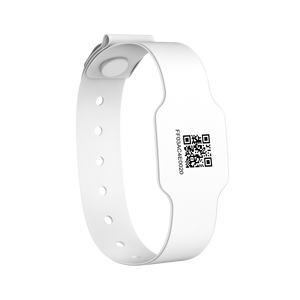
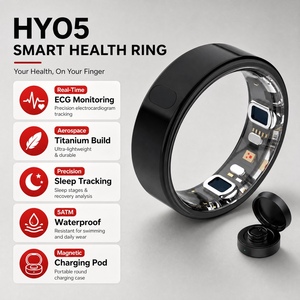
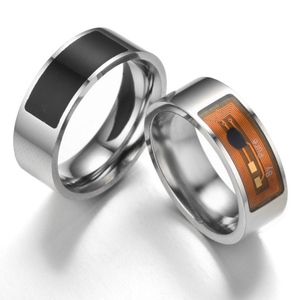
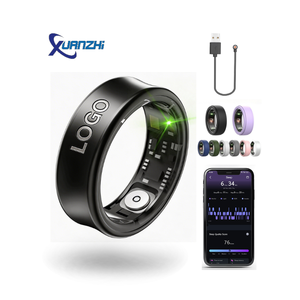
Smart glasses no longer function as isolated peripherals. Our engineering architectures bridge smart rings (for silent sub-gesture tracking and biometrics) with AI smart glasses and earbuds, yielding a holistic personal telemetry mesh operating via ultra-low-latency Bluetooth LE Audio.
Factory Strengths
Enterprise Manufacturing & Engineering Advantages
Shenzhen Yt Technology Co.,Ltc. delivers integrated, tier-one manufacturing capability backed by over 15 years of technical excellence.
End-to-End In-House R&D and Tooling
Eliminate costly subcontractor markups. Since 2009, our Shenzhen facility integrates ID industrial design, mechanical mold tooling, structural DFM, SMT PCB fabrication, firmware engineering, and private-label cloud APP customization under one accountable roof.
8 Assembly Lines + 2 High-Precision SMT Lines
Staffed by over 100 skilled technicians and guided by senior lead engineers, our plant outputs over 300,000 smart wearable units monthly. We seamlessly accommodate prototype engineering verification (EVT/DVT) up to mass seasonal scale.
Rapid Prototyping & Reliable Lead Times
Speed-to-market defines channel leadership. Standard functional verification samples are dispatched within 7 business days. Custom ODM toolings and pre-production validation batches transition into final mass delivery in approximately 35 days.
Five-Gate Quality Control (28 Checkpoints)
Operating under certified ISO 9001 quality management, our lines enforce Incoming Inspection (IQC), Process Control (IPQC), 100% Full Inspection, Environmental Reliability Testing, and Outgoing Quality Assurance (OQC), holding defect rates strictly below 5‰.
Robust IP Protection & Global Export Support
Every commercial engagement is safeguarded by strict NDAs and dedicated engineering sandboxes. We export to over 40 countries across Europe, North America, and APAC, backed by a 12-month global warranty and 24/7 technical customer support.
Procurement Knowledge Base
Frequently Asked Questions for B2B Importers
Crucial commercial, technical, and regulatory clarity to streamline your manufacturing evaluations.
Q1: Can you deliver private-label mobile applications for both iOS and Android?
Yes. Our software team delivers fully rebranded companion applications published under your enterprise developer accounts. We support custom UI/UX theming, custom Bluetooth UUID pairing, proprietary API cloud connectors, and persistent OTA (Over-The-Air) firmware update pipelines.
Q2: What are your Minimum Order Quantities (MOQ) for custom OEM and ODM orders?
For standard private-label branding (laser engraving, custom packaging, and firmware boot logo modification), our typical MOQ begins at 500 to 1,000 units. For full ODM engagements requiring custom industrial design tooling, structural molds, and custom PCB layout, initial project pilots start at 2,000 to 3,000 units.
Q3: How do your AI smart glasses handle audio privacy and sound leakage?
Our acoustic frames utilize directional dipole micro-speakers engineered with reverse sound phase cancellation cavities. This acoustic design focuses directional audio directly toward the wearer's ear canal while attenuating radiated sound waves, ensuring complete conversation privacy even in quiet office environments.
Q4: Which third-party LLM and AI translation engines are compatible with your firmware?
Our middleware architecture is engine-agnostic. We provide pre-configured integrations for major global LLM APIs, including OpenAI ChatGPT, Google Gemini, Anthropic Claude, and DeepL translation, alongside localized low-latency LLMs configured for regional telecom parameters.
Q5: What environmental and reliability tests are performed prior to mass shipment?
Every model passes rigorous laboratory stress tests including hinge flex fatigue testing (>20,000 cycles), high/low temperature operating storage (-20°C to 60°C), salt spray corrosion tests for sweat resistance, drop resistance tests (1.2m), and IPX4 to IP67 ingress protection verification.
Q6: How is intellectual property (IP) secured during custom mold design?
All toolings, 3D CAD geometries, Gerber files, and proprietary firmware code developed under custom ODM contracts remain the 100% exclusive property of the client. We enforce bilateral non-disclosure agreements, physically isolated mold storage, and strict supply chain non-compete clauses.
Start Your OEM/ODM Smart Eyewear Project Today
Connect with our senior hardware solutions engineers in Shenzhen for detailed DFM evaluations, BOM cost breakdowns, optical wave-guide simulations, and rapid prototype scheduling.