Industrial Portfolio Showcase
Featured Wearables & Optical Sensor Subsystems
Precision-engineered client devices ready for turnkey private-label OEM integration, embedded firmware flashing, and cross-platform synchronization with AR smart glasses.
2009
Established in Shenzhen
50+
Wearable & Optical Patents
8+2
Assembly & SMT Lines
300K+
Monthly Unit Capacity
Augmented Reality Engineering: Optical Engine & Waveguide Architecture
Developing production-grade Augmented Reality (AR) glasses presents an extraordinary micro-engineering challenge: balancing thermal dissipation, optical transmission efficiency, display luminance, eye-box dimensions, and all-day ergonomic mass distribution under 55 grams. As an established OEM/ODM manufacturer headquartered in the Shenzhen electronics innovation cluster, our core competency centers on solving this optical-mechanical-electrical trade-off for global hardware exporters and consumer electronics brands.
The optical engine serves as the heart of AR custom eyewear. Modern industrial procurement predominantly demands two architectures: MicroOLED with Geometric/BirdBath optics for high-resolution media consumption and virtual desktop projection, versus MicroLED coupled with Diffractive Optical Waveguides (Surface Relief Grating - SRG) for ultra-compact, sunlight-readable outdoor computing. Our fabrication facilities support both regimes, offering optical design optimization, zero-birefringence resin injection molding, and sub-micron automated active alignment (AAA) to minimize modulation transfer function (MTF) degradation.
From the computational perspective, our hardware architectures support tethered USB Type-C DisplayPort Alternate Mode (DP Alt Mode) configurations as well as standalone untethered spatial computing designs. Powered by edge-compute platforms such as the Qualcomm Snapdragon XR/AR series or low-power RISC-V and ARM dual-core MCUs for lightweight notification glasses, we engineer board-level designs with high-density interconnector (HDI) Any-Layer rigid-flex PCBs. These boards integrate 9-axis low-noise Inertial Measurement Units (IMU) running sensor-fusion algorithms at over 1,000 Hz, enabling 3DoF/6DoF orientation tracking with motion-to-photon (MTP) latencies clocked strictly below 15 milliseconds.
Micro-Optic Light Engines
Customized micro-display integration featuring high-yield silicon backplanes, MicroOLED arrays up to 4,000 nits, and high-efficiency green/RGB MicroLED light engines yielding sub-0.5cc optical engine volumes.
Diffractive Waveguide Etching
High-refractive-index glass substrates (n>1.8) paired with dual-layer Surface Relief Gratings (SRG) ensuring >85% eye-to-ambient light transmission and wide horizontal FOVs up to 40° without rainbow rainbow flares.
Acoustic & Thermal Synergy
Directional dipole open-ear micro-speakers with phase cancellation for privacy, dual beamforming microphone arrays with ENC, and graphite/aerogel thermal heat pipes mitigating temple heat build-up.
B2B Sourcing Intelligence
Optical Architecture & Display Selection Matrix
Compare commercial specifications to align your product definition with manufacturing feasibility, bill of materials (BOM) cost curves, and user experience requirements.
| Evaluation Parameter | BirdBath + MicroOLED | Diffractive Waveguide + MicroLED | Reflective Geometric Waveguide | Monocular HUD Prism |
|---|---|---|---|---|
| Primary Use Case | Cinematic Viewing, XR Workstation | All-Day AI Prompter, Navigation, Transcribe | Enterprise Field Service, Medical HUD | Industrial Logistics, Warehouse Picking |
| Optical Thickness | 12 mm – 16 mm (Bulky front) | 1.2 mm – 2.0 mm (Standard lens look) | 2.5 mm – 3.5 mm (Thin lens look) | 8 mm – 12 mm (Off-axis block) |
| Eye-Level Peak Brightness | 800 – 1,800 nits | 1,500 – 5,000+ nits (Daylight viewable) | 1,000 – 2,500 nits | 1,200 – 3,000 nits |
| Ambient Light Transmittance | 20% – 35% (Requires sunglasses tint) | 82% – 90% (True clear eyewear) | 75% – 85% (High clarity) | N/A (Off-axis glance) |
| Field of View (FOV) | 43° – 52° Diagonal | 28° – 40° Diagonal | 30° – 40° Diagonal | 15° – 20° Diagonal |
| Weight Target (Frames) | 65 g – 85 g | 38 g – 52 g | 50 g – 68 g | 45 g – 60 g |
| Tooling & NRE Investment | Moderate ($25K – $45K) | High ($60K – $120K) | High ($75K – $140K) | Low-Moderate ($18K – $30K) |
| Typical Mass Production Unit BOM | Competitive ($110 – $180) | Premium ($180 – $340) | Enterprise Tier ($220 – $420) | Cost Optimized ($65 – $115) |
Turnkey Engineering Methodology
The 6-Stage AR Glasses Hardware Lifecycle
Structured industrial execution from optical ray-tracing simulations to high-precision SMT assembly and Class 1,000 cleanroom optical bonding.
STAGE 01
Product Definition
Optical ray-tracing (Zemax), industrial ID, weight budget, and target BOM architecture.
STAGE 02
Mechanical (MD)
Ergonomic titanium/TR90 temple design, hinge fatigue modeling, and IP67 dust/water sealing.
STAGE 03
PCBA & Micro-SMT
High-density flex-rigid PCB layouts, 01005 component pick-and-place, and dual-mic beamforming audio.
STAGE 04
Cleanroom Bonding
Class 1,000 optical cleanroom active alignment (AAA) of waveguides, prisms, and micro-engines.
STAGE 05
Firmware & SDK
Custom BLE stack, sensor fusion calibration, FreeRTOS/Linux kernel tuning, and iOS/Android SDK delivery.
STAGE 06
Mass Scale PVT
Pilot verification testing, drop/vibration/thermal cycling, automated optical inspection (AOI), and global logistics.
Why Global Brands Partner With Us
World-Class Manufacturing Excellence in Shenzhen
Rooted in the global electronics epicentre since 2009, Shenzhen Yt Technology delivers integrated R&D, precision toolmaking, and high-throughput production lines.
In-House SMT & Assembly
Operating 8 standardized assembly lines and 2 ultra-high-speed SMT surface-mount lines equipped with Yamaha and Panasonic mounters, delivering a reliable monthly capacity exceeding 300,000 units.
50+ Hardware & Optical Patents
A specialized R&D engineering wing dedicated to optical path design, low-power biosensing architectures, antenna matching for Bluetooth 5.3/Wi-Fi 6, and miniaturized battery charging management.
Strict 5-Gate Quality Inspection
ISO 9001 certified quality infrastructure featuring 28 discrete checkpoints: incoming IQC, in-process IPQC, 100% functional OQC, MTBF environmental stress chambers, and cosmetic AOI keeping defects <5‰.
Strict NDA & IP Protection
Guaranteed confidentiality protocols. Proprietary tooling, firmware source trees, unique industrial casing forms, and client algorithms are isolated under enterprise firewalls and legal non-disclosure covenants.
Multimodal Sensor Ecosystem
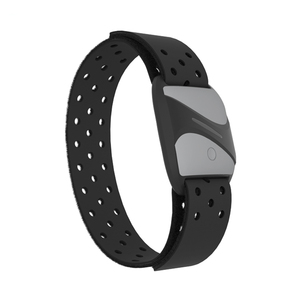
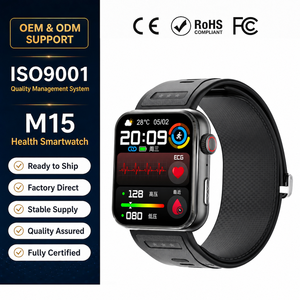
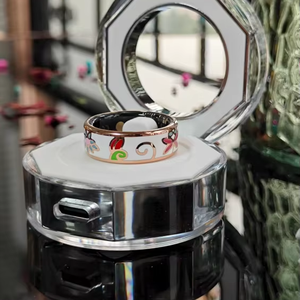
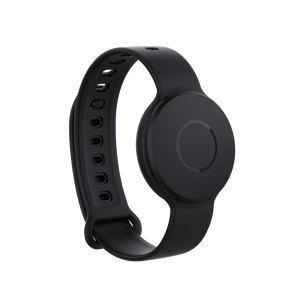
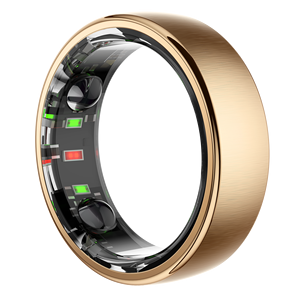
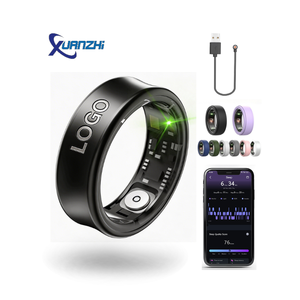
Beyond headwear, we mass-produce companion hardware including optical PPG heart rate armbands, titanium smart rings, and real-time posture monitors designed to act as unified AR interaction peripherals.
Global Regulatory Compliance
Full compliance readiness for rapid international market access, providing turnkey testing and certification support for CE, FCC, RoHS, UKCA, TELEC, REACH, UN38.3, and battery safety transport documentation.
AR Glasses Procurement Forecast & Technology Roadmap (2025–2030)
Strategic hardware procurement directors must anticipate shifting component lead times, emerging optical breakthroughs, and user interaction paradigms over the coming 3- to 5-year commercial window:
1. The Rise of Multimodal Edge-AI & Smart Voice Prompters: Early consumer AR failed due to excessive bulk, awkward aesthetics, and short battery life driven by heavy computational rendering. Sourcing patterns for 2025–2027 are unequivocally pivoting toward "Everyday AI Eyewear"—monochromatic or dual-color diffractive waveguide glasses equipped with local Whisper voice processing and micro-camera sensor suites. These models connect directly to cloud-based Large Language Models (LLMs) to provide real-time translation, situational summarization, and teleprompter workflows while consuming less than 180mW of operating power.
2. Full-Color MicroLED Maturation: While green-only MicroLED light engines currently dominate production due to superior quantum efficiency (yielding over 100,000 nits at the chip stage), full-color RGB MicroLED engines utilizing quantum-dot color conversion (QDCC) or monolithic vertical pixel stacking are expected to hit mass commercial pricing curves by late 2026. Sourcing teams should design flexible mechanical housings now to accommodate plug-and-play optical engine upgrades.
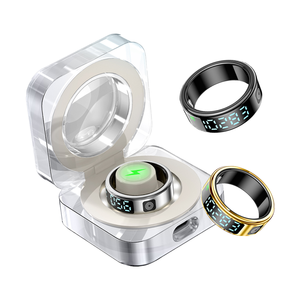
3. Micro-Ring Peripheral Synergy (Cross-Device Fusion): Input modality remains the greatest operational hurdle for glasses. Optical hand tracking requires hungry camera sensors that cause battery exhaustion and thermal throttling. As shown in our product lineup, tier-one brands are bundling custom smart rings (featuring IMU-based micro-gestures and capacitive touch pads) with AR headwear. The ring acts as an invisible, silent mouse cursor, enabling effortless scrolling, UI confirmation, and health metric overlay onto the AR display.
4. Prescription Lens Bonding Integration: Approximately 65% of the adult global target audience requires optical vision correction. Future-proof procurement requires ODM partners capable of direct resin optical bonding of prescription lenses (Rx) straight onto the waveguide surface, eliminating distortion rings, optical reflections, and dual-layer weight penalties.
Direct Engineering Clarity
Frequently Asked Procurement Questions
Essential technical, operational, and commercial parameters clarified directly by our engineering and supply chain directors.
Q1 What is the standard Minimum Order Quantity (MOQ) for custom AR glasses?
For standard white-label platforms utilizing existing tooling and verified optical engines, our pilot MOQ begins at 500 to 1,000 units with custom logo printing, packaging, and firmware splash screens. For completely customized ID/MD ground-up ODM projects requiring new optical mold tooling and custom flex PCBA, the initial production commitment is typically 3,000 to 5,000 units across scheduled release tranches.
Q2 What are the lead times for prototyping (EVT/DVT) versus mass production?
Pre-tooled standard evaluation samples ship within 7 business days. For customized ODM projects, Phase 1 (ID renders, optical simulations, and rapid 3D mockups) spans 2 to 3 weeks. Phase 2 (mold fabrication, SMT tooling, EVT working prototypes) takes 35 to 45 days. Following DVT approval and PVT qualification, mass manufacturing turnarounds require approximately 30 to 35 calendar days from BOM lock to shipment.
Q3 How does your cleanroom ensure zero defective pixels and waveguide clarity?
Optical alignment and bonding take place inside certified Class 1,000 cleanroom environments equipped with Class 100 laminar flow benches. We utilize 6-axis robotic automated optical alignment (AAA) systems that project test reticles through the waveguide to measure MTF resolution, distortion, chromatic aberration, and luminous uniformity across 9 inspection zones prior to UV adhesive curing.
Q4 Can your factory deliver customized iOS/Android companion APPs and SDKs?
Yes. Our internal software engineering wing comprises over 20 embedded and mobile developers. We provide white-label companion mobile applications on both iOS and Android, handling BLE pairing, Wi-Fi high-bandwidth data transfers, over-the-air (OTA) firmware updating, AI speech translation API hooks, and OpenXR-compliant developer SDKs with complete API documentation.
Q5 How is temple thermal dissipation managed to comply with skin-contact safety?
We strictly conform to IEC 62368-1 standards governing wearable touch temperatures (keeping temple surfaces below 41°C during continuous heavy usage). This is accomplished by decoupling the thermal hotspots: processors are located away from direct ear-contact zones, coupled with micro-graphite heat spreaders, boron nitride thermal pads, and ultra-thin aerogel insulation barriers embedded within the TR90 temple interior.
Q6 What IP testing and environmental reliability standards do your wearables pass?
Every mass-production batch is subjected to rigorous qualification protocols: 10,000-cycle temple hinge flexure tests, 1.2-meter tumbling drop tests, 96-hour salt-fog corrosion exposure, high-temperature/high-humidity chambers (60°C @ 90% RH), and optical immersion sealing tests achieving IP54 up to IP67 ingress protection ratings.
Q7 Can our brand integrate proprietary sensors or biosensing algorithms?
Absolutely. We frequently co-develop hardware integrating third-party optical PPG modules, continuous blood pressure sensors, EMG sensors, or proprietary eye-tracking algorithms. Our firmware team facilitates low-level driver porting, custom I2C/SPI bus integration, and flash memory allocation to ensure proprietary client intellectual property remains secure.
Q8 What export certifications are ready for North American and European logistics?
Our products are engineered to comply with CE (RED, LVD, EMC), FCC (Part 15B/15C), RoHS 2.0 (2011/65/EU), REACH, UKCA, and WEEE directives. Internal lithium-ion polymer batteries possess complete MSDS, UN38.3 test reports, and drop-shipping air transport certificates for frictionless international customs clearance.