Monthly Production Capacity
Wearable Technology Patents
Defect Rate Quality Control
Years OEM/ODM Engineering
Turnkey Hardware Platforms Ready for Private Label Customization
From green display heads-up optical engines to edge-AI multimodal sensor integrations, browse our mass-production platforms optimized for enterprise and consumer deployment.
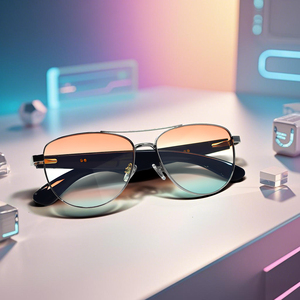
AI Smart Glasses - BT Audio, Photography & AI Translation
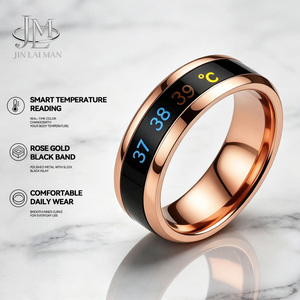
Stainless Steel Smart Temperature Sensing Ring
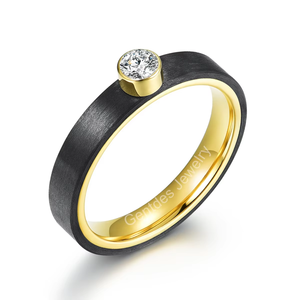
Titanium-Zirconium Carbon Fiber Precision Ring Chassis
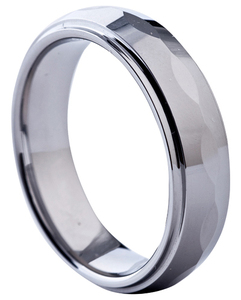
Customized Smart Health Rings (PPG/SpO2/Sleep Tracking)
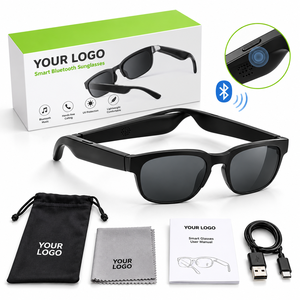
Open-Ear Directional Audio Smart Glasses Platform
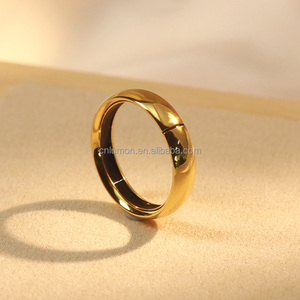
Smart NFC Embedded Titanium Ring (Ntag 216 Integrated)
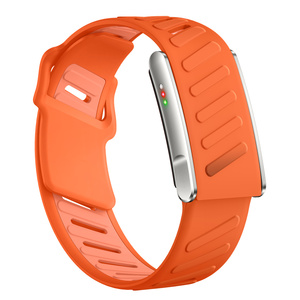
Screenless AI Biosensing Smart Band KR96
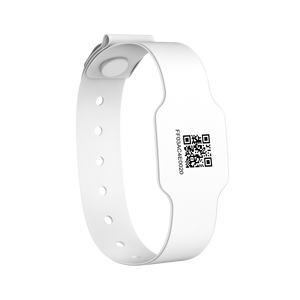
Healthcare BLE 5.0 Beacon & Tracking Bracelet
Why Monochromatic Green Display Leads Next-Gen Smart Eyewear
A rigorous review of human visual photopic sensitivity (V(λ)), thermal dissipation ceilings, and power consumption metrics in near-eye displays.
The Photopic Advantage: 525nm-532nm Peak Luminescence
In head-mounted and heads-up display (HUD) design, balancing optical transmittance, eye fatigue, and daytime readability is paramount. As established by the International Commission on Illumination (CIE), the standard human eye achieves maximum photopic luminous efficiency precisely at 555 nanometers. Monochromatic green micro-displays (operating in the 525nm–532nm wavelength band) align closely with this biological curve. Compared to red (630nm) or blue (465nm) emitters, green light requires up to 4.8 times less optical flux (lumens) to achieve an identical perceived brightness index in bright sunlight conditions.
For OEM/ODM hardware brands, this physical reality is decisive: an optical engine employing a 0.13-inch monochromatic green MicroLED paired with surface-relief diffractive waveguides can project upwards of 1,500 to 3,000 nits into the human eye pupil (the eye-box) while consuming less than 80 milliwatts (mW) of electrical power. Full-color RGB equivalents generally demand over 450mW to overcome waveguide diffraction losses, causing localized heat buildup that degrades battery longevity and violates thermal comfort limits (IEC 62368-1) for skin-contact wearable electronics.
| Architecture Parameter | Monochromatic Green MicroLED + Waveguide | Full-Color Micro-OLED + BirdBath Optical Engine | Monochromatic Red/Blue MicroLED Solution |
|---|---|---|---|
| Luminous Efficiency (Photopic) | 683 lm/W (Near Theoretical Peak) | 95 - 140 lm/W (High Absorption Loss) | 120 - 240 lm/W (Lower Eye Sensitivity) |
| Typical Power Dissipation (Engine) | 50mW – 110mW | 450mW – 1,200mW | 180mW – 350mW |
| Outdoor Contrast Ratio (>50k lux) | > 10:1 (Legible under noon sunlight) | < 3:1 (Severe washout without tinting) | ~ 5:1 (Moderate contrast loss) |
| Optics Weight & Thickness | < 3.5g per lens / 1.5mm thickness | 16g – 24g / 12mm – 18mm thickness | < 4.0g per lens / 1.8mm thickness |
| Ideal Application Vertical | HUD Navigation, Prompting, Industrial Telemetry | Immersive Spatial Video, Gaming, VR Immersion | Specialized Night Vision, Tactical Markers |
Thermal & Weight Optimization
By eliminating bulky polarization beam splitters (PBS) and active cooling channels, our green display frames weigh under 36 grams, identical to standard prescription eyewear.
Daylight Ambient Readability
Surface-relief diffractive gratings (SRG) etched directly on high-index glass achieve over 85% light pass-through, presenting sharp text without blocking user line-of-sight.
Extended All-Day Duty Cycles
Integrated with intelligent duty-cycling firmware and low-quiescent power management ICs (PMICs), our frames deliver up to 14-18 hours of intermittent HUD notifications.
Future Procurement Trends for OEM/ODM Smart Glasses (2025–2030)
Market intelligence and procurement vectors shaping international hardware contract manufacturing for wearable smart vision platforms.
Trend 1: Convergence of Local Small Language Models (SLMs) and Micro-HUDs
B2B buyers and Tier-1 consumer electronic brands are shifting from smartphone-tethered notification glasses toward autonomous Edge-AI vision platforms. By embedding low-power neural processing units (NPUs) into the temple core, our newer ODM architectures support on-device speech-to-text, context-aware whisper prompts, and instantaneous 40-language translations. The green display serves as the optimal low-overhead canvas: projecting immediate, heads-up micro-cards without distracting the wearer's focal depth or generating cognitive fatigue.
Trend 2: Rigorous Multi-Jurisdictional ESG and Supply-Chain Traceability
Procurement executives across the European Union and North America now demand compliance beyond CE and FCC. Regulatory mandates—including the EU Battery Regulation (2023/1542) on battery removability/recyclability, eco-design regulations, and strict PFAS chemical elimination—require suppliers to maintain traceable, audited manufacturing ecosystems. Our Shenzhen manufacturing lines operate on full lot-level ERP tracking with comprehensive RoHS and REACH documentation for all optical adhesives, resins, and lithium-polymer cells.
Trend 3: Industrial & Field Telemetry Overtaking General Consumer Hype
While broad consumer AR adoption scales steadily, enterprise logistics, aviation assembly, warehousing, and clinical field ops are deploying green-display smart HUDs at an accelerated rate. These environments prioritize uncompromised peripheral safety, high-contrast monochrome instructions (picking lists, schematic guidance, barcode verification), and rugged ingress certification (IP54 to IP67). Monochromatic MicroLED glasses meet these enterprise demands without requiring the dark visor attachments typical of color AR systems.
End-to-End OEM/ODM Manufacturing Capabilities
Eliminate multi-vendor friction. We deliver full lifecycle engineering from conceptual industrial design to high-yield Surface Mount Technology (SMT) and final cleanroom assembly.
Precision SMT & Cleanroom Assembly
Our dual SMT lines handle 01005 passives and ultra-dense flex-rigid PCBs (FPCBs) essential for temple integration.
- Class 1,000 Optical Alignment Booths
- 3D Solder Paste Inspection (SPI)
- Automated Optical Inspection (AOI)
Firmware, Algorithm & App Stack
In-house software engineers build the bridge between micro-display drivers, low-power BLE stacks, and private-label mobile apps.
- Custom SDK for iOS and Android
- Over-The-Air (OTA) Secure Firmware Upgrades
- Acoustic Echo Cancellation (AEC) Algorithms
Reliability & Stress Testing Lab
Every design undergoes stringent mechanical, environmental, and accelerated aging validations before mass tooling approval.
- 20,000-Cycle Temple Hinge Fatigue Tests
- High-Temperature & High-Humidity Chambers
- Salt Spray Corrosion Screening for PVD Coatings
Frequently Asked Questions for Sourcing & Engineering Teams
Direct technical and operational answers to streamline your qualification process and de-risk international hardware contracts.
Q1: What is the typical Minimum Order Quantity (MOQ) for custom OEM/ODM tooling?
For existing platform customization (logo laser engraving, CMF finishes, tailored packaging, and custom Bluetooth pairing naming), MOQ starts at 500 to 1,000 units. For complete custom ODM projects involving unique optical tooling, mold fabrication, and custom FPCB layouts, the baseline threshold is typically 3,000 to 5,000 units, supported by stage-gated EVT, DVT, and PVT sample phases.
Q2: How do you manage optical alignment yield and waveguide chromatic dispersion?
Diffractive waveguides require sub-micron optical alignment between the micro-projector collimating lens and the in-coupling grating. We utilize automated 6-axis robotic alignment fixtures within ISO Class 5 laminar flow clean benches. Every lens assembly is dynamically scanned using a high-resolution MTF (Modulation Transfer Function) tester to ensure edge-to-edge text sharpness and zero rainbow dispersion distortion.
Q3: Can green display glasses accommodate prescription (Rx) lenses?
Yes. Our industrial designs incorporate magnetic or screw-mounted Rx carrier inserts positioned behind the waveguide substrate. Alternatively, our higher-tier ODM platforms support precision bonding of prescription corrective blanks directly onto the outer protective glass, ensuring wearers with myopia or astigmatism experience crisp HUD visuals without focal conflict.
Q4: What international safety and radio frequency certifications are provided?
All platforms are engineered to satisfy global market access criteria prior to tooling sign-off. We provide testing documentation and accredited lab certifications for CE RED (Europe), FCC Part 15C (United States), UKCA (United Kingdom), RoHS, REACH, and battery certifications (UN38.3, IEC 62133, MSDS) for air/sea transport clearance.
Q5: What are the standard engineering sample and production lead times?
Platform reference samples are dispatched within 5 to 7 working days. Custom firmware and CMF cosmetic samples require approximately 15 to 20 days. Full ODM turnkey cycles (industrial design to first shots of injection tooling) span approximately 60 to 75 days, with steady-state mass production repeat orders delivering in 30 to 35 days.
Q6: How is intellectual property (IP) and proprietary firmware safeguarded?
We execute standard bilateral Non-Disclosure Agreements (NDAs) prior to receiving customer specifications. Custom tooling molds, proprietary firmware source code, and design schematics remain the sole property of the client, ring-fenced on air-gapped engineering servers to prevent cross-contamination across competing brand lines.
Initiate Your OEM/ODM Green Display Project Today
Engage directly with our Shenzhen optical and hardware engineering staff. Receive a comprehensive feasibility evaluation, Bill-of-Materials (BOM) cost breakdown, and rapid prototyping schedule within 24 hours.