Featured Smart Hardware & Connected Wearables
Directly integrated from our active SMT and automated assembly lines. Fully customizable across ID aesthetic, firmware stacks, PCB micro-architecture, and proprietary private-label companion applications.
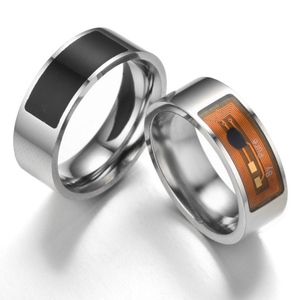
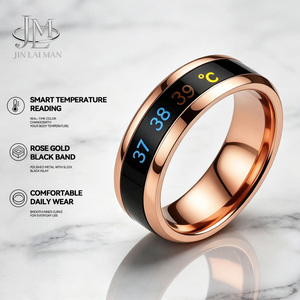
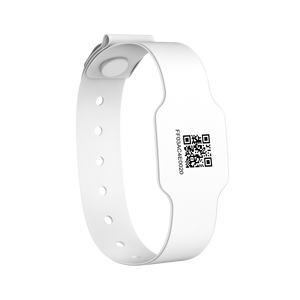
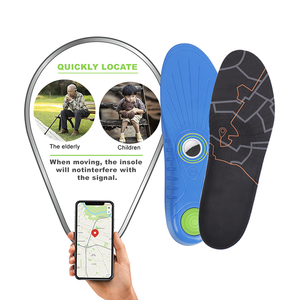
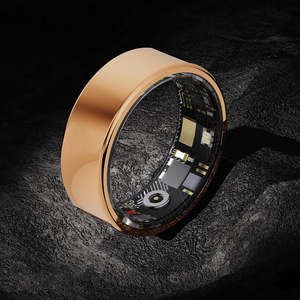

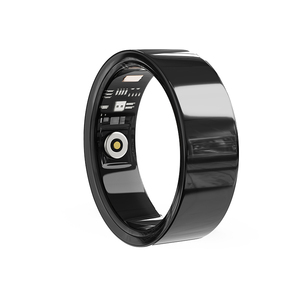
The Paradigm Shift: From Passive TWS Audio to Real-Time Cognitive Edge Hearables
The global personal audio landscape has breached the saturation ceiling of legacy Bluetooth True Wireless Stereo (TWS). Audio brands, enterprise hardware integrators, and consumer electronic conglomerates are rapidly migrating capital from commodity acoustic reproducers toward context-aware, multimodal AI earbuds.
In conventional TWS manufacturing, OEM evaluation centered almost entirely on acoustic diaphragm tuning (e.g., balanced armature vs. dynamic drivers), passive physical ergonomics, and baseline Bluetooth SBC/AAC streaming stability. By stark contrast, engineering an AI-native earbud demands an intricate synthesis of ultra-low-power DSPs (Digital Signal Processors), neural network accelerators (NPUs), dual-core or quad-core BLE 5.4 silicon (Qualcomm S7 Gen 1, BES2700, or Airoha AB1585), and sophisticated cloud-edge hybrid pipeline orchestration.
At Shenzhen Yt Technology Co., Ltd. (YT Smart Wear), our hardware R&D team addresses the quintessential hurdle in modern AI hearables: latency containment and power budget preservation. Standard cloud-dependent speech-to-text (STT) and large language model (LLM) inference cycles incur round-trip delays upwards of 1,200ms to 2,400ms—unacceptable for conversational simultaneous translation or situational voice navigation. By embedding on-device voice activity detection (VAD), neural beamforming algorithms, and edge-quantized acoustic tokenizers directly onto the micro-PCBA, next-generation AI earbuds slash end-to-end processing latencies below 380 milliseconds while preserving battery discharge cycles across 6 to 8 hours of uninterrupted operation.
Comprehensive Audit: Top 10 AI Earbuds OEM Factories & Exporters in China
For global procurement heads, hardware product managers, and consumer electronics distributors, identifying a legitimate manufacturing partner among thousands of coastal exporters requires transparent technical benchmarks. The following matrix benchmarks the top 10 manufacturing archetypes dominating the Chinese hearable and smart wearable sector in 2025.
| Manufacturer / OEM Category | Primary Edge & Focus Area | Core Silicon Ecosystem | Production Capacity | Export Accreditations | Customization Depth |
|---|---|---|---|---|---|
| 1. Shenzhen Yt Technology Co., Ltd. | Turnkey AI Hearable & Wearable ODM | BES, Qualcomm, Nordic, Airoha | 300,000+ Units/Mo | ISO 9001, CE, FCC, RoHS, UKCA | Full DFM, Firmware, Neural SDK, Private App |
| 2. Goertek Inc. | Mega-scale Tier-1 Tier Contract Brand OEM | Qualcomm, Apple Custom, Bestechnic | 15,000,000+ Units/Mo | ISO 9001, ISO 14001, IATF 16949 | High MOQ (>500k), Strict Architectural Gateways |
| 3. Luxshare Precision | Automated Assembly & SiP Packaging | Proprietary Apple H/W, Cirrus Logic | 12,000,000+ Units/Mo | Global Automotive & Tech Standards | Reserved for Multinational Technology Giants |
| 4. Edifier Technology Co. | Acoustic Precision & Planar Driver ODM | Qualcomm Snapdragon Sound, Savitech | 2,000,000+ Units/Mo | CE, FCC, RoHS, KC, TELEC | Strong Acoustic Focus, Medium AI Engine Agility |
| 5. Cosonic Intelligent Technologies | High-Volume Consumer Acoustic Export | Actions Technology, JL, Bluetrum | 3,500,000+ Units/Mo | ISO 9001, BSCI, CE, FCC | Cost-down High Volume, Fixed Tooling Modularity |
| 6. Grandsun Electronic | ANC & Environmental Noise Reduction | Qualcomm, BES, Realtek | 1,200,000+ Units/Mo | ISO 9001, RoHS, WEEE, FCC | Acoustic Tuning, Gaming Low-Latency Stacks |
| 7. Horn Acoustic Technology | MEMS Transducer & Microphone Integration | In-house MEMS Arrays, BES | 2,500,000+ Units/Mo | ISO 9001, ISO 14001, CE | Beamforming Hardware, Audio Subsystem OEM |
| 8. Cannice Technology | Sports Wearables & Ergonomic Hearables | Airoha, BES, Qualcomm | 800,000+ Units/Mo | CE, FCC, BQB, RoHS | Over-ear, Neckband, Waterproof Sports Shells |
| 9. Tongfang Health (Acoustics) | Health-Sensing Hearables & Biometrics | Nordic Semi, Goodix, BES | 500,000+ Units/Mo | MDR, ISO 13485, CE, FDA | In-ear PPG Photoplethysmography & Thermometry |
| 10. Lianchuang Electronics | Optical Integration & AI Smart Glasses/Buds | Qualcomm, MediaTek, BES | 1,000,000+ Units/Mo | ISO 9001, CE, FCC, RoHS | AR Visual Alignment, Cross-device Pairing Hubs |
While conglomerate conglomerates like Goertek and Luxshare service closed-loop balance sheets with half-million-unit MOQs, fast-moving mid-market enterprise brands require an agile ODM factory equipped with localized engineering agility, aggressive prototype-to-tooling speed, and flexible firmware customization. This is where Shenzhen Yt Technology Co., Ltd. (YT Smart Wear) captures commanding market authority, delivering deep full-stack execution from 1,000-unit pilot trial validation up to sustained 300,000+ monthly shipments.
Why Tier-1 Importers Select Shenzhen Yt Technology Co., Ltd.
Founded in 2009 and anchored in Shenzhen—the epicenter of global microelectronics hardware engineering—Shenzhen Yt Technology Co., Ltd. operates as a vertically integrated manufacturer specializing in smart rings, AI smart glasses, and AI real-time translation earbuds. We bridge the gap between abstract algorithmic requirements and robust industrial mass production.
Full-Stack In-House Engineering
We maintain our own dedicated Industrial Design (ID), Mechanical Engineering (MD), SMT layout, embedded firmware, and companion mobile APP teams. This consolidated operational matrix eliminates vendor finger-pointing and condenses product development cycles by 40%.
Industrial Production Scalability
Operating 8 specialized dust-free assembly lines and 2 high-precision automated Yamaha SMT lines staffed by 100+ skilled assembly specialists, we ensure rapid scaling up to 300,000+ units monthly with strict yield optimization.
28-Point QC & Global Compliance
Every batch passes an ISO 9001 audited, 5-gate testing regimen spanning IQC, IPQC, FQC, OQC, and environmental reliability (salt spray, drop, acoustic sweep). All platforms conform to CE, FCC, RoHS, and UKCA market directives.
Global Export Reach in 40+ Countries
Proven track record supplying brand holders, Amazon top-sellers, telecommunications operators, and distributor networks across North America, the European Union, Japan, Korea, and the Middle East with comprehensive NDA IP safety.
Private Label AI & Cloud API Porting
We don't just ship bare hardware. We provide turnkey bridge firmware supporting real-time translation across 144 languages and accents, integrating OpenAI, DeepL, Google Cloud Speech, and custom corporate LLM endpoints.
Defect Rate Controlled Below 5‰
By enforcing automated optical inspection (AOI), acoustic anechoic box test validation, and RF spectrum analyzer verification on 100% of finished goods, our field defect rate remains consistently below 0.5% globally.
Key Technological Trends Defining AI Earbud Hardware in 2025–2027
Hardware engineers designing next-generation hearables must account for rapid micro-architectural convergences. In-ear wearable devices are evolving from simple audio output channels into hyper-connected perceptual sensor nodes.
1. Multimodal Sensor Fusion in the Ear Canal Hardware Trend
The human external auditory canal presents one of the most bio-stable environments for physiological tracking. Modern AI earbud platforms integrate miniature reflective optical PPG sensors for continuous photoplethysmography (measuring arterial heart rate, HRV, and blood oxygenation saturation), alongside 6-axis IMUs (inertial measurement units) for real-time cervical posture analysis, fall detection, and head-gesture human-machine interfaces.
2. Hybrid Neural Noise Cancellation (Deep-Learning ENC) Acoustic AI
Legacy dual-mic beamforming relied on static geometric spatial differential filters, which break down in unpredictable turbulent wind or dense café babble. 2025 AI earbuds leverage low-power DNN (Deep Neural Network) noise suppression trained on hundreds of thousands of hours of acoustic noise corpora, isolating human vocal formants while consuming under 2.5mA of active current.
3. BLE Audio, LC3 Codec & Auracast Broadcast Protocol Trend
The widespread enterprise deployment of Bluetooth LE Audio and the LC3 (Low Complexity Communication Codec) allows 50% lower bitrates than classic SBC while substantially elevating acoustic fidelity. Crucially, the addition of Auracast enables broadcast audio sharing in public spaces, airports, and multilingual conference halls directly into the user’s AI translation channel.
4. Sub-400ms On-Device Edge Translation Pipelines AI Software
Instead of routing raw uncompressed audio to cloud servers, next-gen firmware employs on-chip acoustic feature extraction (MFCC/Filterbanks) combined with streaming zero-shot translation protocols. This decouples local conversational fluidity from cellular carrier signal drops, enabling smooth multi-party dialogue exchange in international transit scenarios.
Future B2B Procurement Trends: How Smart Brands Source Smarter
The economics of consumer hardware manufacturing require procurement executives to balance initial NRE (Non-Recurring Engineering) expenditures against long-term bill-of-materials (BOM) elasticity and regulatory risks.
1. Modular Tooling and Platform-Based Customization: Sourcing organizations are shifting away from entirely bespoke ground-up plastic injection molds for every SKU, which typically command $25,000 to $60,000 in upfront tooling costs and 12-week lead times. Instead, brands are choosing "platform architectures"—such as YT Smart Wear's proven acoustic enclosures and SMT carrier boards—and focusing their brand differentiation on proprietary CMF (Color, Material, Finish), customized tactile touch sensors, unique ceramic bezels, and private-label firmware/app skinning.
2. Strict Cybersecurity and Firmware Traceability Mandates: With the implementation of the European Cyber Resilience Act (CRA) and stringent US FCC equipment authorization rules, hearables with connected microphones and Bluetooth radios face extreme scrutiny regarding cloud data sovereignty and firmware backdoor vulnerabilities. Factory partners must offer signed secure-boot firmware, over-the-air (OTA) encrypted updates, and explicit user-data privacy compliance (GDPR/CCPA) that does not leak voice data back to unauthorized third-party relays.
3. Resilient Multi-Tier Component Sourcing: The memory and micro-controller shortages of past years demonstrated that tying an OEM line to a single proprietary SoC exposes brands to devastating supply chain halts. Sophisticated OEMs now design flexible PCB schematics that accommodate pin-to-pin compatible MCU alternates (e.g., Bestechnic to Airoha, or Nordic to Realtek), protecting shipment delivery dates against regional supply bottlenecks.
Technical & Sourcing FAQ for Procurement Directors
Granular answers addressing common contractual, engineering, certification, and quality assurance checkpoints.