Engineering-Grade Wearable & Smart Ring Solutions
Direct from our ISO 9001 certified manufacturing facilities in Shenzhen. Turnkey PCBA, multi-wavelength biometric sensing, and custom private-label integration ready for international retail.
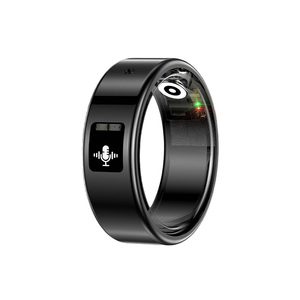
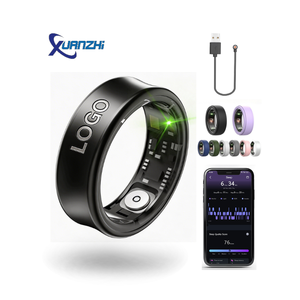
Top 10 Custom Smart Ring Exporters: Evaluation Framework
B2B procurement criteria for consumer electronics brand owners, medical distributors, and cross-border retail conglomerates.
| Tier / Exporter Profile | Primary Sourcing Region | PPG & Sensor Topology | Firmware & SDK Access | Minimum Order (MOQ) | Supply Chain Risk Factor |
|---|---|---|---|---|---|
| Tier 1: Integrated R&D Factories (e.g. YT Smart Wear) | Shenzhen, China | Multichannel Dual-wavelength PPG, NTC, 3-Axis IMU | Full API, Custom Bluetooth GATT, White-label App | 500 - 1,000 Units | Extremely Low (Direct Manufacturing Control) |
| Tier 1: Silicon Fab-Affiliated ODMs | Taiwan / Hsinchu | Proprietary Microcontroller + Integrated Biometrics | SDK Dependent on Licensing Royalty Agreements | 10,000+ Units | High Capital Commitment / Strict NRE Fees |
| Tier 2: Specialized Jewelry CMF Manufacturers | Dongguan / Panyu | Secondary outsourced PCBA drop-in solutions | Standard Turnkey App Only; Zero Firmware Customization | 2,000 Units | Medium-High (Sensor misalignment in casting) |
| Tier 2: Nordic Semi / Ambiq Ecosystem Integrators | Shenzhen Tech Corridor | Medical grade analog front ends (AFE) | Open-source core libraries; customer compiles | 3,000 Units | Medium (Software maintenance burden on buyer) |
| Tier 3: Export Trading Houses (Non-Manufacturing) | Hong Kong / Yiwu | Public Tooling standard components (mixed batches) | Restricted to pre-flashed off-the-shelf software | 100 - 500 Units | High (Zero hardware traceability, firmware drift) |
Wearable Paradigm Shift: Future Sourcing Trends
How edge AI inference, metabolic tracking, and solid-state power systems are redefining smart ring technical specifications for 2026-2030.
Continuous Non-Invasive Metabolic Analytics
While second-generation rings stopped at simple pulse oximetry and baseline heart rate, future market winners are sourcing custom optical paths capable of analyzing peripheral vascular elasticity and dynamic pulse transit time (PTT) for cuffless blood pressure estimation. Factory alignment of photodiode geometry has shifted from planar mounting to radially curved conformal flex PCBs to eliminate optical shunt noise.
High-Density Solid-State Micro-Batteries
Lithium-polymer cells remain the primary bottleneck in smart ring longevity, degrading below 80% capacity within 400 charge cycles. Progressive B2B buyers are negotiating ODM production lines integrating curved solid-state lithium ceramic cells (SSBs). These deliver up to 380 Wh/L volumetric energy density, survive IP68 hot-water immersion testing, and withstand extreme thermal variations without outgassing.
Edge AI & Local Ring-Level Gesture Inference
Transitioning from cloud-dependent raw data upload to local tinyML processing. Modern chip architectures allow 8-bit quantized neural networks to run micro-gesture recognition directly inside the MCU with sub-milliamp power consumption. Exporters who provide complete SDK access for proprietary gesture control (snapping, swiping, rotational scrolling) will dominate downstream enterprise sales.
300,000+
Monthly Unit Capacity
50+
Proprietary Wearable Patents
< 5‰
Target RMA Defect Tolerance
40+
Global Sovereign Markets
Shenzhen Manufacturing Infrastructure & Control
Since 2009, Shenzhen Yt Technology Co.,Ltc. has eliminated intermediate markup and supply chain opacity by co-locating industrial tooling, rapid prototyping, SMT component placement, and ISO 9001 certified clean-room assembly within a single consolidated ecosystem.
2 SMT High-Speed Lines
Micro-placement down to 01005 passives and 0.35mm pitch WLCSP chipsets.
8 Clean-Room Lines
Epoxy potting, optical prism sealing, and vacuum waterproofing verification.
Full CMF Capability
Titanium Grade 5, aero-grade ceramic (ZrO2), and surgical 316L finishing.
In-House Firmware & APP
Dedicated engineering teams for custom Bluetooth GATT services, BLE security, and iOS/Android deployments.
Verified Procurement Lifecycle Safeguards
Sourcing custom electronics overseas carries tangible risks of intellectual property compromise, battery lot failure, and unannounced silicon component obsolescence. YT Smart Wear safeguards institutional clients via strict operational mandates:
- • Pre-engagement mutual Non-Disclosure Agreements with IP escrow option.
- • 100% Traceability via laser-etched serial micro-matrixing inside every ring shell.
- • Complete CE (RED), FCC ID, RoHS, REACH, and UN38.3 regulatory clearance packs ready for customs clearance.
- • 12-Month international replacement warranty on all mass-production lots.
Smart Ring Procurement Frequently Asked Questions
Technical, logistical, and legal considerations addressed directly by our chief engineering and export compliance personnel.
What is the standard tooling lead time for a custom smart ring industrial design (ID)?
For standard modifications on our pre-certified internal platforms (altering outer shell aesthetics, engraving, titanium PVD coatings), tooling modifications take approximately 15 to 20 working days. For ground-up ODM developments requiring novel interior optical lensing, battery mold creation, and waterproof ultrasonic welding channels, tooling and DVT (Design Verification Testing) samples take between 35 to 45 business days. Pilot runs (PVT) begin immediately upon physical sample sign-off.
How do you achieve reliable 5ATM / IP68 waterproofing on small wearable rings?
Unlike larger smartwatches that rely on replaceable silicone rubber gaskets and perimeter screws, smart rings possess miniature form factors where physical mechanical gaskets fail under sustained mechanical shear. We utilize vacuum epoxy micro-potting techniques coupled with UV-curable medical acrylic backfills. Every production unit is passed through dual-stage chamber differential pressure decay testers (verifying vacuum integrity) and batch submerged in a hydrostatic pressure tank equivalent to a 50-meter depth.
Can our development team access raw biometric data, or is data processing locked?
We offer two architectural pathways for international brand partners: First, a turn-key white-label deployment utilizing our validated, GDPR/HIPAA compliant consumer cloud and customizable client applications (iOS/Android). Second, enterprise SDK/API access where our firmware exposes custom Bluetooth SIG GATT services transmitting raw photoplethysmography (PPG) waveforms, un-interpolated 3-axis accelerometer values, and skin surface millivolt temperature data directly to your proprietary cloud servers.
What certifications are required to import custom smart rings into North America and the EU?
Because smart rings feature Bluetooth low-energy radio frequencies and lithium batteries worn in continuous direct skin contact, customs verification is stringent. For North America, units must have FCC Part 15C certification (covering unintentional and intentional RF radiators), battery safety standard UN38.3 for air cargo, and California Proposition 65 heavy metal compliance for materials. For the European Union, the Radio Equipment Directive (RED 2014/53/EU), RoHS Directive 2011/65/EU, REACH regulations (specifically addressing nickel release on skin-contact surfaces according to EN 1811), and CE markings are mandatory. YT Smart Wear manages full compliance certification dossiers on behalf of our B2B clients.
How do you solve finger-sizing variability for direct-to-consumer e-commerce shipments?
Biometric sensors require firm, continuous micro-dermal contact without restricting blood vessel perfusion; an incorrect ring size degrades heart rate and HRV measurement by up to 60%. As standard procedure for our e-commerce and retail partners, we produce customized, high-precision injection-molded plastic sizing kit sets (US sizes 6 through 13). We manufacture these custom-branded sizing sets at high-speed scale so buyers can fulfill size-selection kits ahead of the electronic device shipment, dramatically slashing returns and product exchanges.
What are the typical Minimum Order Quantities (MOQ) for custom private label smart rings?
For standard configurations utilizing existing tooling with private-label laser marking, custom logo splash screens on client apps, and custom retail gift boxes, our MOQ starts at 500 to 1,000 units per order batch. For complete ground-up structural ODM projects involving proprietary industrial design molds, bespoke sensor topologies, and custom PVD casing alloy formulations, the MOQ typically begins at 3,000 to 5,000 units, backed by an initial prototype validation batch of 50 to 100 units.