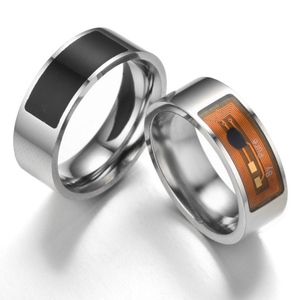
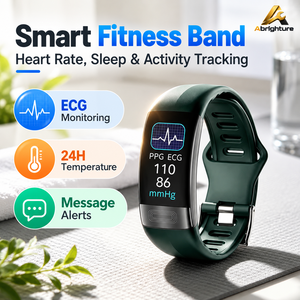
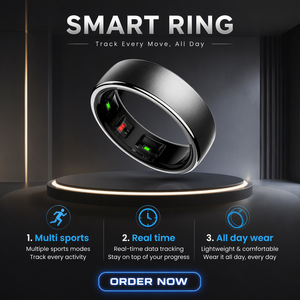
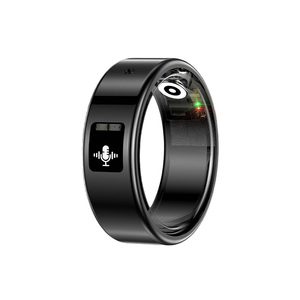
Production-Ready Platforms
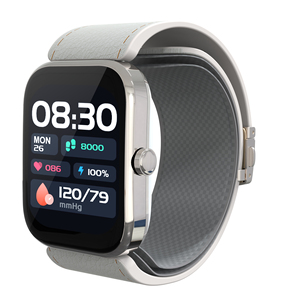
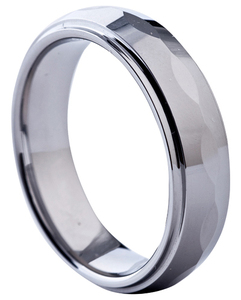
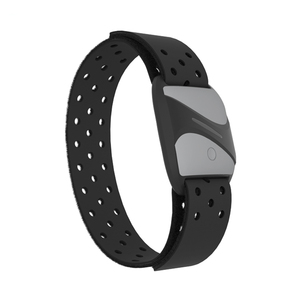
High-Precision Smart Hardware Ecosystem
Pre-certified reference designs supporting end-to-end private-label tailoring—from bare PCBA algorithms to custom cosmetic tooling and cloud API pipelines.

2009+
Engineering Pedigree
300K/Mo
High-Precision Output
50+
Acoustic & Sensor Patents
<5‰
Factory Defect Rate
The Shift in Private Label AI Earbuds: Acoustic Transducers to Neural Edge Endpoints
The global earwear landscape has transitioned from standard True Wireless Stereo (TWS) playback toward context-aware AI acoustic endpoints. For private-label brand owners, distributors, and procurement directors, procuring AI earbuds in the modern market is fundamentally different from selecting generic commodity consumer electronics.
Modern AI-augmented earbuds serve as low-latency interface hubs running real-time bidirectional translation, environmental voice enhancement (ENC powered by multi-microphone neural networks), active contextual awareness, and real-time multimodal Large Language Model (LLM) interaction. Engineering this complexity within an ultra-compact ear canal profile requires deep vertical integration across system-level circuit board design (SiP - System in Package), customized DSP acoustic architectures, and rock-solid ultra-low-power Bluetooth LE Audio streaming protocols.
Critical Architecture for Private Label AI Audio
When selecting a tier-1 private-label manufacturer, procurement teams must audit the vendor’s internal ability to balance acoustic acoustic cavities against thermal and antenna constraints. A true manufacturer controls the entire execution pipeline: surface mount technology (SMT) with minimum 01005 component placements, automated RF testing in anechoic chambers, injection molding of hypoallergenic acoustic nozzles, and dedicated firmware engineering capable of integrating proprietary wake-word engines and cloud translation APIs without latency spikes.
Neural ENC & Beamforming
Dual or triple MEMS microphone matrices paired with DNN (Deep Neural Network) noise cancellation chips that isolate spoken voice phonemes down to -45dB in chaotic environments.
Biometric Fusion Systems
Micro-PPG optical sensors integrated into the earbud shell tracking continuous tympanic-adjacent heart rate, core body temperature, and stress levels with clinical precision.
On-Device Voice AI Engines
Low-power NPU coprocessors enabling local vector wake words, offline bi-directional phrase translation, and dynamic switching between local offline nodes and cloud LLMs.
Future Sourcing & Procurement Trends (2025–2030)
Procurement strategies are rapidly evolving to mitigate supply chain volatility and accommodate consumer expectations for intelligent devices. Brands looking to gain a lasting commercial advantage must align their roadmaps with these high-impact procurement shifts:
1. The Convergence of Generative Voice Agents & Dynamic Context
Standard earbud products are rapidly depreciating into single-digit margin commodities. Leading consumer brands are commanding premium price points by embedding zero-latency access to multi-agent LLMs (such as ChatGPT, Claude, and specialized enterprise corporate voice engines). Buyers are now requiring factories to provide pre-integrated SDKs for iOS and Android that allow seamless pass-through token management, live bidirectional multi-lingual interpretation, and localized semantic summarization directly through earbud touch sensors or discrete voice activation.
2. Modular SiP Architecture & Accelerated Turnaround
The traditional 12-month hardware development cycle is obsolete. Leading enterprise buyers demand modular System-in-Package (SiP) platforms. By selecting an OEM partner that maintains qualified, pre-certified core sub-assemblies (RF transceiver, power management IC, and neural processing units on unified substrates), brands can deploy distinct aesthetic shells, unique acoustic chambers, and bespoke CMF (Color, Material, Finish) treatments in under 90 days from concept to PVT (Production Validation Testing).
3. Stringent ESG, Battery Lifecycle & Traceability Protocols
International cross-border regulations—notably the European Union’s Battery Regulation and Corporate Sustainability Due Diligence Directive—are forcing global procurement teams to rethink component supply chains. Private-label factories must now document cell chemistries, support ethical cobalt provenance, demonstrate ISO 14001 compliance, and engineer charging cases with modular, easily serviceable or recyclable lithium polymer batteries without sacrificing IPX7 water ingress protection.
Top 10 Private Label Factory Audit Framework: What Defines Tier-1 Vendors?
When compiling a competitive index of the top 10 private-label smart earwear and AI earbud factories in China and Southeast Asia, our manufacturing analysis examines five core operational pillars rather than simple marketing claims:
01. SMT Precision & Cleanroom Grade
In-house high-speed SMT lines (such as Yamaha or Panasonic modular placers) operating in Class 100,000 cleanrooms capable of placing 0.4mm pitch BGA packages and miniature high-frequency components.
02. End-to-End Acoustic Tooling
Full anechoic chambers equipped with Audio Precision (APx555) analyzers, Bruel & Kjaer head-and-torso simulators (HATS), and automated frequency response curve grading stations on 100% of finished lines.
03. Full-Stack Software Engineering
Dedicated in-house software teams handling Embedded C firmware, DSP acoustic calibration, Bluetooth stack optimization, and native smartphone companion apps with custom enterprise SDK support.
Shenzhen Yt Technology Co.,Ltc. (YT Smart Wear) consistently ranks at the upper tier of this audit framework due to its vertical integration established in 2009, combining industrial design, PCB assembly, acoustic tuning, firmware development, and international regulatory certification within one managed ecosystem.
Factory Pedigree: Engineered for Predictable B2B Execution
YT Smart Wear bridges the gap between ambitious product concepts and dependable, scaled manufacturing. Headquartered in Shenzhen's electronics innovation cluster, we provide comprehensive OEM/ODM manufacturing across smart rings, AI smart glasses, and AI audio solutions.
Strict IP & Firmware Security
We execute enforceable bilateral NDAs, maintain isolated internal network segments for customer CAD and algorithm files, and guarantee customer-exclusive tooling protection worldwide.
28 Inspection Quality Gates
From Incoming Quality Control (IQC) on raw MEMS chips and lithium batteries to 100% full functional burn-in and anechoic audio checks, maintaining a defect rate below 5‰ across production runs.
International Certifications
Full engineering validation and paperwork delivery for CE, FCC, RoHS, UKCA, REACH, and battery transport safety certifications (UN38.3, MSDS) for straightforward customs clearance.
Procurement FAQ: Direct Answers for Sourcing Directors
Key technical, financial, and logistical insights regarding our private-label and ODM workflows.
What are your minimum order quantities (MOQ) for custom private label AI audio products?
For standard private label configurations (applying customer brand graphics, packaging, Bluetooth pairing broadcast name, and localized firmware configurations onto existing proven hardware platforms), our baseline MOQ starts at 500 to 1,000 units. For full ODM engagements involving proprietary mold tooling, custom ID ergonomics, customized acoustic waveguides, and dedicated mobile application builds, production batches generally start at 3,000 to 5,000 units per CMF variation.
Can your team develop and deploy a custom, white-labeled mobile application?
Yes. Our internal mobile engineering department builds native iOS (Swift) and Android (Kotlin) companion apps customized with your brand's identity system, cloud backend integration, and customized UI elements. We also supply cross-platform React Native and Flutter SDKs with comprehensive documentation for enterprise clients who prefer to incorporate our device controls, translation engines, and health dashboards into their own existing brand applications.
What is the standard production timeline from technical kickoff to seaport/airport dispatch?
Initial cosmetic prototypes and functional engineering samples derived from existing platforms ship within 7 to 10 working days. Full custom industrial design, mold tooling opening, and DFM validation typically require 35 to 45 days. Once pre-production evaluation units (EVT/DVT) receive formal stakeholder sign-off, volume manufacturing runs on our SMT and assembly lines take approximately 30 to 35 business days, including burn-in testing and comprehensive QA audits.
How do you handle firmware updates, bug tracking, and post-launch maintenance?
Every device we build includes a secure Over-The-Air (OTA) firmware update protocol. Our software engineers maintain continuous regression testing against newly deployed iOS and Android versions to resolve Bluetooth stack anomalies or audio codec optimizations before end-users run into issues. All hardware carries a standard 12-month manufacturing warranty with clear component-level root-cause analysis procedures.