Factory Direct Catalog
Featured AI Wearable Platforms & Precision Smart Hardware
Engineered for private label deployment, scalable firmware tailoring, and cross-market medical-grade regulatory certifications.
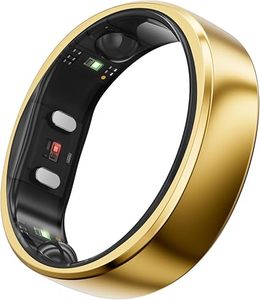
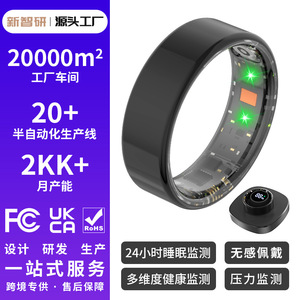
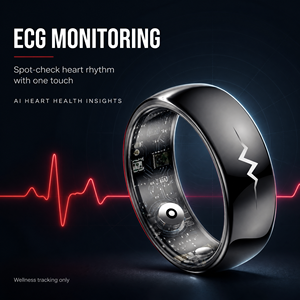
Industry Whitepaper Analysis
Technological Paradigm Shifts in AI Smart Glasses Engineering
Moving beyond discrete heads-up audio to contextual awareness: How modern optical waveguiding, generative on-device models, and edge compute reshape hardware architecture.
Diffractive Optical Waveguides
Next-gen AI glasses transcend conventional curved projection prisms. OEM pipelines leverage surface relief gratings (SRG) etched into high-refractive-index glass, driving light transmittance past 85% while minimizing external ocular eye-glow in consumer frames.
MicroLED Luminescence Efficiency
Overcoming ambient daylight wash requires optical engines yielding 2,000,000+ nits at raw output to secure 1,500+ nits to the human pupil. Monochrome green remains energy-optimal, while polychromatic RGB MicroLED arrays are advancing for full-color AR translation prompts.
Spatial Audio & ENC Telemetry
Directional open-ear acoustics minimize peripheral sound leakage by using dual out-of-phase acoustic dipoles. Array microphones paired with neural network noise suppression isolate human speech against 75dB environmental acoustic noise floor.
| Hardware Domain | Conventional Smart Frames (Gen 1) | Industrial Enterprise AR (Gen 2) | Contextual AI Neural Glasses (Gen 3 - Our Platform) |
|---|---|---|---|
| Display Technology | Audio Only (No Optical Waveguide) | Bulky BirdBath / Freeform Prisms | Sub-0.2cc MicroLED Engine + Binocular Waveguide |
| Onboard Processing | Low-tier Bluetooth Audio SoC | External Tethered Compute Pack | Heterogeneous Multi-Core SoC + Edge Neural Processing |
| Sensor Architecture | Basic 3-Axis Accelerometer | Heavy Dual RGB SLAM Cameras | Ultra-low power 9-Axis IMU + Ambient Light + VPU Vision Engine |
| Battery / Ergonomics | 40-50g / 4-6h Continuous | 180-300g / 2h Continuous | Under 42g Total Chassis / High-density 180mAh Li-Cobalt Cells |
Procurement Strategy
Global Sourcing Dynamics: What Professional Buyers Must Evaluate
Navigating the commercialization gauntlet from design-for-manufacturing (DFM) to modular firmware customization.
Thermal Dispersion in Resin
Confining RF radiators, power management ICs, and high-discharge micro-batteries into acetate or TR90 optical frames demands advanced graphite thermal conduction sheets and dynamic CPU throttling to prevent temple overheating.
Private-Label SDK & API Stack
Procurement teams demand decoupled BLE/Wi-Fi protocols, allowing direct integration with proprietary cloud LLMs (OpenAI, Claude, custom models), bypassing generic third-party servers to maintain brand data governance.
Hinge Cycle Reliability
Unlike smart rings or wristbands, smart glasses endure cyclic mechanical stress across spring hinges. Elite manufacturing mandates 25,000+ continuous flex tests without circuit trace breakdown across the FPC (Flexible Printed Circuit).
BOM Cost Optimization
Direct supply-chain aggregation in Shenzhen eliminates layer-by-layer markups, giving brands predictable pricing matrices from rapid EVT/DVT tooling runs through high-volume PVT mass shipments.
Factory Heritage & Capability
Turnkey Manufacturing Excellence: Shenzhen Yt Technology Co., Ltc.
Established in 2009, YT Smart Wear pairs world-class mechanical, electrical, and optical engineering with high-capacity mass production.
01
15+ Years Industrial R&D
Over 15 continuous years engineering smart wearable platforms, backed by 50+ utility and design patents and led by senior hardware, firmware, and structural architects dedicated to your brand.
02
Integrated SMT & Clean Assembly
Two dedicated high-speed SMT surface-mount lines and eight cleanroom assembly lines run with 100+ skilled operators, yielding a reliable 300,000+ unit monthly capacity for global peak-season fulfillment.
03
ISO 9001 & Multi-Gate QC Flow
Operating under certified ISO 9001 systems with 28 strict quality checkpoints—covering incoming component QA, SMT paste AOI, RF tuning, water immersion testing, and a defect rate held strictly below 5‰.
04
Complete NDA & IP Ring-Fencing
Strict non-disclosure agreements are executed prior to project discussions. Tooling designs, Gerber layouts, and customized firmware builds remain dedicated to client accounts with zero reuse in competing lines.
05
Global Regulatory Certification
Full support for global market compliance, including CE (RED), FCC ID, RoHS, UKCA, TELEC, and SRRC, ensuring turnkey border clearance across EU, North American, UK, and Asia-Pacific retail corridors.
06
One-to-One Technical Support
Assigned senior bilingual application engineers oversee your build milestones: standard samples ready in roughly 7 days, mass delivery within ~35 days, plus a 12-month full factory warranty.
Buyer Intelligence
Frequently Asked Procurement & Engineering Questions
Clear answers addressing tooling economics, firmware stack ownership, quality verification, and delivery cadences.
What are the lead times for custom tooling and mass production batches? +
Standard OEM platform evaluation samples typically dispatch within 7 business days. For full ODM hardware development requiring custom mold tooling (frames, casing, battery encapsulation), the DFM and tooling phase requires 25 to 30 days. After Golden Sample and DVT approval, mass production runs are delivered within roughly 35 days, contingent upon specialized component lead times.
Can we embed our custom AI translation, LLM endpoints, and private-label app? +
Yes. Our in-house software and firmware engineering departments support white-label and native iOS/Android application deployment. We furnish complete RESTful APIs, Bluetooth protocol dictionaries, and peripheral SDKs so your engineering team can link the hardware directly to custom large language models (such as GPT-4o, Claude, or proprietary localized inference servers).
What Minimum Order Quantities (MOQs) apply to OEM versus custom ODM projects? +
For existing hardware platforms with custom laser etching, branded CMF packaging, and personalized firmware boot screens, MOQs start as low as 500 to 1,000 units. For fully bespoke ODM configurations requiring customized tooling, proprietary PCB layouts, and dedicated optical waveguide alignments, initial baseline pilot orders start at 2,000 to 3,000 units.
How do you handle optical alignment and IP-grade ingress testing during assembly? +
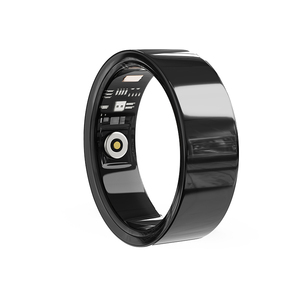
Optical waveguiding engines are seated using high-precision 6-axis collimation jigs to ensure sub-milliradian alignment accuracy across binocular setups. For waterproofing, products such as our smart rings and outdoor smart glasses undergo positive and negative pneumatic chamber tests to verify IP68 and 5ATM ingress protection prior to final packaging.
How are Intellectual Property (IP) and design files safeguarded under Chinese manufacturing law? +
We routinely execute binding bilateral Non-Disclosure and Non-Use Agreements (NDAs) enforceable under relevant international and Chinese trade jurisdiction. Your 3D CAD models, optical simulations, and custom firmware codebases are segmented within encrypted project silos accessible only by your assigned development engineers.