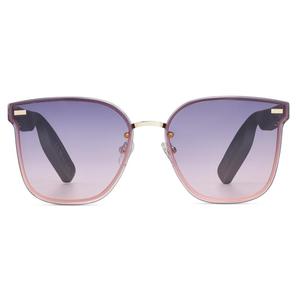






In the contemporary hardware landscape, smart glasses represent one of the most mechanically demanding and ergonomically sensitive segments of the consumer electronics and industrial wearable industries. Moving beyond the bulkiness of legacy head-mounted displays, contemporary intelligent eyewear demands the convergence of optical waveguide engineering, ultra-miniaturized SMT (Surface Mount Technology), sub-milliamp energy management, and real-time multimodal Artificial Intelligence. As a dedicated Shenzhen-based smart glasses manufacturer, Shenzhen Yt Technology Co., Ltd. operates at the core of this engineering nexus, maintaining end-to-end sovereignty across industrial styling (ID), mechanical CAD/CAM mold engineering, firmware architecture, optical waveguide alignment, and turnkey final assembly.
The transition from conventional audio frames to full-fledged visual and AI-assisted spatial computing frames has fundamentally redefined procurement standards for global buyers. B2B enterprise procurement officers and private-label brand distributors are no longer merely seeking assembly capacity; they require deep architectural validation. Producing a commercially viable pair of AI smart glasses involves balancing counteracting physical parameters: optical transparency versus display luminance, structural battery capacity versus bridge weight distribution, and high-gain processing power versus micro-chassis thermal dissipation.
At Shenzhen Yt Technology, our multi-tiered engineering facilities resolve these structural bottlenecks through cleanroom lens bonding, in-house high-density PCB routing, and direct partnerships with upstream optical silicon suppliers. Whether configuring monocular green Micro-LED heads-up text prompts for warehouse picking operations or binocular Micro-OLED birdbath prisms delivering 1080p spatial cinematic video, our production pipelines meet strict industrial tolerances, ISO 9001 quality compliance, and international CE, FCC, RoHS, and UKCA certification standards.


