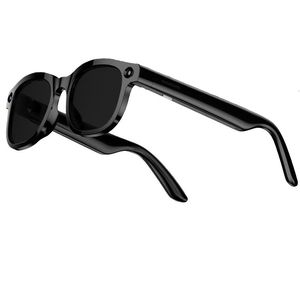
Export-Grade Platforms
Precision Ring Architectures & Cross-Disciplinary Wearables
Engineered to deliver medical-grade reflectance oximetry, durable IP68/5ATM enclosures, and seamless cross-platform SDK synchronization for institutional deployment across Greater Tokyo.
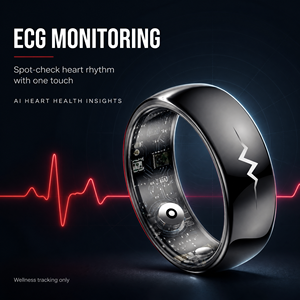
Smart Ring Health Tracker ECG Heart Rate Blood Oxygen Sleep Monitor Body Temperature 5ATM Waterproof Smart Rings
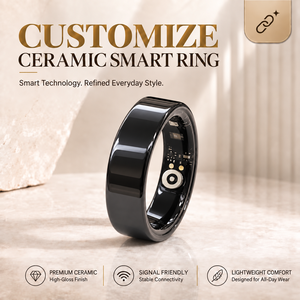
Waterproof Ceramic Smart Ring Health Tracker Fitness Sleep Heart Rate Monitor Wholesale Supplier
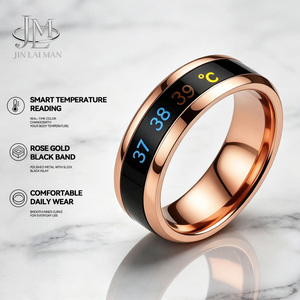
Stainless Steel Smart Temperature Sensing Mood Ring Fashion Band Jewelry
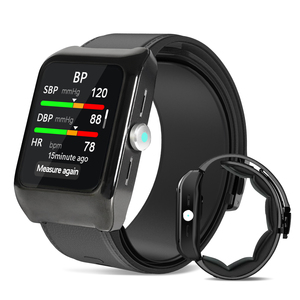
Airbag Smartwatch Blood Pressure Monitor with Real-Time Health Tracking Digital BP Monitor
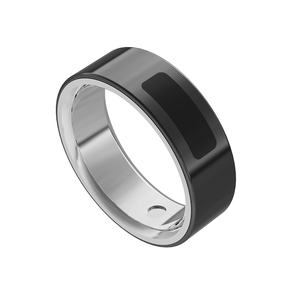
Manufacturer OEM Gesture Smart Rings 5ATM Waterproof Stainless Steel Thin Fitness Ring
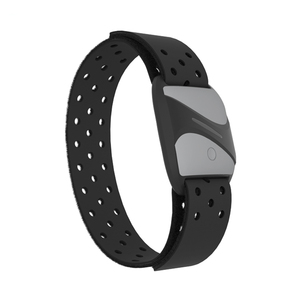
Bluetooth ANT+ Optical Armband Heart Rate Monitor IP67 Waterproof Sensor for Cycling Running
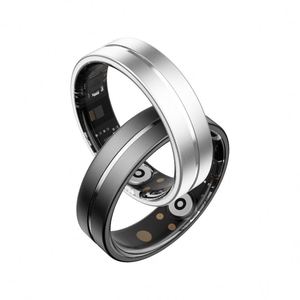
TK7 Multifunctional Smart Ring Health Tracker Voice Touch Control Alert Support OEM/ODM
Metropolitan Dynamics
High-Density Health Paradigms: Tokyo Field Implementations
Analyzing the operational requirements of Japan's specialized enterprise, clinical, and silver-economy ecosystems where continuous arterial pulse oximetry transforms health data continuity.
Corporate Kenko Keiei Programs
Under Japan's Ministry of Economy, Trade and Industry (METI) "Health and Productivity Management" framework, Tokyo conglomerates leverage continuous pulse oximetry rings to quantify operational fatigue, prevent burn-out, and reduce karoshi hazards among finance, tech, and corporate personnel.
- Circadian resting heart rate analysis
- Autonomic nervous stress load indexing (HRV)
- Nocturnal desaturation event logging
Senior Living & Home Telehealth
Addressing the super-aging population across Tokyo's 23 Special Wards. Form-factor compliance is paramount: elderly residents frequently discard smartwatches due to skin abrasion or nightly recharging requirements, making hypoallergenic ceramic oximetry rings the ideal non-intrusive alternative.
- Early detection of hypoxemic events
- Remote care-facility API synchronization
- Continuous skin temperature deviation alerts
Commercial Transport & Night Shift Safety
Under the Japanese Ministry of Land, Infrastructure, Transport and Tourism (MLIT) guidelines, transit and logistics operators in Tokyo-Yokohama require continuous screening for Sleep Apnea Syndrome (SAS) to mitigate systemic transport risks caused by intermittent nocturnal desaturation.
- High-frequency nocturnal SpO2 sampling (1Hz)
- Oxygen Desaturation Index (ODI 3%/4%) output
- Tactile vibration alerts for acute hypoxemia
Strategic Market Evolution
Tokyo Digital Health: Micro-Wearable Structural Trends
A rigorous examination of hardware, regulatory, and demographic shifts steering procurement strategies across Japan's digital healthcare and consumer electronics distribution sectors.
Transition from Wrist to Digital Arteries
Tokyo's consumer and institutional wellness sectors are rapidly migrating from smartwatches to smart rings. The palmar digital arteries of the finger feature significantly higher capillary density and lower dermal melanin distortion than the dorsal wrist, yielding markedly superior signal-to-noise ratios (SNR) during reflectance photoplethysmography (PPG).
APIs, Edge AI & Local Cloud Sovereignty
Enterprise procurement teams across Shinagawa and Marunouchi demand direct SDK/API access over consumer walled-gardens. Custom firmware integrations allow raw PPG, raw accelerometer vectors, and localized telemetry to pipe directly into domestic servers complying with Japan's Act on the Protection of Personal Information (APPI).
Convergence of CE Mark & PMDA Demarcation
While formal pharmaceutical approval under Japan's PMDA (Pharmaceuticals and Medical Devices Agency) requires prolonged clinical evaluation, Tokyo brand distributors actively source CE Medical (MDR 2017/745 Class IIa) compliant rings to establish baseline metrological rigor for non-medical health monitoring platforms.
Factory Direct Infrastructure
End-to-End Smart Wearable Engineering Architecture
Shenzhen Yt Technology Co.,Ltc. consolidates industrial design, micro-electronics packaging, custom algorithm development, and mass production under a single ISO 9001 quality framework.
2009
Manufacturing Since
50+
Granted Patents
8+2
Assembly & SMT Lines
300,000+
Monthly Unit Capacity
Full-Chain Customization
Turnkey OEM/ODM development spans proprietary tooling, ultra-compact rigid-flex PCBA architectures, biometric firmware coding, native iOS/Android application deployment, and custom retail packaging tailored for upscale Tokyo retail environments.
Rapid Prototype & Delivery
Standard design verification samples ship within 7 days. Dedicated fast-track EVT/DVT tooling schedules ensure bespoke ODM ring frameworks advance to volume pilot production within 35 days, compressing time-to-market across Asian trade channels.
Dedicated Engineering Squads
Each OEM/ODM project is assigned a dedicated technical account manager, firmware specialist, and hardware architect. Transparent milestone reports, DFM reviews, and traceable component batch registries eliminate communication lag across international borders.
Strict Quality Verification
Manufactured under an ISO 9001 certified regime featuring a 28-checkpoint quality gate flow—from spectral LED calibration to immersion pressure stress—maintaining an overall shipment defect rate below 5‰ backed by a 12-month international warranty.
Procurement Clarity
Frequently Asked Questions: Tokyo B2B Sourcing
Key regulatory, technical, and operational considerations addressed for Japanese consumer electronics brands, healthcare distributors, and corporate buyers.
How does CE certification map to Japanese market regulatory requirements? +
While CE mark covers compliance with European Union directives (EMC 2014/30/EU, RED 2014/53/EU, and RoHS 2011/65/EU), our hardware design ensures seamless compliance with Japanese domestic regulations. For wireless transmission, our Bluetooth Low Energy (BLE 5.0/5.2) modules can be delivered pre-certified or fully prepared for Japan Radio Law (TELEC / MIC “Giteki” certification). Furthermore, our skin-contact ceramic, medical resin, and titanium alloys comply with the Japanese Household Goods Quality Labeling Act and domestic bio-compatibility standards.
What metrological accuracy can we expect for continuous blood oxygen (SpO2) readings? +
Our rings integrate red (660nm) and infrared (940nm) dual-wavelength optical sensor arrays paired with high-performance Analog Front-Ends (AFE) and proprietary motion-artifact cancellation algorithms. In institutional bench testing against arterial blood gas references across 70% to 100% SpO2 ranges, the system maintains a root mean square error (ARMS) of < 2.5%, matching high-tier clinical benchmark parameters during quiescent resting states and nocturnal sleep stages.
Can our organization white-label the mobile application and secure Japanese cloud deployment? +
Yes. We offer complete software localization. Our software engineering team provides white-label companion apps with fully native Japanese UI/UX strings, customized icon sets, and branding. For enterprise clients requiring strict data localization under Japan's APPI regulations, we offer full Bluetooth communication protocol documentation, Android/iOS SDKs, and Webhook APIs that allow telemetry to feed directly to private AWS/GCP servers located within the Tokyo (ap-northeast-1) or Osaka regions without passing through third-party servers.
How do you handle sizing range requirements for East Asian ergonomic profiles? +
We provide precision tooling across US sizes 6 through 13 (circumference 51.8mm to 69.5mm), accommodating the anthropometric variations typical of Japanese male and female users. In addition, we supply custom-branded sizing kit sets (dummy plastic calibration bands) for consumer e-commerce verification prior to final device fulfillment, minimizing return rates and maximizing optical sensor coupling integrity.
What are your minimum order quantities (MOQ) and production lead times for Tokyo shipments? +
Standard platform sample evaluations are dispatched via express courier (DHL/FedEx) to Haneda or Narita within 5 to 7 working days. Custom private-label runs (laser-etched logo, customized packaging, localized firmware) start at an accessible MOQ of 500 to 1,000 units. Full ODM developments requiring customized tooling or internal structural adjustments typically require 35 days for mass production validation following engineering sign-off.
How is customer intellectual property and proprietary firmware logic protected? +
We operate strictly under mutual Non-Disclosure Agreements (NDAs). Design files, mechanical STEP models, and customer-specific algorithm implementations remain partitioned on secured internal servers with role-based clearance. Customer-exclusive industrial designs or customized tooling remain the sole property of the client and are never repurposed for standard open-market distributions.
Initiate Collaboration
Accelerate Your Smart Ring Roadmap in Japan
Whether you represent a Tokyo-based consumer health brand, a telecare provider, or a consumer electronics distributor, our Shenzhen engineering center is equipped to deliver compliant, scalable, and high-margin smart oximetry hardware.
Inquire Now