Medical BLE
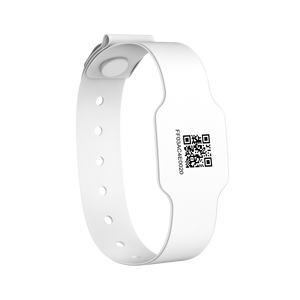
MOKO W7 Smart Healthcare Bracelet IP67 BLE 5.0 RFID/NFC Beacon
IP67 Waterproof
RFID / NFC
BLE 5.0 Beacon
Engineered to satisfy stringent CE directives and EAC TR CU compliance standards, our proprietary platforms span precision hemodynamic monitors, RTLS location beacons, and advanced physiological trackers.
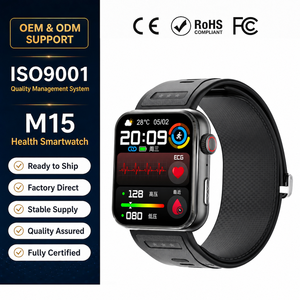
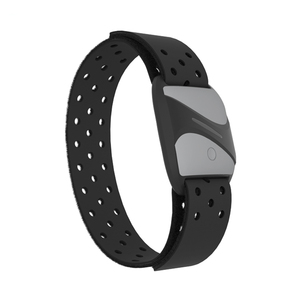
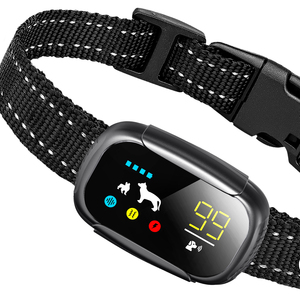
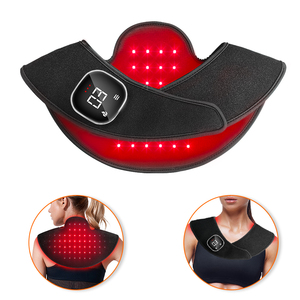
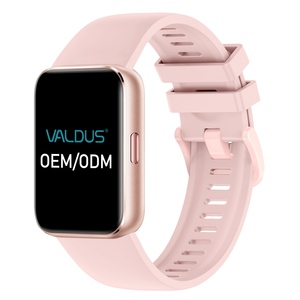
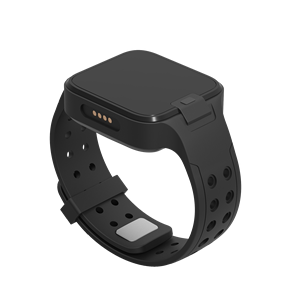
The wearable electronics landscape within the Moscow metropolitan sector (including the Central Administrative Okrug and the rapidly industrializing Moscow Oblast logistics corridors) is experiencing an unprecedented structural transformation. Driven by municipal healthcare digitization initiatives like the Unified Medical Information and Analytical System (UMIAS), heightened personal health accountability among tech-forward urban professionals, and extensive enterprise modernization along the MKAD transport perimeter, Moscow procurement directors demand smart hardware that surpasses generic consumer specifications. As a premier Shenzhen smart wearable manufacturer with comprehensive CE certification frameworks and turnkey export channels, Shenzhen Yt Technology Co., Ltd. delivers institutional-grade engineering specifically optimized for Eurasian operating conditions.
A fatal vulnerability of conventional consumer smart wearables deployed within Moscow's continental climate is catastrophic battery capacity loss during winter extremes (-15°C to -30°C). Standard lithium-cobalt-oxide cells suffer severe impedance escalation, precipitating internal voltage drops that trigger unintended micro-controller shutdowns. Our dedicated R&D engineering facility resolves this through specialized low-temperature electrolyte chemistries (featuring fluoroethylene carbonate additives) and ultra-low internal resistance PCBA power management ICs (PMICs). Encapsulated in biocompatible titanium alloys and thermally buffered polymers, our devices maintain over 82% effective discharge efficiency at sub-zero operating thresholds, guaranteeing continuous physiological telemetry and emergency SOS signaling for Moscow users traversing sub-zero outdoor environments.
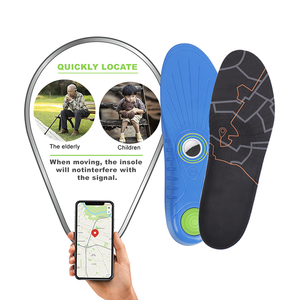
Geospatial tracking accuracy across the complex urban topography of Moscow—distinguished by dense skyscraper clusters in Moscow City (MIBC) and rigorous national electronic defense perimeters—demands advanced RF front-end architectures. Our smart insoles, healthcare bracelets, and industrial UWB wearables integrate multi-band GNSS transceivers that natively decode Russian GLONASS constellations alongside GPS and BeiDou. Coupled with custom Kalman filter algorithms embedded within the device firmware, our hardware mitigates urban canyon multipath distortion, providing Moscow enterprise logistics and vulnerable individual care facilities with sub-meter location resolution.
Hardware competitiveness in the Russian Federation is fundamentally linked to native software integration. Our internal software engineering departments ensure complete localized Cyrillic font typography rendering at the RTOS level, preventing character clipping on round AMOLED displays and smart bands. Furthermore, our Bluetooth Low Energy (BLE 5.0/5.3) protocol stacks and mobile SDKs allow turnkey API handshakes with proprietary Russian cloud infrastructures, respecting sovereign data handling frameworks (Federal Law No. 152-FZ "On Personal Data") without proprietary backend vendor lock-in.
Purpose-built engineering frameworks catering to municipal institutions, clinical telemedicine providers, and high-performance logistics operations.
Integration with private clinical networks (Medsi, EMC, Mother & Child) across Moscow. True oscillometric air-pump wristwatches continuously capture diagnostic-grade systolic and diastolic pressures, streaming real-time ECG strips via encrypted BLE to decentralized hospital dashboards.
High-precision UWB and BLE RFID beacons deployed across multi-tier fulfillment warehouses along Moscow’s central transport hubs (Sheremetyevo, Domodedovo, Podolsk). Prevents industrial collisions, tracks personnel dwell times, and detects lone-worker falls with millisecond alert routing.
Ergonomic smart insoles equipped with dual-core GNSS and dynamic pressure sensors for Moscow Oblast assisted living complexes. Inconspicuous biomechanical tracking eliminates patient wandering hazards while transmitting discreet distress alerts to local caregivers.
A critical consideration for Moscow import houses, commercial distributors, and system integrators is ensuring zero customs friction when clearing wearable electronics at Sheremetyevo (SVO) or Domodedovo (DME) cargo terminals. Although the Russian Federation enforces Eurasian Economic Union technical regulations (TR CU), possessing fully authenticated European CE certificates (RED Directive 2014/53/EU, RoHS 2011/65/EU, LVD 2014/35/EU) drastically streamlines the issuance of mandatory EAC Declarations of Conformity (EAC DoC). Our institutional test reports, conducted by accredited ILAC-MRA laboratories, are structured to satisfy both European and EAEU standards seamlessly.
| Compliance Vector | Standard CE Directive (EU) | EAEU / Russian Norm (TR CU) | YT Smart Wear Implementation Metric |
|---|---|---|---|
| Electromagnetic Compatibility | EN 301 489-1/-17 (RED) | TR CU 020/2011 (EMC) | Pass: Shielded inductors, 10V/m RF immunity |
| Radio Frequency Spectrum | EN 300 328 v2.2.2 (2.4GHz) | SCRF (GKRCh) Decisions | Pass: Narrowband BLE frequency hopping protocols |
| Sub-Zero Low Voltage Safety | EN 62368-1:2014+A11 | TR CU 004/2011 (LVD) | Certified: Cold-resistant Class II isolation |
| Hazardous Chemical Control | RoHS 2011/65/EU + 2015/863 | TR EAEU 037/2016 | 100% Lead-Free: SMT zero-halogen chemistry |
| Skin Biocompatibility | ISO 10993-5 / -10 Cytotoxicity | GOST R 52770-2007 | Hypoallergenic: Medical silicone, surgical Ti alloys |
| Ingress Protection Reliability | EN 60529 (IP67 / IP68) | GOST 14254-2015 | Dual Sealing: Ultrasonic welding + nano-coating |
Headquartered in Shenzhen since 2009, Shenzhen Yt Technology Co., Ltd. operates an integrated 8-assembly-line ecosystem capable of producing over 300,000 certified units per month with uncompromising traceability.
In-house industrial design, mold manufacturing, and precision CNC milling. Rapid turnaround of structural EVT/DVT prototypes tailored for ergonomic international wrist and finger dimensions.
Two dedicated, fully automated Yamaha SMT lines deploying 01005 micro-component placement. Advanced automated optical inspection (AOI) and X-ray validation prevent microscopic solder voids.
Proprietary sensor calibration labs utilizing multi-wavelength simulators to benchmark PPG pulse oximetry, blood pressure oscillometrics, and ECG waveforms against clinical gold standards.
Bilateral supply agreement frameworks, stable raw material buffers, and flexible cross-border logistics clearing tailored specifically for Moscow air, rail, and sea container freight channels.
Clear, direct answers regarding Eurasian customs clearance, logistics pipelines, Cyrillic localization, and commercial supply chain terms.
All test protocols generated for our CE declarations (RED, LVD, EMC, RoHS) originate from globally accredited ILAC/CNAS test laboratories. Russian certification bodies (accredited under the Federal Service for Accreditation - RusAccreditation) routinely recognize these factory audit logs and safety certificates to issue mandatory EAC Declarations of Conformity under TR CU 020/2011 and TR CU 004/2011, cutting your domestic certification timeline by up to 60%.
We provide multiple audited logistics channels: Express Air Cargo directly to Sheremetyevo (SVO) takes approximately 4–7 business days; multimodal Accelerated Rail Freight via Manzhouli/Zabaikalsk to Moscow Vorsino Logistics Park requires 16–22 days; while sea-rail multimodal corridors through Vladivostok generally transit within 28–35 days. All shipments include complete export declarations and dual-use exemption documentation.
Yes. Our dedicated software engineering team provides end-to-end Russian localization. This encompasses Cyrillic Unicode character rendering across our RTOS display drivers, Russian voice prompts for Bluetooth calling devices, fully translated iOS/Android companion apps, and localized retail packaging designed in accordance with Russian Consumer Protection legislation.
We utilize customized high-density lithium polymer battery cells infused with specialized low-temperature electrolyte additives. Combined with software-driven dynamic clock throttling (which curtails background RF pinging when temperature sensors detect ambient drops below -10°C), our hardware guarantees reliable operational stability without unexpected brownout shutdowns.
For existing structural platforms requiring customized laser-etched branding, custom boot-up screens, and Russian retail packaging, our MOQ starts at 500 units. For full OEM/ODM programs involving bespoke mechanical tooling, specialized PCB layouts, and proprietary algorithmic sensors, projects typically initiate at 1,000 to 3,000 units depending on industrial specifications.
To eliminate international currency volatility and banking friction, we maintain direct cross-border trade accounts supporting direct Chinese Yuan (CNY / RMB) settlement, standard USD telegraphic transfers (T/T), and confirmed Letters of Credit (L/C) for qualifying institutional buyers and verified enterprise distributors across the Moscow region.
Partner with an established Shenzhen OEM/ODM leader with 15+ years of electronic engineering precision, robust CE certifications, and tailored Eurasian supply chain readiness. Request comprehensive DFM reviews, hardware datasheets, and sample evaluations today.