Featured Smart Wearable Hardware Engineered for Canadian Distribution
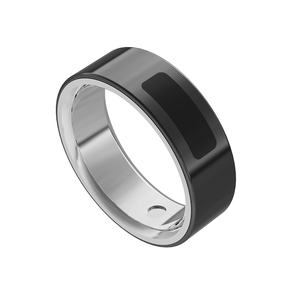
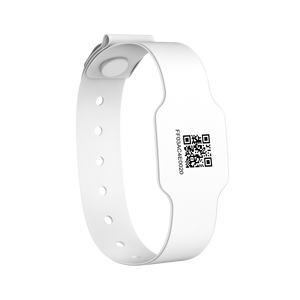
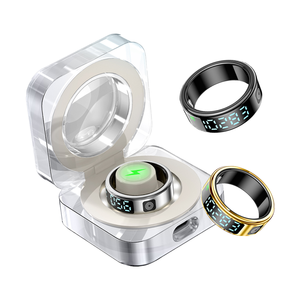
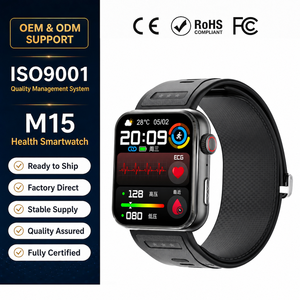
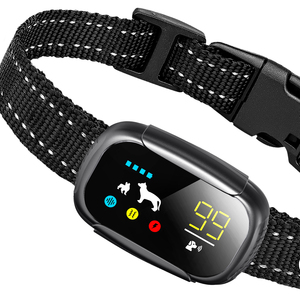
Each platform integrates ultra-low-power microcontrollers (Nordic nRF52/Dialog DA14585), medical-grade photoplethysmography (PPG) sensors, and precision titanium-ceramic biocompatible shells, fully pre-validated for ISED Canada compliance.
Engineering Architecture: Why Smart Ring OEM Demands Micron-Level Precision
Unlike wrist-worn fitness trackers or smartwatch hardware, engineering a market-leading smart ring requires solving three ruthless physical bottlenecks simultaneously: spatial volumetric constraints under 0.8 cubic centimeters, multi-sensor signal attenuation caused by ambient light refraction through skin micro-capillaries, and electrochemical battery degradation under severe sub-zero thermal cycling. As an established original equipment manufacturer based in Shenzhen's hardware corridor, Shenzhen Yt Technology Co., Ltd. provides Toronto's expanding IoT ecosystem with fully integrated, Tier-1 manufacturing pipelines designed to eliminate these technical friction points.
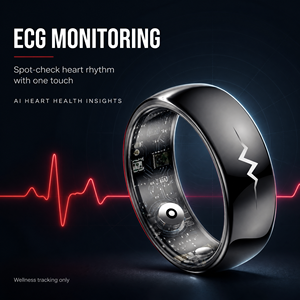
The arterial micro-vasculature of the human finger provides an order-of-magnitude cleaner photoplethysmography (PPG) signal than the dorsal wrist, where tendon motion, ulnar bone interference, and superficial venous architecture distort optical biometric accuracy. By leveraging multi-wavelength infrared (940 nm), red (660 nm), and green (525 nm) optical LED clusters coupled with precision silicon photodetectors, our custom flexible printed circuit board (FPCB) layouts capture pristine peripheral capillary blood flow waveforms. This enables Toronto medical tech startups, corporate wellness aggregators, and sports brands to offer clinical-grade resting heart rate (RHR), beat-to-beat heart rate variability (HRV via rMSSD metrics), peripheral blood oxygen saturation (SpO2), and cutaneous micro-temperature trending without invasive skin pinch.
Sub-Zero Battery Chemistry
Standard lithium polymer cells suffer severe internal resistance spikes and voltage drops below -10°C, causing premature device shutdowns during Canadian winters. Our custom curved LiPo pouch cells incorporate proprietary low-temperature electrolyte blends and ceramic separators, maintaining over 82% effective discharge capacity at -20°C.
Biocompatible Titanium Shells
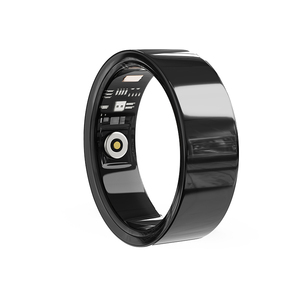
Our structural outer housings are CNC-milled from aerospace-grade Grade 5 Titanium (Ti-6Al-4V) or medical zirconia ceramics, treated via Physical Vapor Deposition (PVD). The inner inner-bore ring lining utilizes hyper-allergenic medical epoxy resin that complies fully with ISO 10993 cytotoxicity and cutaneous irritation mandates.
Hermetic 5ATM Epoxy Infill
Employing high-pressure low-temperature structural vacuum resin encapsulation, the interior electronics cavity is purged of microscopic air bubbles. This structural potting achieves genuine 5ATM/IP68 ingress protection, ensuring water integrity under pressure during indoor pool training, showering, and freezing sleet exposure.
Localized Application Scenarios: The Greater Toronto Area (GTA) Ecosystem
Deploying wearable electronics in Ontario requires tailored hardware-software alignment matching the distinct climatic, economic, and institutional environments of the Toronto regional corridor.
Winter Endurance & Sub-Zero Sports
From the Lake Ontario waterfront running trails to the ski resorts of the Blue Mountains, Ontario athletes demand biometric monitoring that functions reliably through extended exposure to freezing winds. Wrist optical sensors encounter vasoconstriction errors when exposed directly to cold air. In contrast, our smart rings rest beneath insulating winter gloves, continuously tracking core temperature shifts, early onset hypothermia trends, and stamina exertion indices via deep micro-arterial light absorption.
Bay Street Financial Executive Wellness
Toronto’s Financial District represents Canada's densest concentration of capital markets, corporate law firms, and consulting enterprises. High-stress executive populations increasingly abandon bulky, glowing smartwatches that cause notification anxiety in boardrooms. Our discrete ceramic smart rings run 24/7 background sympathetic vs. parasympathetic balance calculations, autonomic stress spike notifications, and circadian sleep stage tracking—providing subtle executive wellness insights via private cloud dashboards.
MaRS & UHN Remote Patient Monitoring
Toronto houses the Discovery District, anchored by the MaRS Discovery District and the University Health Network (UHN). Local digital health innovators and medical AI spin-outs require raw biometric data pipelines (unfiltered photoplethysmogram waveforms, inter-beat intervals, raw accelerometer axes) rather than commercial consumer averages. Our factory provides specialized OEM firmware profiles that stream uncompressed biometric telemetry directly to custom iOS/Android SDKs, supporting Ontario PHIPA-compliant clinical research programs.
Technical Specification Matrix: OEM Platforms vs. Standard Market Alternatives
An exhaustive teardown comparison designed for Toronto hardware procurement executives, firmware architects, and product managers assessing tier-one Chinese manufacturing capabilities.
| Architecture Parameter | YT Smart Wear OEM Ring Platform | Generic White-Label Factory | Consumer Off-the-Shelf Ring |
|---|---|---|---|
| Primary SoC / MCU | Nordic Semi nRF52840 / Dialog Low-Power | Generic Chinese RISC-V or Telink | Proprietary closed microcontroller |
| PPG Sensor Module | Multi-wavelength dual-photodiode (Red+IR+Green) | Single green LED (heart rate only) | Standard Dual-color optical sensor |
| Skin Temperature Sensor | High-precision infrared NTC thermistor (±0.05°C) | Estimated ambient algorithm (unreliable) | Medical grade contact thermistor |
| Battery Chemistry & Life | 18–24 mAh Curved LiPo, 5–7 Days (-20°C rated) | 12–15 mAh Flat cell, 2–3 Days (freezes) | 15–22 mAh, 4–6 Days (standard temp) |
| Structural Materials | Aerospace Ti-6Al-4V / Zirconia Ceramic + Bio-Resin | Zinc alloy or electroplated aluminum | Titanium with PVD coating |
| Waterproof Rating | 5ATM (50 meters hydrostatic) + IP68 Hermetic | IPX5 or basic splash resistance | 5ATM / 100 meters |
| Regulatory Pre-testing | ISED Canada (IC ID), FCC, CE, RoHS, ISO 10993 | Self-declared CE mark only | Fully certified global retail SKU |
| Data Access & Firmware | Open BLE API / Raw PPG & IBI Output / White-label App | Locked third-party shared server app | Locked proprietary ecosystem (paywall) |
Canadian Market Dynamics: Regulatory Compliance & Emerging Trends
The wearable device market across Canada, and particularly throughout Ontario, is undergoing a profound structural evolution. Three strategic trends dominate the purchasing intent of local distributors and enterprise buyers:
ISED Canada & Health Canada Bifurcation
All radiofrequency devices radiating intentional Bluetooth Low Energy (BLE) emissions must obtain Innovation, Science and Economic Development (ISED) Canada certification, registered under an authorized Canadian representative with an assigned IC ID number. Concurrently, B2B brands must navigate the critical boundary between general wellness electronics and Health Canada Class II Medical Devices. Our factory pre-engineers PCB antenna arrays to comply strictly with Canadian RSS-247 and RSS-GEN radio requirements, while our firmware architecture can be customized to maintain non-diagnostic wellness positioning or integrated into Class II clinical software submission dossiers.
PIPEDA & Ontario PHIPA Data Sovereignty
Canadian consumers and corporate institutions demand stringent privacy boundaries. Under the Personal Information Protection and Electronic Documents Act (PIPEDA) and Ontario’s Personal Health Information Protection Act (PHIPA), biometric data collected via consumer wearables cannot be transferred indiscriminately to unmonitored overseas third-party servers. We solve this for Canadian OEM buyers by deploying dedicated white-label mobile applications connected directly to the client’s designated cloud infrastructure (such as AWS Canada Central in Montreal or Microsoft Azure Central Canada in Toronto), ensuring total customer data autonomy.
The "Zero Screen" Invisible Health Shift
Screen fatigue is real. A significant segment of Canadian smart device users is intentionally reducing daily active display engagement. The smart ring represents the pinnacle of the "invisible wearable" paradigm—gathering continuous physiological signals without vibrations, intrusive pop-up notifications, or glowing OLED screens. In the Canadian corporate sector, this translates to heightened daily compliance: users wear smart rings continuously for 5–7 days, even during sleep, providing unbroken datasets unattainable through conventional smartwatches that require nightly charging.
Enterprise Advantage: Shenzhen Yt Technology Co., Ltd. Manufacturing Might
Founded in 2009, Shenzhen Yt Technology Co., Ltd. has spent over 15 years mastering the full product lifecycle of micro-wearables and AI intelligent hardware. For Toronto technology clients, our single-source factory model eliminates the risks of managing fragmented supply chains across multiple subcontracting workshops.
Fully Integrated Production Under One Roof
We operate 8 final assembly lines and 2 automated surface-mount technology (SMT) cleanroom lines staffed by over 100 skilled technicians. From high-speed Panasonic SMT placement of 0201 passive components and BGA chips onto custom flexible PCBs to microscopic ultrasonic bonding and automated vacuum resin casting, our production processes are governed by ISO 9001 quality management protocols.
Rigorous 5-Stage QC Verification
Quality control is engineered into every millimeter of manufacturing. Our rings undergo a comprehensive 28-checkpoint quality matrix: 100% incoming inspection (IQC) of bare optical sensors and lithium cells, in-line process control (IPQC), optical automated inspection (AOI) post-reflow, high-pressure hydrostatic chamber immersion for 5ATM verification, and thermal shock testing from -30°C to +60°C to guarantee reliability across Canadian climate extremes.
Turnkey White-Label Software & Firmware
A smart ring without robust software is merely fine jewelry. Our in-house firmware and software engineering departments deliver full-stack support: BLE communication stack customization, sleep scoring algorithms (deep, REM, light, awake), exercise calorie burn profiling, and customized white-label iOS and Android applications branded with your corporate identity, delivered with comprehensive SDKs and API endpoints.
Toronto Procurement FAQ: Direct Answers for Canadian Supply Chain Teams
Everything you need to know about lead times, international freight, compliance, and IP safety when partnering with our Shenzhen factory.
Launch Your Custom Smart Ring Brand in Toronto
Partner with China’s premier smart wearable OEM/ODM manufacturer. From industrial design engineering and rapid prototyping to turnkey ISED-compliant mass production and dedicated logistics directly to the Greater Toronto Area—our engineering team is ready to scale your hardware vision.