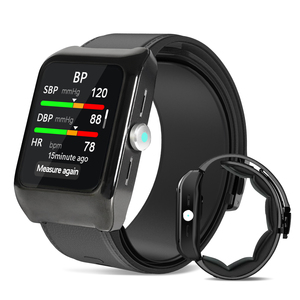
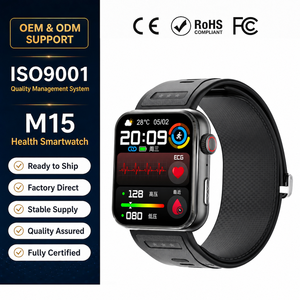
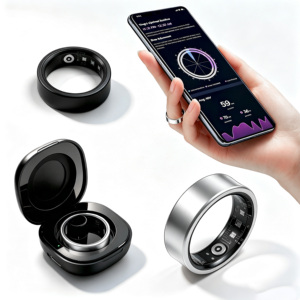
Production Portfolio
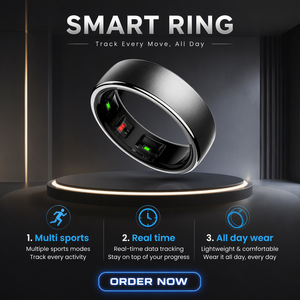
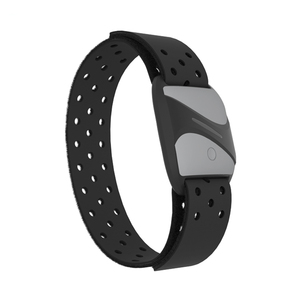
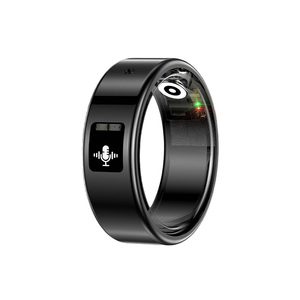
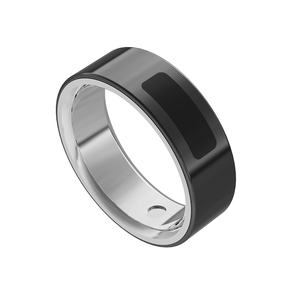
Precision-Engineered Smart Wearable Platforms
Each OEM/ODM hardware platform integrates medical-grade biosensing, acoustic DSP architectures, and industrial-grade wireless protocols built to exceed European market standards.
15+
Years OEM/ODM (Est. 2009)
300k
Monthly Unit Output
8+2
Assembly & High-Speed SMT
<5‰
Strict Factory Defect Rate
Engineering Whitepaper
Engineering Architectural Precision: The German Requirement for Audio Wearables
The German smart eyewear market has transitioned from novelty consumer gadgets into mission-critical, connected optical computing platforms. Driven by Germany's strict ergonomics, data security (GDPR/BDSG), and telecommunications safety paradigms, local procurement teams require hardware that satisfies demanding acoustics without compromising optical safety or frame aesthetics. As a direct-source manufacturing factory operating out of Shenzhen's high-tech industrial core since 2009, Shenzhen Yt Technology Co., Ltd. bridges the gap between rapid Chinese micro-electronics development and stringent German quality expectations (DIN standards).
1. The Physics of Open-Ear Directional Acoustics: Sound Leakage Mitigation
German professional consumers demand complete confidentiality during executive telecommunications and hands-free logistics operations. Traditional open-ear audio frames suffer from high sound radiation into ambient space, violating basic privacy thresholds. Our engineering team solves this through Acoustic Dipole Phase Cancellation. By integrating dual miniature micro-speakers (15mm x 6mm planar magnetic or dynamic drivers) inside the temple arms with specialized rear sound vents, our proprietary acoustic cavities produce opposing sound waves (180-degree phase shift) that negate audio leakage beyond a 30-centimeter radius.
This allows a worker on a warehouse floor in North Rhine-Westphalia or an automotive engineer in Stuttgart to hear crystal-clear synthesized voice commands or take binaural calls up to 85 dB SPL without bystanders hearing private corporate telemetry or client conversations.
2. Edge-AI Environmental Noise Cancellation (ENC) for DACH Climates & Wind Resilience
Whether navigating blustery urban crosswinds in Hamburg on an e-bike or working next to heavy CNC machinery in Bavaria, microphone arrays must isolate the human vocal tract. Our smart audio glasses leverage dual or quad digital MEMS microphones coupled with on-board Edge-AI Neural Network noise cancellation. By running spectral subtraction and spatial filtering directly on our ultra-low-power Bluetooth 5.3/5.4 audio SoCs (such as Qualcomm QCC and bespoke RISC-V DSP architectures), our frames attenuate stationary background machinery hum and turbulent wind noise up to 28 km/h by 35 dB, maintaining flawless voice intelligibility.
| Hardware Parameter | Standard Commercial Specs | YT Smart Wear German OEM Export Standard | German Compliance Impact |
|---|---|---|---|
| Acoustic Dipole Isolation | Single down-firing driver, >15% leakage at 50cm | Dual-driver phase cancellation (<3% leakage at 30cm) | Compliant with enterprise confidentiality & DIN EN 50332 |
| Chassis & Hinge Architecture | Standard Polycarbonate, plastic snap hinges | Swiss EMS TR90 + Titanium flex memory hinges (>50k flex cycles) | Exceeds DIN EN ISO 12870 ophthalmic frame standards |
| Battery Ingestion & Safety | Single unprotected LiPo cell | Dual 110mAh balanced cells with Seiko Protection ICs | CE-RED, RoHS, UN38.3 & EU Battery Directive 2023/1542 |
| Edge Computing Latency | Cloud dependent (>250ms voice prompt delay) | On-chip DSP offline keyword spotting (<40ms latency) | GDPR (DSGVO) compliant zero-cloud mandatory storage |
| Water & Dust Ingress | IPX4 (Light splash resistance) | Precision ultrasonic welding + nano-coating (IP67 certified) | Operational in wet outdoor and humid factory environments |
3. Optical Rx Compatibility: Partnering with German Opticians
A fatal flaw in mass-market smart glasses is their inability to accommodate corrective prescription lenses easily. Working closely with German ophthalmic distributors and optical chains (such as independent opticians adhering to the Zentralverband der Augenoptiker und Optometristen guidelines), our mechanical frames feature standard 4-base and 6-base lens groove curvatures. Opticians can cold-glaze or gently warm the frame fronts to insert single-vision, progressive, blue-light-blocking, or photochromic Zeiss or Rodenstock prescription lenses without risking damage to the delicate internal flex circuits routed through the temple lugs.
Market Deployment
High-Value Industrial & Lifestyle Applications Across Germany
Custom OEM audio eyewear addresses localized pain points across German manufacturing clusters, green logistics corridors, and mobile enterprise ecosystems.
Industrie 4.0 & Voice-Picking Logistics
In automated logistics hubs across Frankfurt, Hamburg, and Leipzig, warehouse operators using SAP EWM systems require seamless audio picking instructions. Our smart audio glasses provide crisp acoustic cues directly into the auditory canal without blocking sirens, AGVs (Automated Guided Vehicles), or emergency evacuation signals (DIN EN ISO 7731 situational awareness compliance).
Field Service & Remote Plant Maintenance
Engineers inspecting automotive robotic cells or mechanical presses in Baden-Württemberg benefit from real-time audio conferencing with central operations. With high-rejection ENC microphone filtering, machine hum is filtered out so remote master technicians hear clear diagnostic descriptions, improving first-time fix rates without needing cumbersome over-ear headsets.
Urban Commuting & StVO-Compliant Cycling
Under the German Road Traffic Act (§ 23 StVO), cyclists and e-scooter riders are penalized if their hearing is impaired by isolating earphones. Open-ear smart glasses leave ear canals unblocked, giving daily commuters across Berlin or Munich full awareness of ambient traffic, vehicle horns, and tram bells while streaming GPS navigation prompts and high-fidelity podcasts.
Enterprise Teleworking & GDPR Data Privacy
German hybrid workforces require audio peripherals that treat biometric and voice data responsibly. Our smart glasses operate on local edge firmware; they do not collect, store, or transmit ambient acoustic signals to third-party cloud servers without user authorization, matching strict General Data Protection Regulation (DSGVO) guidelines for enterprise laptops and smartphones.
Hospitality, Security & Concierge Teams
Security teams at German trade fairs (Messe München, Deutsche Messe Hannover) and high-end hotel chains use discreet smart audio glasses connected to encrypted two-way radios via Bluetooth. The low-profile classic wayfarer frame design ensures guards maintain friendly eye contact with guests while continuously monitoring team radio channels.
Regulatory Engineering
Strict Regulatory Alignment for the German & EU Single Market
Entering the German market requires strict adherence to European Union directives and German national safety legislation. We deliver fully certified hardware ready for German customs clearance and retail distribution.
REGULATION 01
CE-RED & Telecommunication Directives
Full conformance with the EU Radio Equipment Directive (2014/53/EU). Our RF engineers optimize integrated ceramic patch antennas inside the temple arms to guarantee specific absorption rates (SAR < 0.08 W/kg) far below the 2.0 W/kg EU limit, with verified ETSI EN 300 328 wireless stability.
REGULATION 02
ElektroG, WEEE & BattG Registration
Designed for easy dismantling and recycling under the German Electrical and Electronic Equipment Act (ElektroG3). Batteries feature solderless or pull-tab release mechanics, ensuring compliance with the new EU Battery Regulation 2023/1542, simplifying WEEE and Stiftung EAR registration for distributors.
REGULATION 03
REACH & Skin Sensitization (DIN EN ISO 10993)
Because smart glasses sit on facial skin for over 8 hours a day, all chassis materials (Swiss EMS Grilamid TR90, silicone nose pads, hypoallergenic anti-sweat coatings) are rigorously tested and certified free of hazardous SVHC chemicals, phthalates, and nickel release under REACH Regulation (EC) No 1907/2006.
REGULATION 04
DIN EN 50332 Sound Pressure Protection
To prevent long-term hearing degradation and comply with German occupational health guidelines (ArbSchG), our DSP firmware enforces strict maximum decibel limits (capped at ≤100 dB SPL with continuous dose-warning signals at 85 dB), preventing industrial acoustic trauma.
REGULATION 05
Supply Chain Due Diligence (LkSG Ready)
Shenzhen Yt Technology operates transparent tier-1 and tier-2 supply chains. We provide full material declarations, conflict mineral reports (CMRT), and ISO 14001 / ISO 9001 audit dossiers, giving German enterprise purchasers effortless reporting under the German Lieferkettensorgfaltspflichtengesetz.
Enterprise Capabilities
Why Leading European Brands Entrust Their ODM Projects to Us
Shenzhen Yt Technology Co., Ltd. is not a broker or trading entity. We are an end-to-end intelligent wearable factory combining product definition, precision tooling, cleanroom SMT, and ISO 9001 certified assembly.
Full-Stack In-House Engineering
From 2D/3D industrial design (ID) and mechanical engineering (MD) to high-speed SMT placement, customized antenna tuning, and iOS/Android BLE application development, your team works directly with our senior R&D engineers, eliminating third-party communication markups and project friction.
28-Point Multi-Gate Quality Control
Every audio frame undergoes 100% automated acoustic curve testing in soundproof anechoic test chambers using Audio Precision analyzers, continuous RF signal verification, hinge torsion tests (>50,000 cycles), IPX7 water tank immersion, and high-temperature sweat corrosion testing.
German Logistics & DDP Project Management
We provide comprehensive logistics support including DDP (Delivered Duty Paid) air freight directly to air hubs in Frankfurt am Main (FRA), Munich (MUC), or maritime consolidation to Hamburg. Our English- and German-speaking account managers provide transparent weekly milestone reporting with Gantt charts.
Procurement FAQ
Frequently Asked Questions by German Purchasing Teams
Clear, direct answers regarding production capacity, technical customization, software SDK integration, and European compliance.
What is your Minimum Order Quantity (MOQ) for custom OEM/ODM projects?
For standard private-label branding (laser logo engraving on the inner temple arm, customized packaging, and localized German user manual), our MOQ starts at 500 to 1,000 units. For full ODM projects requiring custom structural mold opening, bespoke frame geometries, and custom PCBA layout, the typical MOQ is 3,000 to 5,000 units. Prototype verification samples can be fabricated and delivered within 7 to 10 working days.
How do you ensure GDPR (DSGVO) compliance for smart glasses with voice audio?
Our smart audio eyewear is engineered with privacy-by-design principles. There is no active cellular or Wi-Fi uplink embedded inside the glasses; all audio processing occurs either locally on the DSP chip (offline wake words) or routes through the user's paired mobile device via encrypted Bluetooth. We do not maintain or require cloud servers that store continuous audio telemetry. If you deploy our companion smartphone application, we provide clean white-label source code allowing you to host database servers entirely within EU territory (e.g., AWS Frankfurt or Frankfurt Equinix datacenters).
Can German opticians swap and fit customized prescription (Rx) lenses?
Yes. Our frames are explicitly designed to meet DIN EN ISO 12870 standards for ophthalmic frames. The front rims feature standardized V-bevel grooves suitable for CR-39, polycarbonate, high-index (1.67/1.74), and mineral glass lenses. Opticians can use cold edging machines without degrading the electronic integrity of the smart temples.
What certifications are provided for German customs clearance and retail sale?
All production batches are accompanied by comprehensive Declaration of Conformity (DoC) certificates for CE-RED, RoHS 2.0 (Directive 2011/65/EU and amendment 2015/863), REACH SVHC test reports from accredited bodies (SGS/TÜV Rheinland), and UN38.3 + MSDS documentation for international lithium battery shipping. We also support UKCA, FCC, and IC for brands marketing across broader international regions.
How is our intellectual property (IP) and industrial design protected?
We routinely sign legally binding Non-Disclosure Agreements (NDAs) drafted under European and international commercial law prior to reviewing CAD files or project definitions. Tooling and injection molds paid for by our ODM clients remain the 100% exclusive property of the client; mold sets are tagged with serial numbers, stored securely, and are never repurposed or utilized for other clients or commercial catalog lines.
What is the typical production timeline from DVT to final shipment?
Once the Design Verification Test (DVT) and tooling samples are approved by your engineering team, mass production lead time averages 30 to 35 business days. This includes SMT surface mounting, cleanroom optical assembly, automated acoustic dipole testing, ultrasonic casing bonding, 100% battery aging, packaging, and third-party pre-shipment quality inspection (AQL 0.65 / 1.5 standard).
Initiate Your Wearable Hardware Program
Request Detailed Technical Whitepapers & OEM Product Catalogs
Connect directly with our senior hardware and acoustic engineering team. We will provide detailed dimensional drawings, acoustic frequency response curves, BOM cost models, and sample availability for the German market within 24 business hours.
Get Catalog