Engineered Hardware Portfolio & Integrated Smart Wearables
Explore our certified hardware ecosystem, featuring monocular/binocular green display engines, bio-sensing smart rings, and contextual telemetry devices.
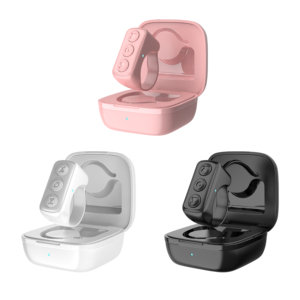
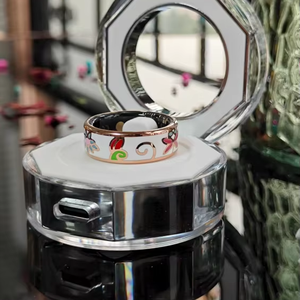
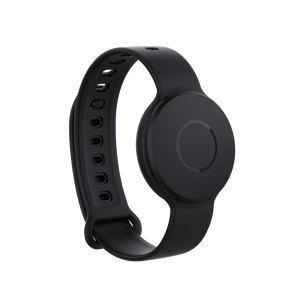
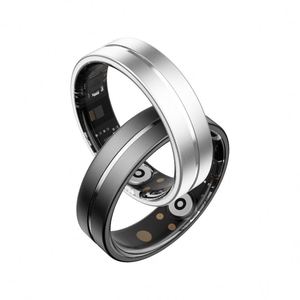
High-Efficiency Monochromatic Green Micro-Optical Engines: Why Green Display Smart Glasses Lead Industrial Deployments
In human visual perception, the photopic luminosity function peaks precisely at 555 nanometers—the green spectral band. For head-mounted displays operating in outdoor, extreme-contrast, or industrial ambient environments, monochromatic green microLED and diffractive optical waveguide engines represent the zenith of efficiency, contrast ratio, and battery longevity. While consumer-grade smart glasses frequently pivot toward full-color binocular engines, heavy industry, mining telematics, precision agriculture, and enterprise maintenance favor high-nit monochromatic green micro-displays.
Optical Superiority and Luminous Efficacy
Green micro-displays achieve luminance efficiencies surpassing 100,000 nits at the engine level, translating to over 1,500 to 2,500 nits to the human eye after waveguide coupling loss. This optical throughput allows workers under Chile's hyper-arid, high-ultraviolet Atacama Desert sunlight or maritime coastal conditions in Valparaíso to read crisp contextual telemetry, telemetry telemetry prompts, schematics, and sensor feedback without optical wash-out. Furthermore, single-wavelength green light mitigates chromatic aberration entirely, eliminating bulky multi-element collimation optics and shrinking temple-arm thickness below 8.8mm.
Energy Dynamics and Heat Dissipation Profiles
Power consumption in wearable architectures determines weight, safety, and operational reliability. Monochromatic green microLED arrays require up to 72% less power than comparable RGB micro-OLED matrices displaying alphanumeric strings. By operating on ultra-efficient sub-100mAh lithium-polymer cells integrated within aviation-grade magnesium-aluminum or TR90 frames, continuous operating times extend from 14 hours to 36 hours on a single charge. Thermal throttling is practically eliminated, maintaining temple chassis temperatures well below international ergonomic skin-contact thresholds (<38°C).
Chilean Industry Applications: From Copper Corridors to Port Logistics
Precision-engineered smart glasses tailored to Chile's geographic diversity, corporate safety standards, and expanding 5G telecommunication infrastructure.
Mining Operations & High-Altitude Safety (SERNAGEOMIN Compliance)
Chile's Antofagasta, Calama, and Tarapacá copper and lithium sites require hands-free visual telematics. Integrating our green HUD optics with safety hard-hat clips provides live atmospheric gas alerts, dispatch alerts, and structural inspection checklists without obstructing the wearer's peripheral field of vision.
Maritime Logistics & Port Terminals (San Antonio & Valparaíso)
Container yard operators and customs agents handle tens of thousands of TEUs weekly. Ruggedized IP67 smart glasses with barcode, QR-code scanning, and real-time OCR telemetry speed up cargo verification while allowing crane operators to receive target coordinates directly onto high-contrast green focal planes.
Viticulture & Agricultural Telematics (Central Valley)
From the Maipo to Colchagua valleys, smart viticulture depends on rapid micro-climate monitoring and pruning assessment. Agronomists leverage smart glasses paired via BLE 5.3 to smart rings and soil probes to review NDVI maps and canopy data hands-free under blazing midday sun.
Chile Wearable Tech Market Trends (2025–2030)
Chile stands as Latin America’s undisputed pioneer in digital connectivity. Following the nationwide deployment of 3.5 GHz commercial 5G networks and aggressive corporate digitization backed by CORFO initiatives, Chilean enterprises are transitioning from consumer handhelds toward purpose-built hands-free edge devices.
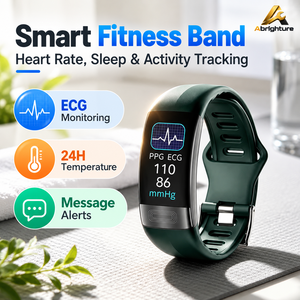
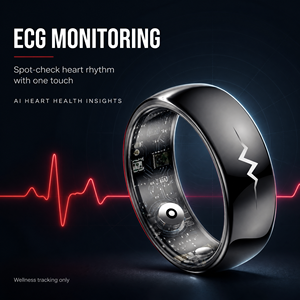
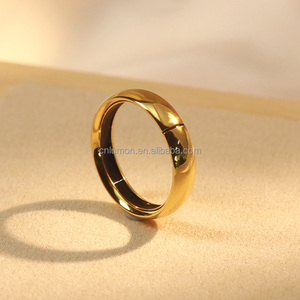
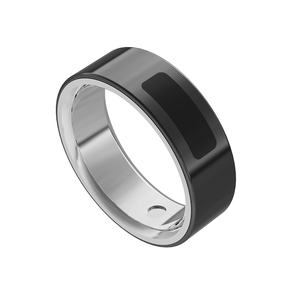
Key market drivers include: (1) Strict Occupational Hazard Controls: Chilean Law 16.744 dictates strict safety guidelines in remote heavy machinery operation, incentivizing augmented HUD overlays that keep eyes on task; (2) Bilingual Enterprise AI Adoption: Cross-border corporate hubs in Santiago demand real-time Spanish-English translation overlays during video calls and international asset audits; (3) Convergence of Multi-Node Sensor Ecosystems: Chilean health insurers (ISAPREs) and commercial logistics operators increasingly purchase bundled ecosystems—pairing smart glasses with physiological monitoring rings and panic-beacon bracelets for complete employee vitals tracking.
Full-Stack OEM/ODM Manufacturing Excellence
From Shenzhen's elite hardware supply ecosystem to Santiago port clearance—guaranteed execution, end-to-end IP protection, and ISO 9001 certified precision.
In-House ID & Optical Lab
Custom tooling, CMF engineering, and optical prism alignment. We optimize weight distribution to ensure center-of-gravity rests comfortably across nasal bridges.
SMT & Cleanroom Assembly
Equipped with 2 high-speed SMT lines and 8 assembly tracks, delivering ultra-compact flexible PCB integration with micron-level placement precision.
Firmware & SDK Customization
Full SDK release for Android/iOS, custom RTOS compilation, secure BLE payload encryption, and proprietary green display rendering engines tailored for brand apps.
Turnkey Quality Control
A rigorous 5-stage QC flow covering IQC, IPQC, FQC, OQC, and environmental drop/thermal-shock stress tests ensuring field defect rates remain strictly below 5‰.
Chile Importer & Procurement FAQ
Technical and commercial answers addressing Chilean importation, regulatory compliance, and ODM product development.
Q1: Do your smart glasses and wearable devices comply with SUBTEL regulations in Chile?
Yes. All wireless Bluetooth (BLE 5.0/5.3) and Wi-Fi transmission modules are engineered and tested to comply with SUBTEL (Subsecretaría de Telecomunicaciones) resolution parameters for radio-frequency equipment. We supply complete test reports (FCC/CE) to streamline certificate homologation in Chile.
Q2: How do your green display smart glasses withstand the harsh UV and dust conditions in northern Chile?
Our industrial-grade frames use UV-stabilized polycarbonate and TR90 polymer coatings that resist thermal degradation in extreme desert conditions. Optical engines are sealed within IP65/IP67 rated enclosures, preventing fine silica and copper dust ingress.
Q3: What are the sample lead times and mass production minimums (MOQ) for Chilean brands?
Standard functional evaluation samples ship within 7 business days via air courier (DHL/FedEx to Santiago). Custom ODM programs featuring bespoke tooling and localized Spanish companion apps have a production lead time of 30 to 35 days following EVT sign-off. Standard OEM branding starts from 500 units.
Q4: Can we integrate custom software or connect the display to our proprietary enterprise ERP?
Absolutely. We provide open API interfaces, comprehensive BLE serial protocols, and software development kits (SDKs) supporting Android, iOS, and embedded Linux. Your local engineering team can output customized telemetry prompts directly onto our green micro-display.
Accelerate Your Smart Wearable Line in Chile
Partner directly with Shenzhen’s premier R&D factory. Access confidential hardware schematics, customized housing designs, and volume tier pricing today.
Get Catalog