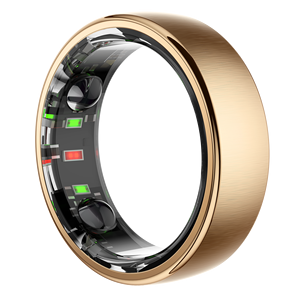
Hardware Inventory
Enterprise Portfolio Engineered for Commercial Export
Tested for extreme temperatures, cross-jurisdictional biometric compliance, and robust daily ergonomics.
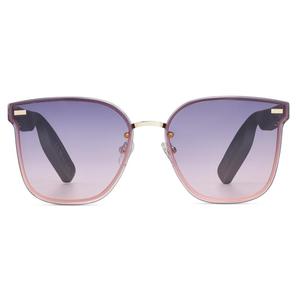
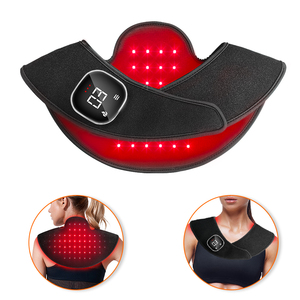
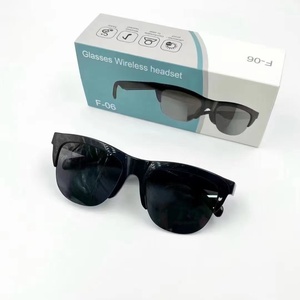
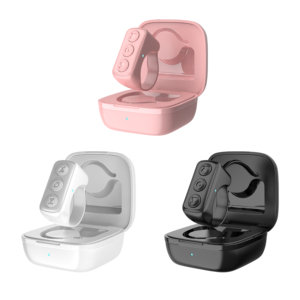
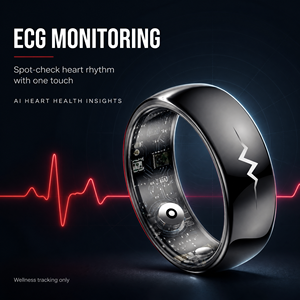
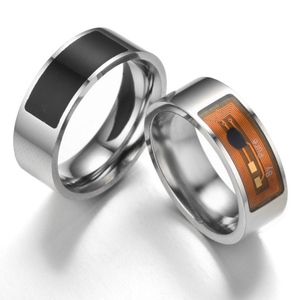
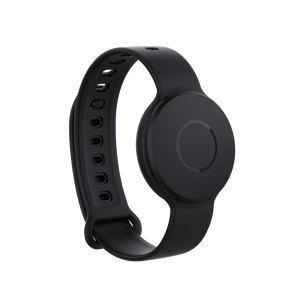
Market Fit Engineering
Canadian Ecosystem Deployments: Overcoming Sub-Zero and Demographic Hurdles
Exporting smart wearable devices to Canada demands technical competencies beyond generic consumer electronics. The geopolitical, demographic, and meteorological landscape requires targeted hardware and software adjustments that our OEM/ODM facilities execute natively during prototype tooling and firmware compilation.
Sub-Zero Battery Chemistry (Cold Weather Optimization)
Standard lithium-polymer cells experience rapid voltage drop-off below -10°C, causing abrupt system shutdowns. For the Canadian market—spanning Ontario down to the Northwest Territories—we integrate specialized low-temperature electrolyte blends and modified lithium-cobalt oxide (LiCoO2) cathode architecture. Our smart rings and clinical wristbands maintain full micro-controller operational voltage at -25°C, ensuring uncompromised field telemetry during Canadian winters.
Geriatric Telecare & Remote Patient Monitoring (RPM)
Canada’s universal healthcare framework faces structural load challenges, accelerating funding into provincial home-care infrastructure (such as Ontario Health Teams). Our W6 BLE telemetry bands and RZ20 Smart Rings are engineered with custom GATT services and automated REST API webhooks. They stream continuous biometric trends—ambient skin temperature, nocturnal SpO2 drops, and sudden deceleration vectors indicating falls—directly to hospital networks and independent living platforms.
Enterprise Worker Safety in Natural Resources & Mining
Deployed in British Columbia forestry and Alberta energy sectors, our hardware acts as the first line of personnel monitoring. Featuring IP68 and 5ATM hermetic encapsulation, our wearable units survive heavy mud, hydrostatic pressure, and vibration exposure. Configurable haptic engines provide tactile alerts when biometric exhaustion thresholds are crossed or ambient hazardous conditions are detected via connected beacon arrays.
Macro Market Trajectory
Emerging Trends Reshaping Wearable Imports Across Canadian Provinces
The Canadian wearables market has decisively matured past the novelty fitness-tracker era. Importers, retail distributors, and health-tech incubators must align product matrices with distinct regulatory and technological shifts happening throughout Canada:
Strict PIPEDA & Law 25 Architectural Alignment
Consumer privacy in Canada is among the strictest globally. Quebec’s Law 25 and national PIPEDA mandates prohibit non-consensual offshore biometric data transfer. We solve this for OEM buyers by providing decoupled firmware models: raw sensor parameters are securely processed on-device (Edge Computing), allowing client smartphone apps to pipe encrypted payloads directly to local Canadian cloud nodes (AWS Montreal / Azure Central) without passing through intermediary proprietary third-party servers.
Dual-Language Ecosystems (English & French Canadian)
Compliance under the Canadian Consumer Packaging and Labelling Act and Quebec's Charter of the French Language requires end-to-end linguistic localization. Our ODM software engineering encompasses complete localization of mobile companion apps (iOS/Android), packaging, legal user inserts, and onboard optical prompt HUDs into verified Canadian French (Français Canadien) and North American English.
ISED Radio Certification Integration at Factory Gate
Navigating Innovation, Science and Economic Development Canada (ISED) regulations can delay product rollouts by quarters. Our internal RF laboratories pre-tune antenna resonance and SAR (Specific Absorption Rate) geometries against IC RSS-247 and RSS-102 benchmarks, delivering turn-key testing data packages to speed up your local Canadian certification filings.
Foundational Rigor
Enterprise Manufacturing Infrastructure
Direct from our state-of-the-art facilities in Shenzhen, delivering end-to-end production control without broker intermediaries.
High-Density SMT & Micro-Encapsulation
Equipped with 2 ultra-precision SMT lines and 8 assembly bays, our factory masters system-in-package (SiP) micro-soldering. We manufacture ultra-compact, double-sided curved flex-PCBs capable of embedding 3-axis accelerometers, PPG optical sensors, and BLE radios within a 2.5mm ring profile.
In-House Tooling & Advanced CMF
From aerospace-grade Titanium TC4 precision CNC turning to medical ceramic sintering and scratch-resistant physical vapor deposition (PVD) coating, our industrial design (ID) and structural teams deliver exterior aesthetics identical to leading global hardware flagships.
5-Tier Quality Assurance Architecture
Operating under ISO 9001 protocols, every production cycle undergoes a rigorous 5-stage quality gate: Incoming Component Testing (IQC), In-Process Control (IPQC), 100% Function & Drop Testing (FQC), Extreme Thermal Cycling Reliability, and Outgoing Shipping Audit (OQC) to cap defect rates below 5‰.
Comprehensive Intellectual Property Guardrails
We work under rigorous non-disclosure agreements (NDAs). Firmware source codes, ID mold designs, and proprietary algorithmic tuning parameters remain fully sequestered, guaranteeing that our private-label partners retain full market exclusivity for their hardware platforms.
Procurement Inquiries
Frequently Asked Questions by Canadian Importers
Critical considerations spanning logistics, certification, hardware customization, and lead times.
What specific certifications are required for importing smart wearables into Canada?
Smart wearables entering Canada must comply with Innovation, Science and Economic Development Canada (ISED) regulations, specifically IC testing (RSS-247 for Bluetooth/Wi-Fi devices and RSS-102 for SAR evaluation). Devices with direct electrical charging contact must also align with electrical safety mandates governed by the Standards Council of Canada (SCC) approved standards (such as cULus or CSA markers). Additionally, materials coming into prolonged skin contact are verified under RoHS and REACH toxicity directives to avoid dermatological irritants.
How does your factory accommodate Canadian cold-weather reliability?
During the engineering product definition stage, Canadian clients can specify broad-temperature industrial polymer batteries featuring custom electrolyte blends that maintain discharge characteristics down to -25°C. Furthermore, thermal compensation algorithms in our firmware adjust optical sensor power output dynamically, preventing the measurement errors commonly caused by skin vasoconstriction in freezing environments.
Can you integrate custom firmware that connects to Canadian healthcare APIs?
Yes. As a pure-play ODM developer, we provide open SDKs, Bluetooth GATT documentation, and custom firmware compilation. We can tailor internal memory stacks to format data outputs for integration into FHIR-compliant Canadian healthcare infrastructures, or route encrypted data solely through chosen Canadian data-center endpoints without proprietary vendor lock-in.
What are your typical timelines for custom sample delivery and mass export shipments?
Platform evaluation samples are dispatched within 7 business days. For fully custom ODM configurations requiring new tooling, mold fabrication, and algorithmic testing, EVT/DVT prototypes take roughly 30–45 days. Once pre-production verification (PVT) sign-off is completed, our mass production lead time averages 35 days, with direct air freight options reaching Toronto Pearson (YYZ) or Vancouver International (YVR) within 4–6 business days.
What Minimum Order Quantities (MOQs) apply for private labeling?
For custom laser etching of ring chassis, branded laser glass frames, custom packaging, and minor cosmetic variations on existing platforms, our baseline MOQ begins at 500 units. For full ODM hardware iterations including custom mold fabrication and ground-up PCBA routing, production runs typically scale from 1,000 to 3,000 units.
Direct Factory Consultation
Accelerate Your Wearable Hardware Program in Canada
Whether you require a custom batch of sub-zero optimized biometric rings, AR-integrated glasses, or specialized health telemetry trackers, our R&D team is ready to evaluate your bill of materials (BOM), software architecture, and Canadian compliance pathway.
Contact Us