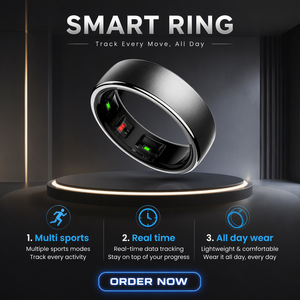
Precision Hardware Portfolio
Flagship Smart Wearables & AI Optical Platforms
Engineered for high data throughput, rugged ergonomics, and enterprise compatibility across New South Wales enterprise and commercial networks.
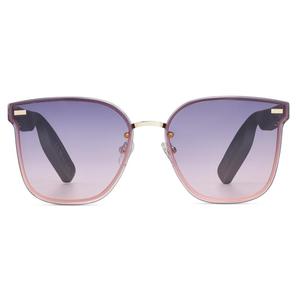
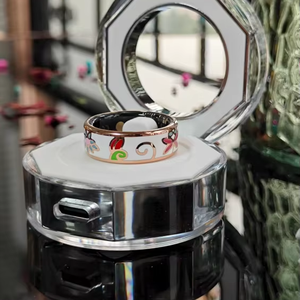
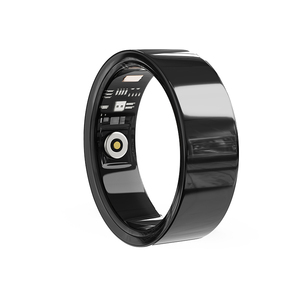
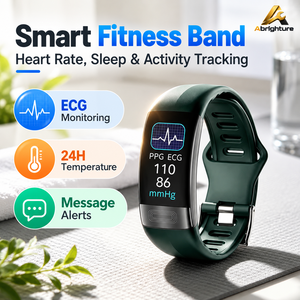
⚙ Technical Architecture: High-Luminance Micro-Display & Waveguide Integration
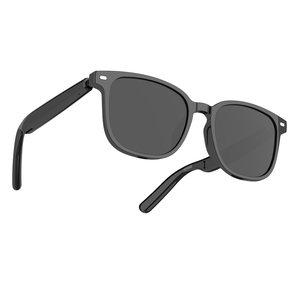
When engineering AI glasses with integrated heads-up display (HUD) systems for the Australian corporate and industrial sector, optical performance under severe daylight irradiance is the primary engineering challenge. Ambient light levels across New South Wales frequently exceed 85,000 to 100,000 lux during peak summer hours. Traditional beam-splitter prisms and low-output projection systems wash out entirely, inducing extreme visual fatigue, accommodation-vergence conflict, and severe cognitive strain for field operators.
As a seasoned tier-one original design manufacturer (ODM), our optical laboratory integrates diffraction-based surface-relief relief (SRG) optical waveguides alongside custom Micro-OLED and Micro-LED light engines capable of delivering binocular or monocular peak ocular luminance from 1,500 nits up to 3,500 nits directly to the pupil eye box. This guarantees razor-sharp crispness for telemetry dashboards, live bidirectional translation, turn-by-turn vectors, and dynamic visual overlays whether navigating Sydney's Martin Place financial district or conducting asset inspections along Port Botany.
Optical Engine
Geometric & Diffractive Waveguides
Utilizing high-refractive-index glass wafers (n ≥ 1.9) with micro-nanometer etching precision, eliminating internal chromatic aberration while maintaining an ultra-thin 1.6mm lens thickness profile.
Acoustic Engineering
Dual-Beamforming ENC Microphones
Custom directional microphone arrays running DNN noise suppression algorithms, isolating wearer speech amidst 75dB industrial reverberation and ambient urban transport noise.
Thermal Envelope
Passive Copper Foil & Graphene Dissipation
Proprietary structural heat spreaders ensure temple operating temperatures stay below 37.8°C, sustaining continuous Edge-AI computation without triggering localized skin thermal throttling.
Regional Market Alignment
Localized Application Scenarios Across Sydney Metropolitan Infrastructure
Analyzing field-proven use cases where hands-free optical intelligence accelerates enterprise efficiency, logistics flow, and professional collaboration.
🚢
Maritime Logistics & Port Botany Intermodal Hubs
Operators handling container transfers, hazardous cargo manifests, and rail-freight intermodal sorting utilize ruggedized display frames to access real-time OCR telemetry, barcode scanning vectors, and remote expert assistance without detaching protective leather gloves or looking down at bulky handheld tablets.
🩺
Westmead & Randwick Health Precincts
Surgical specialists and mobile medical practitioners deploy hands-free AI display lenses for unobtrusive patient vitals feeds, automated real-time medical transcription, and live camera-streamed diagnostic mentoring, fully compliant with clinical ergonomic posture standards.
🌐
Sydney CBD Multinational Commerce & Hospitality
Financial executives and bilingual trade delegates operating throughout Barangaroo and the Sydney ICC capitalize on 145-language real-time speech translation displayed directly on transparent micro-lenses, neutralizing cross-border linguistic latency in high-stakes negotiations.
🏗️
Western Sydney Aerotropolis Engineering
Civil contractors, BIM engineers, and structural surveyors reference digital architectural blue-prints, subterranean electrical cabling schematics, and sensor calibration metrics mapped straight into visual peripheral space under intense sunlight.
⚡
Renewable Energy & High-Voltage Grid Patrols
Field technicians servicing regional transmission substations and solar array distribution centers rely on thermal imaging streaming modules and contextual voice check-lists, boosting compliance with NSW Work Health and Safety (WHS) protocols.
🎓
Higher Education & University Research R&D
Research teams across UNSW, University of Sydney, and UTS utilize fully unlocked SDK platforms with open IMU, camera, and eye-tracking serial protocols for computer vision training, spatial spatial audio design, and human-computer interface modeling.
📈 Strategic Market Trends Driving AI Optical Wearables in Australia
The Australian enterprise landscape is undergoing a structural transition away from handheld compute hardware towards ambient spatial computing interfaces. In Sydney, procurement directives are shaped by aggressive workplace productivity mandates, rising operational labor costs, and a stringent regulatory environment overseen by SafeWork NSW and the Australian Communications and Media Authority (ACMA).
Key macroeconomic and technical forces driving this acceleration include:
- Stringent Occupational Health & Safety Demands: Hands-free protocols are shifting from optional luxury to mandatory safety standards across mining, civil construction, and rail operations, driving replacement cycles of legacy PDAs with heads-up displays.
- Ubiquitous 5G Standalone (SA) Coverage: Sydney's dense mmWave and sub-6GHz enterprise networks enable offloading heavyweight LLM inferences to low-latency edge servers, maintaining lightweight frame architectures under 58 grams.
- Localized Data Sovereignty & Privacy Safeguards: Commercial enterprises require on-device edge processing, dedicated on-premise Bluetooth gateway bridges, and zero-retention cloud pipelines conforming to the Australian Privacy Principles (APPs).
- Cross-Environment Optical Adaptability: Growing appetite for electrochromic dimming lenses that shift transmission from 85% clear indoors to 15% dark outdoors within 1.2 seconds, tailored for Australia's UV Index 11+ conditions.
Procurement Due Diligence
Frequently Asked Questions by Australian Importers & Enterprise Buyers
Direct technical and operational clarifications addressing regulatory, supply chain, and hardware integration queries.
? Do your AI smart glasses comply with Australian RCM and ACMA standards?
Yes. All OEM/ODM electronic shipments are engineered to obtain the Regulatory Compliance Mark (RCM), satisfying AS/NZS CISPR 32 standards for electromagnetic compatibility and AS/NZS 62368.1 electrical safety guidelines before port entry.
? How do the optical displays perform under bright Australian summer sunlight?
Our optical architectures leverage high-efficiency micro-LED and micro-OLED optical waveguides delivering ocular field brightness exceeding 2,500 nits, reinforced by optional photochromic or polarized clip-on sun shields certified under AS/NZS 1067.1.
? Can we customize the firmware and mobile applications with private-label branding?
Absolutely. We provide end-to-end software integration including custom bootloader animations, private-label iOS and Android APK deployments, custom cloud backend integration, and raw BLE/Wi-Fi serial SDK access for internal IT ecosystems.
? What are the standard lead times for custom tooling and mass production runs?
Standard engineering verification prototypes ship within 7 days. Full custom industrial design, tooling molds, EVT/DVT phases, and mass production runs conclude within approximately 35 business days following final drawing sign-off.
? How is IP integrity and proprietary software architecture protected?
We execute legally binding bilateral non-disclosure agreements (NDAs). Design schematics, custom molds, PCB Gerber files, and proprietary neural network weight models remain locked to dedicated engineering cells with zero third-party cross-use.
? What warranty and technical support provisions are provided for Australian orders?
Every batch comes with a 12-month comprehensive factory warranty, dedicated RMA spare parts allocation, and 24/7 direct-access engineering support to accommodate Sydney Standard Time (AEST/AEDT) operational schedules.
🏭 Institutional OEM/ODM Manufacturing Strengths
Operating since 2009 at the epicentre of the Shenzhen high-technology industrial cluster, our consolidated production campus eliminates intermediate contracting layers. With industrial design, optical alignment cleanrooms, high-speed SMT placement, and firmware flashing housed under one quality-certified roof, we deliver deterministic engineering outcomes for demanding global partners.
8+2 SMT & Assembly Lines
High-precision Fuji surface-mount machines capable of placing 0201 passives and ultra-dense micro-BGA packages on flexible-rigid boards.
ISO 9001 Certified QA
Rigorous 28-point staging validation encompassing drop tests, hinge lifecycle flexion, ingress sealing, and continuous thermal run-in chambers.
Optical Class-100 Cleanroom
Precision robotic alignment for optical waveguides and micro-display prisms, ensuring zero particle intrusion and micron-level optical registration.
Full-Chain Product Stewardship
In-house tooling, acoustic chamber calibration, mold injection, packaging fabrication, and global logistics documentation under one roof.