Industrial-Grade Hardware Directory
High-Reliability Smart Wearables & Edge AI Platforms
Pre-certified sensor architectures, ultra-low-power DSP integration, and ruggedized packaging engineered for demanding commercial, fitness, and enterprise deployments.
2009
Established Since
50+
Utility Patents
8+2
Assembly & SMT Lines
300K+
Monthly Output
<5‰
Defect Threshold
40+
Global Export Hubs
Strategic AI Hardware Engineering for Mumbai's Industrial & Corporate Core
As India’s primary financial capital and an accelerating epicenter for deep tech, telematics, and digital health, Mumbai presents a unique convergence of technical demand and environmental challenges. Hardware engineering teams operating within the Bandra-Kurla Complex (BKC), Powai’s IIT tech clusters, and the manufacturing belts of Navi Mumbai and Thane increasingly look to Tier-1 turnkey suppliers capable of translating complex computational models into rugged, low-power edge form factors. Designing hardware for this metropolitan ecosystem requires moving beyond off-the-shelf development boards toward specialized embedded systems capable of continuous inference under demanding physical constraints.
Shenzhen Yt Technology Co., Ltc. bridges the critical gap between conceptual silicon architecture and mass commercial fabrication. Established in 2009, our manufacturing infrastructure operates with an ISO 9001 certified ecosystem spanning two dedicated SMT lines, eight specialized assembly lines, and in-house firmware/algorithmic tuning laboratories. When deploying connected sensor arrays, smart rings, voice-driven AI glasses, and wireless medical telematics in Mumbai, engineering resilience must counteract heavy industrial EMI, fluctuating tropical humidity, and persistent heat dissipation bottlenecks. Our direct factory-to-enterprise integration ensures Indian hardware developers, corporate integrators, and OEM distributors secure verified bill-of-materials (BOM) pipelines, complete intellectual property (IP) ringfencing, and deterministic delivery cycles.
Edge Computing
Integrated TinyML architectures and low-power ARM Cortex-M microcontrollers executing sensor fusion locally without cloud dependency.
Tropicalized CMF
IP68 waterproof and nano-coating encapsulation engineered to survive coastal monsoon humidity and salt-spray oxidation in Western India.
Rigorous NDA & IP
Dedicated production partitions, isolated client Gerber files, and legally enforced bilateral non-disclosure frameworks securing your proprietary schemes.
Compliance Readiness
Pre-engineered hardware structures aligned with CE, FCC, RoHS, and BIS validation paths, significantly reducing institutional time-to-market.
Localized Deployment Paradigms Across Mumbai's Industrial Sectors
Engineering edge computing systems requires careful adaptation to real-world deployment parameters. Generic consumer prototypes fail in production environments due to unmitigated mechanical impact, electrical interference, and unoptimized sensor placement. Our factory engineering programs target three critical regional applications:
Corporate Wellness & Financial Enterprise Analytics
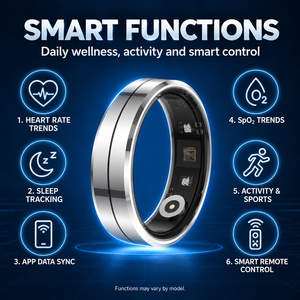
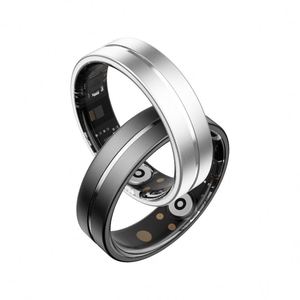
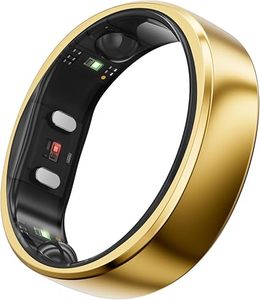
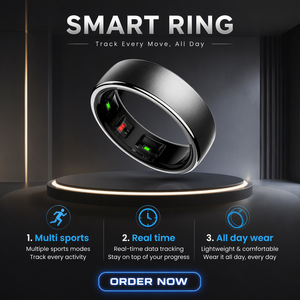
Within the fast-paced trading floors and corporate headquarters of Nariman Point and BKC, employee health management has evolved into proactive occupational wellness. Our low-profile smart rings utilize clinical PPG (photoplethysmography) and skin conductance modules running HRV (heart rate variability), SpO2, and deep sleep tracking algorithms. Encased in surgical-grade titanium or stainless steel alloys, these form factors operate continuously for 5 to 7 days on a single inductive charge, supplying encrypted Bluetooth telemetry directly to proprietary corporate health applications without causing wrist fatigue or screen distraction.
Maritime, Cold-Chain & Port Logistics at JNPT
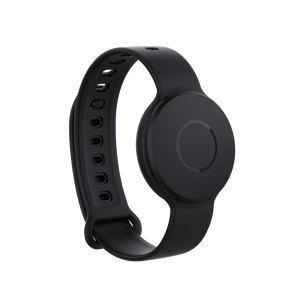
The Jawaharlal Nehru Port Trust (JNPT) and accompanying logistics corridors in Navi Mumbai handle a massive share of national cargo. Deploying personnel safety and tracking systems requires resilient, explosion-proof hardware design. Our programmable BLE beacons and industrial wristbands incorporate tri-axis accelerometer sensors, fallback geofencing logic, and real-time distress triggers. With ultrasonic welding and specialized potting compounds, these devices achieve genuine IP68 liquid ingress resistance, safeguarding operational efficiency across damp container terminals, heavy transshipment yards, and chemical logistics hubs.
Clinical Telehealth & Private Hospital Monitoring
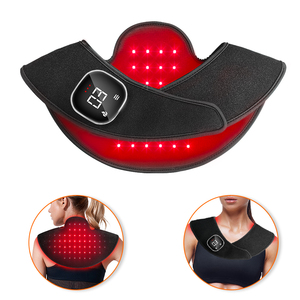
Premier healthcare institutions in South and Central Mumbai increasingly deploy remote biometric monitoring to alleviate overburdened inpatient infrastructures. By leveraging our dual-chip red light therapy wraps and multispectral PPG ring platforms, biomedical providers capture cardiovascular metrics, peripheral oxygenation, and tissue recovery profiles remotely. Our firmware team supplies customized BLE/Wi-Fi communication stacks designed to interface with hospital management systems (HMS) via secure, RESTful microservices, ensuring patient privacy and data integrity.
Macro Technology Trends Shaping Mumbai's AI Hardware Procurement
Hardware development in Maharashtra is undergoing structural transformation driven by national high-tech manufacturing initiatives, 5G commercial maturity, and corporate modernization. Hardware procurement directors and product definition teams are adopting specific criteria when auditing foreign ODM/OEM manufacturing lines:
1. Shift from Cloud Computing to Edge AI Inference: Rising cloud compute costs and network latency across dense urban cells have accelerated the mandate for edge inference. Modern smart wearables must process sleep architecture, cardiac arrhythmia detection, and motion gestures directly on the device using lightweight neural networks (TinyML), transmitting only finalized telemetry packets.
2. Stringent Environmental Durability & CMF Integrity: Mumbai’s extended monsoon seasons subject electronic assemblies to elevated corrosive vapor and extreme relative humidity (often exceeding 90%). Surface-mount technology (SMT) must incorporate advanced conformal coatings, selective nickel-gold immersion (ENIG) plating, and airtight ultrasonic seal designs to ensure zero field failures.
3. Demand for Unified System-in-Package (SiP) Solutions: As consumers migrate toward screenless, minimalist wearables, internal physical volume shrinks dramatically. OEMs require high-density multi-layer printed circuit boards (HDI PCBs) and flexible circuits capable of hosting power management ICs (PMIC), wireless transceivers, and optical sensor arrays within sub-3mm structural enclosures.
End-to-End OEM/ODM Engineering: From Schematic to High-Volume Production
Scaling an intelligent hardware concept into a mass-market product requires strict stage-gate discipline. Shenzhen Yt Technology Co., Ltc. removes execution risks by unifying all R&D, structural engineering, and manufacturing phases under one roof:
01
Architecture Definition
Sensor BOM selection, compute latency budgeting, power modeling, and market-entry regulatory scoping.
02
Industrial Design & CMF
Ergonomic mechanical modeling, rapid SLA/SLS 3D prototyping, and high-end surface finish definitions.
03
Tooling & Mold Making
High-precision tooling, dynamic structural mold flow analysis, and mechanical tolerance validation (DFM).
04
Firmware & Algorithms
Embedded C development, digital signal processing (DSP), Bluetooth Low Energy stacks, and SDK APIs.
05
DVT & EVT Verification
Thermal chamber cycling, drop resistance tests, saltwater immersion, and battery lifecycle audits.
06
High-Capacity SMT & PVT
Automated optical inspection (AOI), high-speed component mounting, and final quality control checks.
Frequently Asked Questions: Hardware Procurement & Import for Mumbai
Critical operational answers for supply chain directors, procurement leads, and technology founders navigating overseas hardware manufacturing.
What is the standard production timeline for initial prototypes and mass batches?
Existing baseline tooling samples ship within 7 business days for electrical and ergonomic evaluation. Fully custom ODM hardware projects involving new mold tooling, bespoke PCB design, and private-label firmware integration require 4 to 6 weeks for EVT/DVT testing, followed by a 35-day mass manufacturing cycle after sign-off.
How do you assist Mumbai buyers with Indian regulatory and customs clearance (BIS/WPC)?
While our factory products carry global CE, FCC, RoHS, and UKCA compliance marks, we proactively supply Indian corporate buyers with calibrated RF performance reports, UN38.3 battery flight documentation, and full bill-of-materials declarations required for Bureau of Indian Standards (BIS) and Wireless Planning & Coordination (WPC) certification filings.
Can you accommodate private-label mobile app integration and proprietary cloud pipelines?
Yes. We deliver turnkey Android and iOS white-label applications branded with your corporate identity, or provide low-level SDKs and BLE transmission API keys. This enables your internal development team in Mumbai to stream raw biometric and inertial data directly into proprietary cloud servers without external dependencies.
What quality assurance mechanisms prevent field defects in mission-critical applications?
We adhere to a rigorous 28-checkpoint quality verification framework spanning five separate gates: IQC (raw materials), IPQC (SMT & assembly), FQC (100% functional testing), OQC (reliability, drop & water pressure), and final pre-shipment auditing. Through strict process control, our field defect rate is documented below 5 per thousand (<5‰).
Accelerate Your AI Hardware Roadmap Today
Connect directly with our senior engineering team to evaluate product definition schematics, request physical verification samples, and receive comprehensive volume quotations tailored for your Indian market expansion.
Get Catalog