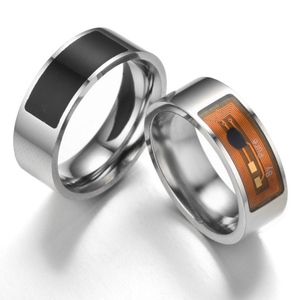
Featured Acoustic & Wearable Platforms
Featured OEM/ODM Wearable Engineering Units
Explore our production-ready hardware platforms spanning bidirectional AI translation acoustic systems, dual-engine voice transcription rings, and head-mounted optical intelligence.
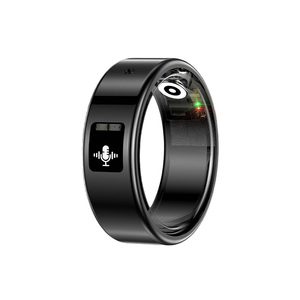
Customized Hardware Intelligent Interview Wearable with Voice Transcription Support AI Recording Smart Ring
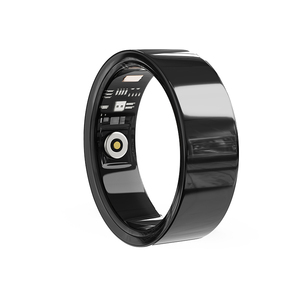
AI Health Tracker with Sleep SpO2 Monitoring IP68 Smart Ring for Men Women NFC Control Ceramic Bezel Magnetic Fast Charging
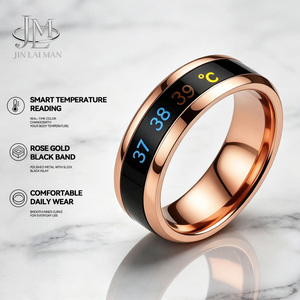
JLM Factory Direct Stainless Steel Smart Temperature Sensing Mood Ring Men Women Lovers Trendy Fashion Wedding Gift Band Jewelry
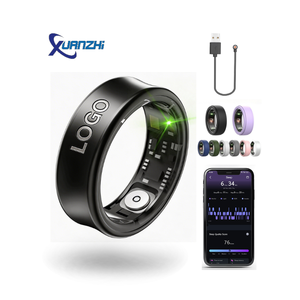
SHR OEM K3 AI Analysis Smart Ring App Control Sleep Tracker IP67 Waterproof Body Recovery Tracking Stress Level Management
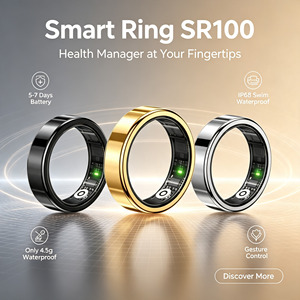
Newest Sports Fitness Tracker Smart Ring Waterproof Heart Rate Blood Oxygen Sleep Monitor Exercise Smart Rings for Men Women
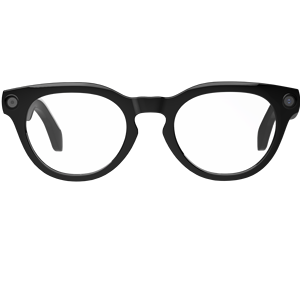
OEM ODM acceptable Smart AI Glasses AI Translation Anti-Shake Bluetooth Waterproof 4K Video Photo Smart Glasses with Display
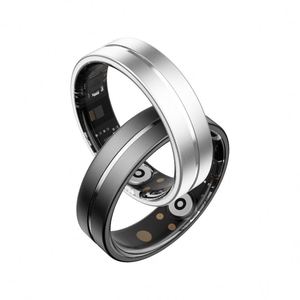
2026 New Trending Smart Ring TK7 Multifunctional Smart Ring Health Tracker Voice Touch Control Vibration Alert Support OEM/ODM
2009
Established Manufacturing
300,000+
Monthly Units Production
8+2
Assembly & SMT Lines
<5‰
Batch Defect Rate
Engineering Whitepaper
The Next-Generation Neural Acoustic Computing Engine
The international market for personal smart translation hardware has transitioned completely away from rudimentary consumer Bluetooth earbuds that act as dumb conduits for smartphone cloud translation APIs. In modern international supply networks, enterprise-grade AI translation earbuds are deployed as independent edge-computing and acoustic-isolation ecosystems. The convergence of multilingual natural language processing (NLP), on-device neural voice activity detection (VAD), and ultra-low latency wireless streaming protocols has reshaped standard procurement criteria for global electronics importers.
At Shenzhen Yt Technology Co.,Ltc. (YT Smart Wear), our OEM/ODM translation infrastructure resolves the fundamental trade-off of cross-language acoustic communication: End-to-End Latency vs. Semantic Precision. Achieving natural, simultaneous interpretation necessitates an acoustic pipeline operating under 450 milliseconds. Conventional cloud-dependent architectures routinely exhibit round-trip latencies of 1.2 to 2.8 seconds, producing disorienting conversation pauses that degrade business negotiations, bilateral diplomatic exchanges, and international tourism workflows.
Three Pillars of Acoustic Sub-System Engineering
1. Directional Dual/Triple Beamforming Microphones: Standard consumer MEMS microphones pick up background ambient audio indiscriminately. Our hardware integrates precise physical acoustic chambers tuned with Knowles digital MEMS arrays. Coupled with our proprietary Environmental Noise Cancellation (ENC) neural networks running on dual-core 32-bit DSPs, our acoustic front-end achieves an SNR improvement of greater than 28 dB, isolating human voice spectrums even in train stations or busy exhibition floors.
2. Edge-Cached Hybrid Neural Machine Translation (NMT): Through deep integration with leading global LLMs and localized offline NMT databases, our platforms execute high-frequency lexical tokenization locally. When connected to high-bandwidth cellular networks via private-labeled client APPs, the system transitions fluidly between on-device edge inferencing and high-parameter cloud neural synthesis across 144 languages and dialects.
3. Dual-Earbud Bi-Directional Splitting: The true test of ODM translation firmware is "One-Pair, Two-User" mode. By establishing independent dual-channel audio streams over Bluetooth 5.4 BLE with custom LE Audio LC3 codecs, two conversation participants can wear a single earpiece each, exchanging natural dialogue simultaneously without audio cross-talk or synchronization degradation.
Market Intelligence
Future Sourcing & Procurement Trends for Global Buyers
Sourcing intelligence for B2B category managers, Amazon brand aggregators, and consumer tech distributors navigating the 2026–2030 smart wearable horizon.
On-Device Offline LLM Model Miniaturization
B2B procurement contracts are shifting away from pure cloud-subscription translation units. Enterprise buyers now mandate hardware with 32MB+ embedded Flash capable of running on-device distilled quantized translation weights, eliminating roaming data dependencies and meeting corporate air-gap compliance requirements.
Sovereign Data Privacy & Zero-Retention Security
European and North American regulatory authorities (GDPR, CCPA, EU AI Act) enforce stringent data handling standards on acoustic data capture. Future-proof procurement requires ODM partners who supply localized data centers, end-to-end encrypted audio payloads, and fully certified zero-audio-retention API switches.
Ultra-Low Power Multimodal Sensor Synergy
Smart translation earbuds are no longer isolated audio nodes. Modern platform RFPs specify interoperability with smart ring bio-telemetry and smart display optical glasses, forming synchronized personal computing ecosystems managed via unified private-label iOS/Android SDKs.
R&D Trajectory
Technological Evolution: From Static Speech-to-Text to Context-Aware Emotion Synthesis
The commercial trajectory of translation acoustics is progressing through four definitive architectural epochs. Understanding these phases allows international brands to formulate multi-year procurement roadmaps that prevent premature inventory obsolescence.
Phase 1 (Legacy)
Push-to-Talk Mono
Unidirectional speech capture reliant on phone touchscreen interaction. High latency (>2500ms), basic BLE 4.2 audio profiles, standard cloud STT/TTS routing.
Phase 2 (Current Baseline)
Simultaneous Dual-Stream
Continuous dual earpiece capture with spatial VAD, sub-800ms response, ambient noise suppression, and real-time text visualization on companion apps.
Phase 3 (Next Gen)
Tone & Sentiment Cloning
Real-time pitch contour and prosody mapping. The receiving listener hears translated dialogue rendered in the original speaker's distinctive timber and emotional inflection.
Phase 4 (Enterprise Vision)
Subvocal Edge Inference
Integration of bone conduction and neuromuscular bio-impedance sensors that capture micro-movements of vocal cords, enabling near-silent cross-language interpretation.
Manufacturing Excellence
Full-Chain Shenzhen Manufacturing Infrastructure
Engineered in Shenzhen's prime hardware cluster, Shenzhen Yt Technology Co.,Ltc. eliminates supply bottlenecks by combining precision ID design, SMT placement, and ISO 9001 certified assembly under one roof.
In-House SMT & Assembly Lines
Operating 2 high-precision automated SMT surface-mount lines and 8 lean assembly lines staffed by 100+ skilled technicians, delivering dependable volume capacity exceeding 300,000 units monthly.
Rigorous 5-Stage QC Architecture
Incoming raw component verification (IQC), continuous in-process control (IPQC), 100% full functional acoustic testing (FQC), environmental reliability stress-testing, and strict outgoing pre-shipment sampling (OQC).
International Regulatory Compliance
Complete lab-tested certifications supporting worldwide market entry without customs hold-ups: CE (RED), FCC ID, RoHS 2.0, UKCA, REACH, TELEC, and UN38.3 lithium battery transportation safety reports.
Dedicated Turnkey ODM Support
From bespoke tooling modifications, CMF colorway formulation, and custom packaging to dedicated iOS/Android APP white-labeling and secure server API routing backed by strict bilateral non-disclosure agreements (NDAs).
Procurement Knowledge Base
Frequently Asked Questions by Professional Importers
Direct, transparent operational data addressing minimum orders, firmware modification, translation licensing, and mass production delivery cycles.
What is the typical Minimum Order Quantity (MOQ) for custom private label AI earbuds?
For standard catalog platforms with custom silk-screened logos and bespoke packaging boxes, our typical MOQ starts at 500 to 1,000 units. For full ODM engineering programs requiring dedicated injection tooling, customized PCBA layouts, or proprietary BLE firmware algorithms, standard project initiation thresholds range from 3,000 to 5,000 units. Pilot evaluation samples are available in approximately 7 working days.
How are ongoing AI translation engine and API licensing fees managed?
We offer two versatile commercial structures: First, a bundled lifetime license model where translation engine service fees are embedded directly into the unit hardware BOM cost, allowing consumer brands to market "Lifetime Free Translation" without recurring end-user paywalls. Second, a private API gateway configuration where your companion mobile application routes directly to your own enterprise Azure, Google Cloud, or custom LLM translation endpoints.
What is the standard production timeline from sample confirmation to sea/air freight?
Once functional DVT/PVT samples and artwork proofs receive formal sign-off, standard batch production takes approximately 30 to 35 calendar days. Tooling development for novel structural chassis requires 25 to 30 days prior to trial shots. We coordinate with buyer-designated freight forwarders for FOB Shenzhen/Hong Kong terms or provide end-to-end DDP air/ocean logistics support.
Can your engineering team support custom iOS and Android companion APP rebranding?
Yes. Our software engineering division maintains modular, white-label client codebases for both iOS and Android platforms. We configure client-specific graphic design UI themes, proprietary splash screens, localized brand copywriting, and customized cloud authentication. Furthermore, we handle full compliance testing for Google Play Store and Apple App Store submission, ensuring seamless public release.
How does your factory ensure intellectual property protection and confidentiality?
We operate under strict international intellectual property protocols. Mutual Non-Disclosure Agreements (NDAs) are signed prior to reviewing technical drawings, Gerber files, or commercial specifications. Proprietary mold tooling remains client-exclusive with contractual protection guarantees against unauthorized duplicate injection molding or third-party resale.
Partner with a Proven AI Wearable Manufacturing Facility
Initiate your OEM/ODM translation hardware program today. Connect directly with our senior application engineering team in Shenzhen to review BOM optimization, acoustic performance targets, and prototype timelines.