Engineering Portfolio: OEM & ODM Hardware
Precision Photoplethysmography (PPG) Micro-Architectures, Multi-Wavelength Pulse Oximeters, and Connected Health Ecosystems
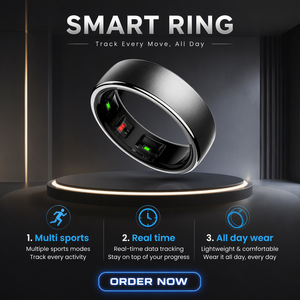
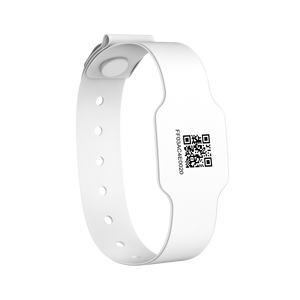
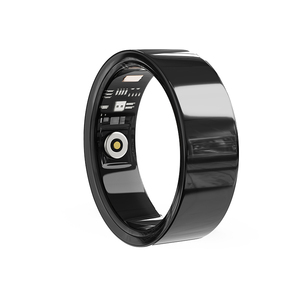

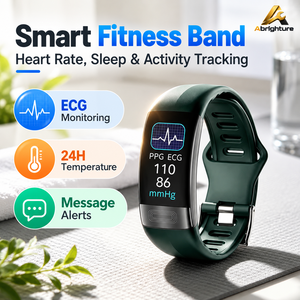
2009
Manufacturing Since

50+
Proprietary Patents

5
Chief Hardware R&D Leads

8+2
Assembly + SMT Lines

300K+
Monthly Unit Capacity

100+
Skilled Technical Operators
The Biometric Paradigm: Why Ring Architecture Outperforms Wrist-Worn SpO2
In digital health monitoring, accurate peripheral capillary oxygen saturation (SpO2) quantification has historically encountered severe limitations when measured at the dorsal wrist. Standard wristbands face compromised Signal-to-Noise Ratios (SNR) due to deep radial artery depth, skin pigmentation variance, subcutaneous adipose tissue dispersion, and frequent motion artifacts. As a premier China blood oxygen monitoring ring manufacturer and OEM/ODM factory, Shenzhen Yt Technology Co.,Ltc. (YT Smart Wear) resolves these photoplethysmography (PPG) hurdles through micro-form-factor finger anatomy exploitation.
The palmar digital arteries running laterally along the fingers reside immediately beneath thin epithelial layers with minimal muscular interference. By embedding red (660 nm) and infrared (940 nm) LEDs alongside photodiode arrays within a curvilinear biocompatible inner shell, our medical-grade smart rings measure light transmission and reflectance with optical clarity up to four times greater than wrist wearables. Pulse oximetry formulas calculate the ratio of ratios (R = (AC660/DC660) / (AC940/DC940)), mapping volumetric arterial pulsation cycles directly against empirical blood-gas calibrations.
Multi-Wavelength Optical Paths
Dual or triple-emitter arrays minimize perfusion index (PI) volatility, delivering continuous peripheral oxygen readings down to 70% saturation under extreme low-perfusion environments.
Dynamic Motion Compensation
Embedded 3-axis/6-axis MEMS accelerometers continuously feed spatial displacement data into proprietary Kalman filter firmware, filtering out nocturnal tossing and movement artifacts.
Sub-Milliamp Dynamic Power
Custom Nordic Semiconductor / Dialog BLE SoCs adjust optical emitter pulse widths (50µs to 200µs), securing 5 to 7 days of continuous monitoring on an ultra-thin 18mAh lithium cell.
Global Sourcing & Procurement Strategic Shifts (2025–2030)
B2B buyers, consumer electronics brand directors, and clinical telemetry partners must navigate rapid shifts in the wearable healthcare procurement landscape:
- From Periodic Spot-Checks to Continuous Hypoxic Event Interception: Traditional oximeters offer snapshot metrics. Emerging B2B procurement specifications demand uninterrupted overnight 1 Hz sampling capable of calculating the Oxygen Desaturation Index (ODI) to pre-diagnose Obstructive Sleep Apnea (OSA).
- Biocompatible Structural Materials: Titanium alloy (Grade 5) and medical-grade zirconia ceramics (ZrO2) have replaced standard polycarbonate bands. Devices must offer medical-grade resin potting with IP68 / 5ATM water resistance, supporting unhindered 24/7 wear during swimming, showering, and vigorous exercise.
- Regulatory Readiness (CE MDR & FDA 510(k)): Global compliance has shifted from standard CE/FCC consumer certifications to Class II medical device requirements. Factories must deliver traceable SMT batch records, audited production cleanrooms, and validated benchtop phantom test documentation.
- White-Label Cloud Architecture & SDK Access: Hardware procurement now encompasses end-to-end software integration. Overseas clients require native iOS and Android SDKs, secure HIPAA/GDPR-compliant cloud endpoints, and customizable local Bluetooth protocols without compulsory third-party cloud subscriptions.
The Shenzhen Advantage: End-to-End Vertical Manufacturing Under One Roof
Unlike virtual trading firms, Shenzhen Yt Technology Co.,Ltc. integrates ID industrial design, mechanical tooling, high-precision SMT surface mount assembly, proprietary embedded firmware engineering, and cleanroom encapsulation in a unified production center. This cohesive structure reduces typical EVT/DVT cycles from 90 days down to 35 days while maintaining exceptional assembly tolerance controls.
 Incoming QC (IQC)
 SMT Surface Placement
 Optoelectronic Testing
 Hydrostatic & Drop Test
 Outbound Audit (OQC)
Every smart ring batch undergoes rigorous testing across 28 distinct inspection stations. We employ automated artificial finger test jigs that simulate varied perfusion indices (0.1% to 20%) alongside real-time fluctuating blood gas models, maintaining our overall line defective rate below 5‰.
Procurement Frequently Asked Questions
Crucial Engineering, Customization, and Compliance Insights for Smart Ring Sourcing
What physiological sensor accuracy can your blood oxygen monitoring rings achieve?
Our smart ring platforms utilize advanced red and infrared optical arrays tuned for medical-grade accuracy. In controlled bench testing using standard simulated finger phantoms, root-mean-square error (ARMS) stays within ≤2% throughout the 70% to 100% SpO2 operational window. Heart rate precision maintains ±1 BPM at resting state and ±3 BPM during moderate motion regimes.
How do you approach multi-size structural molds and tooling costs?
Human finger circumferences typically demand 8 distinct structural ring sizes (US sizes 6 through 13). We eliminate high tooling barriers by offering access to our standardized, field-tested internal housing modules. Clients can customize exterior coatings, Physical Vapor Deposition (PVD) metallic finishes, and laser etchings with zero initial tooling fees. For full-custom industrial designs, our CNC tooling and precision injection tooling cycles complete within 20 to 25 working days.
What are your Minimum Order Quantities (MOQs) and lead times for OEM/ODM orders?
For standard white-label hardware (custom laser branding, customized retail packaging, and customized firmware BLE broadcasts), our MOQ starts at 500 to 1,000 units with prototype delivery within 7 days. Full-scale ODM solutions requiring custom printed circuit board assemblies (PCBA), unique structural housing, and private-label mobile applications generally begin at 2,000 to 3,000 units, featuring an initial mass production turnaround of 35 days.
Do you provide custom Bluetooth App development and API/SDK data integration?
Yes. We provide complete software integration solutions. You can license our turnkey white-label mobile app (iOS and Android) rebranded with your corporate identity, or integrate our native BLE SDKs directly into your proprietary digital health platforms. The SDK exposes raw photoplethysmography data points, calculated SpO2, heart rate variability (HRV), sleep stage indicators, and temperature tracking without intermediary data collection gates.
What international safety, wireless, and environmental certifications are supported?
Operating under an ISO 9001:2015 certified quality management system, our smart rings comply with CE (RED, LVD, EMC), FCC Part 15C, RoHS 2.0, REACH, and UKCA standards. The built-in rechargeable lithium-ion polymer batteries carry certified UN38.3, MSDS, IEC 62133, and UL 1642 compliances, facilitating smooth air and ocean freight logistics worldwide.
Accelerate Your Smart Ring Product Development
Connect with our senior hardware and optical firmware engineering team. Request a detailed engineering feasibility study, DFM review, sensor calibration log, or sample prototyping schedule today.
Inquire Now