Engineered Smart Audio & Optical Glasses Portfolio
Precision-engineered hardware platforms manufactured under strict ISO 9001 guidelines, optimized for consumer acoustics, AI translation, and enterprise imaging.
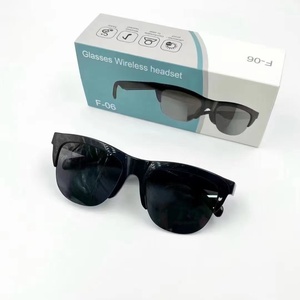
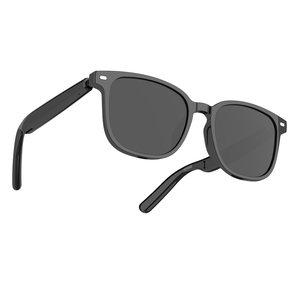
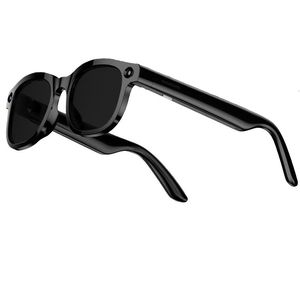
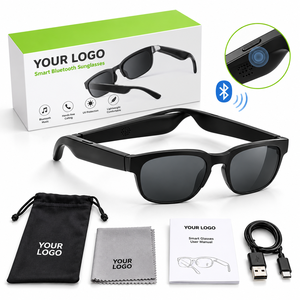
Strategic Procurement Analysis: The Structural Shift to AI-Powered Optical Wearables
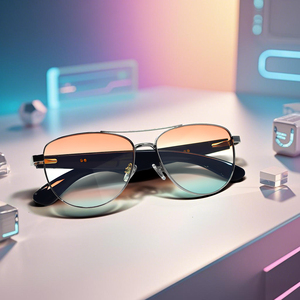
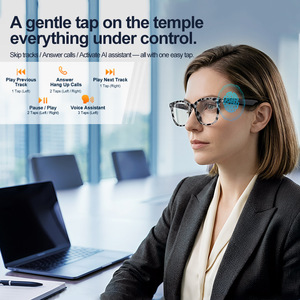
As the international smart wearable market evolves past wrist-worn form factors, Bluetooth smart glasses have emerged as the foundational frontier for human-centric computing. Head-mounted acoustics and contextual visual hardware eliminate the sensory friction intrinsic to smartphones and traditional earphones. As a primary China Bluetooth smart glasses factory & supplier based in Shenzhen's core microelectronics cluster, Shenzhen Yt Technology Co., Ltd. provides high-precision ODM/OEM development bridges between high-level AI cloud models and ruggedized, lightweight daily eye frames.
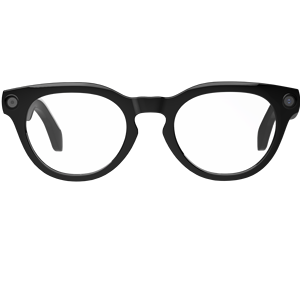
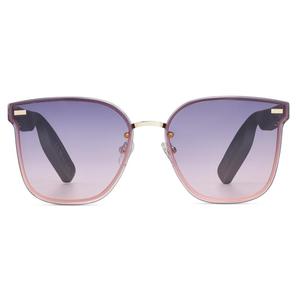
Commercial deployment across North American and European tier-one brands highlights that modern consumers prioritize standard optical aesthetics paired with high-fidelity performance. Procurement teams are moving away from bulky, conspicuous experimental gadgets toward ultra-slim, balanced frames containing miniature open-ear acoustic cavities, dual beamforming directional microphones, and ultra-low-power Bluetooth 5.3/5.4 system-on-chips (SoC). Our direct-to-factory infrastructure guarantees full supply-chain sovereignty—from high-density interconnect (HDI) PCBA routing and tooling execution to specialized battery chemical integration engineered to withstand facial thermal profiles.
Beyond traditional consumer entertainment, commercial procurement demand is surging across professional sectors. Hands-free linguistic translation across up to 145 dialects, enterprise field-inspection recording with localized 4K ultra-wide EIS sensors, and telematics integration for safe vehicle operation dictate that modern smart frames are no longer simple Bluetooth peripherals; they are intelligent edge gateways.
Smart Glasses Architectural Trends & Sourcing Outlook
Key technological vectors dictating global B2B procurement decisions over the upcoming multi-year product lifecycle.
Edge AI & LLM Cloud Latency
Integration of low-power sub-second latency protocol stacks enabling conversational AI interaction, multilingual neural translation, and contextual live prompts directly through low-energy RF pipelines without terminal overheating.
Micro-Acoustic Privacy Isolation
Elimination of sound leakage through inverse soundwave phase cancellation structures and directional dipole dispersion channels, safeguarding conversational confidentiality in crowded environments.
Dual-Cell Density & Weight Distribution
Transition toward ergonomic split battery architectures distributed evenly inside both temples, providing up to 8 hours of continuous audio transmission while preserving critical optical frame center-of-gravity balance under 38 grams.
Anti-Shake 4K Micro-Sensors
Deployment of miniature CMOS sensors featuring electronic image stabilization (EIS) and localized hardware-level encryption protocols, satisfying consumer POV vlogging and enterprise security auditing compliance.
Waveguide Micro-Optical Display
Strategic migration toward single-green or full-color diffractive optical waveguides delivering readable, high-nits heads-up telemetry under direct sunlight without obstructing central user peripheral vision.
Prescription Structural Modularity
Patented quick-release front rim mechanisms and magnetic clip-on frames that accommodate prescription lenses (myopia/presbyopia) alongside UV400 polarized shading elements on one unified electronic chassis.
Shenzhen Yt Technology: Direct Industrial Advantages
Vertically integrated microelectronics, industrial ID styling, cleanroom assembly, and global certification compliance under one roof.
Vertically Integrated SMT
Two precision automated surface-mount (SMT) production lines paired with eight dedicated assembly bays delivering verified monthly output in excess of 300,000 units.
50+ Proprietary Patents
Continuous investment into mechanical hinge ergonomics, acoustic anti-leakage chambers, specialized PCB water-resistant nano-coatings, and bespoke firmware architecture.
Full-Stack Algorithm & App
In-house mobile SDK developers providing bespoke iOS and Android client applications with tailored private-label branding, BLE pairing, OTA firmware, and cloud server tie-ins.
Tier-1 Global Compliance
Factory operational controls strictly certified under ISO 9001. Full turnkey documentation, pre-testing, and compliance support for CE, FCC, RoHS, UKCA, REACH, and battery UN38.3 transport.
Procurement & Engineering Frequently Asked Questions
Clear, direct answers regarding production milestones, IP ownership, acoustic quality, and tooling options.
What are the standard sample and mass production lead times for custom orders?
Standard white-label prototype samples derived from our existing validated hardware platforms are dispatched within 7 working days. For comprehensive bespoke ODM projects—involving custom industrial styling, mechanical hinge tooling, customized PCBA layout, and firmware building—functional T1 tooling samples are delivered in 30 to 45 days. Post sample golden-unit sign-off, standard mass production cycles average approximately 35 days depending on component allocation.
How does the factory address sound leakage during open-ear phone conversations?
We deploy specialized dual-speaker dipole sound cavities inside each eyewear temple. By generating inverted phase-cancelling acoustic waves outside the direct ear canal target area, private voice call audio dissipation is restricted to the wearer's immediate perimeter. Coupled with dual-microphone beamforming arrays running ENC (Environmental Noise Cancellation) algorithms, vocal pick-up remains crystalline while ambient traffic or wind noise is filtered by up to 35dB.
How is Intellectual Property (IP) and proprietary firmware protected for overseas brands?
All OEM/ODM projects are anchored by binding Non-Disclosure Agreements (NDAs) enforceable under international and local jurisdiction. Customer-funded tooling, external cosmetic molds, dedicated firmware source files, and proprietary application frameworks remain the exclusive commercial property of the client. Engineering files are sequestered in partitioned server architectures with access restricted to designated project engineers.
What waterproof rating and structural reliability testing is conducted on smart frames?
Our smart eyewear frames undergo rigorous 28-checkpoint reliability testing, including IPX4 to IPX7 ingress chamber trials, high-frequency hinge flex fatigue tests (guaranteed over 20,000 cycles), thermal shock exposure (-20°C to 60°C), artificial sweat corrosion validation, and 1.2-meter drop impact assessments. Micro-PCBA components are further shielded via automated conformal nano-coating lines to prevent internal short-circuiting.
Ready to Build Your Private-Label Smart Glasses Line?
Initiate direct technical dialogues with our Shenzhen engineering specialists. Discuss CMF designs, optical requirements, BOM targeting, and request rapid prototypes for evaluation.
Send an Inquiry