Featured OEM/ODM Wearable & AI Hardware Catalog
Direct from our Shenzhen automated manufacturing base: explore high-precision real-time translation glasses, multimodal AI wearables, and medical-grade bio-sensing instruments.
Industry Whitepaper: Engineering Architecture of Modern Real-Time Translation Glasses
The transition from standalone digital voice translators to heads-up optical AI wearables represents a fundamental paradigm shift in human-computer interaction and natural language processing. For enterprise procurement directors, consumer electronic brand licensors, and telecom distributors sourcing from China, evaluating a real-time translation glasses manufacturer requires scrutinizing hardware-software convergence across three core technical domains: Optical Waveguide Micro-displays, Acoustic Beamforming Arrays, and Hybrid Edge-Cloud AI Inferencing pipelines.
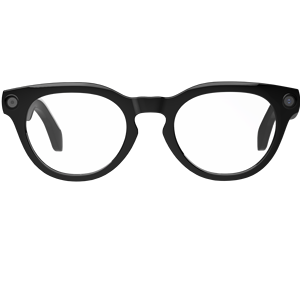
Modern translation glasses manufactured by Shenzhen Yt Technology Co., Ltd. address the historical latency and cognitive load barriers of cross-lingual dialogue. Instead of looking down at a handheld screen or sharing an earbud, dual-eye micro-displays project synchronized subtitles at infinity focal distances within a 30° Field of View (FoV), ensuring zero eye strain during prolonged international negotiation sessions, diplomatic protocols, tourism, and multilingual site inspections.
| Technical Specification | Conventional Consumer Audio Frames | YT Technology Enterprise Translation Eyewear |
|---|---|---|
| Optical Engine Architecture | None (Audio Only / Blind Frames) | Monocular / Binocular Diffraction Optical Waveguide Micro-OLED |
| Audio Processing Engine | Single Omnidirectional Mic | Dual MEMS Array + 65dB SNR Deep Acoustic ENC Beamforming |
| End-to-End Latency | 2,500ms - 4,000ms (Phone app dependent) | <650ms Ultra-Low Latency Edge-Cloud Streaming Protocol |
| Language & Dialect Support | 12 - 20 Common Languages Online | 138+ Languages & Regional Accents + 16 Offline Packs Built-In |
| Weight Distribution | 55g - 80g Front-Heavy Unbalanced | <48g Ergonomic Center-of-Gravity Counterbalance (Titanium/TR90) |
Overcoming the Latency Bottleneck: The 650ms Threshold
In natural human dialogue, conversational gaps longer than 800 milliseconds break neurological coherence, converting an organic interaction into disjointed turn-taking. Our Shenzhen R&D center solves this latency bottleneck through proprietary Voice Activity Detection (VAD) coupled with streaming chunk-based Automatic Speech Recognition (ASR). Rather than waiting for a speaker to complete an entire sentence before transmitting audio buffers, our firmware transmits 200-millisecond phonetic fragments directly over low-power dual-mode Bluetooth 5.3 to dedicated Neural Machine Translation (NMT) micro-services. Concurrently, localized text-to-display rendering engine displays real-time subtitles via micro-waveguide optics in under 650 milliseconds, sustaining authentic, fluid cross-border communication.
Future Procurement Trends for AI Translation Glasses (2025–2030)
Procurement directors and consumer electronics category managers must align their supply chain roadmaps with seismic architectural shifts underway in smart wearable manufacturing. As the China industrial ecosystem matures, bulk purchasing criteria have moved beyond basic unit pricing toward long-term firmware extensibility, intellectual property clearance, and acoustic performance under extreme industrial noise.
Edge SLM Integration
Next-generation OEM procurement mandates localized Small Language Models (SLMs) compiled on NPU-accelerated wearable chipsets (such as Qualcomm AR platforms and customized RISC-V coprocessors). Offline translation capability without cellular reliance is now a mandatory contract clause for defense, diplomatic, aviation, and confidential boardroom applications.
Multimodal Contextual AI
Optical translation is transcending pure audio-to-text conversion. Future smart glasses combine ultra-compact CMOS image sensors with spatial translation algorithms. Wearers looking at printed menus, technical manuals, machinery placards, or directional road signage in foreign territories receive zero-latency augmented optical text replacement directly in their line of sight.
Medical & Ergonomic Compliance
Global regulatory bodies (including the EU MDR and US FDA guidelines for consumer wearables) are enforcing strict blue-light hazard limits, electromagnetic absorption (SAR) thresholds, and biocompatibility protocols for temple frames contacting skin for 12+ consecutive hours. Sourcing managers must select factories holding audited medical and safety certifications.
Technological Roadmap & Industrial Development Horizons
The manufacturing complexity of real-time translation smart glasses demands multidisciplinary expertise spanning optoelectronics, sub-nanometer micro-machining, acoustic isolation, and distributed cloud computing. Understanding the roadmap from legacy audio-only frames to ambient contextual AR headsets allows B2B buyers to forecast SKU lifespans and avoid inventory obsolescence.
Acoustic Direct-Transmission
Audio-only smart frames utilizing open-ear directional sound chambers. Translation output relies entirely on paired smartphones, functioning as wearable Bluetooth relays with high conversational lag and no optical augmentation.
Monochrome Waveguide Subtitling
Current industrial mass-production benchmark pioneered in our factory: high-contrast green or amber micro-LED optical engines projecting crisp, readable text overlays onto prescription-compatible lenses under direct sunlight up to 3,000 nits.
Full-Color Multimodal AR Engines
Emerging full-color micro-OLED optical waveguide displays combined with high-definition anti-shake camera sensors, supporting conversational translation, real-time contextual visual OCR, and gesture-controlled spatial operating systems.
Shenzhen Factory Advantages & Manufacturing Excellence
Headquartered in the epicenter of the world’s consumer electronics supply chain since 2009, Shenzhen Yt Technology Co., Ltd. delivers vertical integration that turns ambitious wearable designs into certified commercial realities.
End-to-End Vertical Integration
From initial ID industrial styling and mechanical structural engineering to dual high-speed SMT lines, optical cleanroom assembly, mold fabrication, and custom firmware/APP development, everything is consolidated within our ISO 9001 facility.
Strict Intellectual Property Protection
We implement strict multi-tier Non-Disclosure Agreements (NDAs). Your custom tooling designs, optical schematics, private-label firmware source codes, and branded cloud server endpoints are compartmentalized in restricted project environments.
Rapid Prototyping & Agile Delivery
Functional engineering samples ready in as few as 7 business days for validated hardware platforms. Standard customized mass-production cycles delivered in approximately 35 days, supported by a scalable capacity of 300,000+ units per month.
28-Point Zero-Defect QA System
Our quality control protocol incorporates incoming component IQC, automated SMT optical inspection, high/low temperature environmental chamber cycling, salt-spray corrosion tests, and drop reliability assessments, guaranteeing a defective rate under 5‰.
Global Regulatory Compliance
Seamless international commercialization. Our hardware architectures are engineered and certified to comply with CE (RED), FCC ID, RoHS 2.0, REACH, UKCA, TELEC, and UN38.3 lithium battery transport safety certifications for immediate customs clearance.
Full-Stack SDK & Private-Label APP
We provide full white-label iOS and Android client applications, complete RESTful API SDK documentation, customizable cloud translation server gateways, and ongoing OTA firmware updates to ensure lifetime device stability and brand loyalty.
Frequently Asked Questions for B2B Importers & Brands
Direct technical and commercial answers to guide procurement teams through engineering feasibility, MOQs, certification requirements, and mass production delivery.
What is the typical Minimum Order Quantity (MOQ) for custom OEM/ODM orders?
For custom private-label branding on our established and validated smart glasses platforms (including laser-etched frame logos, custom packaging, startup splash screens, and private-label app skinning), our standard MOQ begins at 500 to 1,000 units. For complete ODM custom projects requiring exclusive industrial tooling molds, unique PCB layout architectures, and proprietary optical prism integration, the MOQ typically begins at 3,000 to 5,000 units per production run. Flexible initial trial batches are available for qualified long-term enterprise partners.
How does the translation glasses system maintain accuracy across regional dialects and ambient background noise?
Accuracy depends on clean acoustic input before data reaches the AI translation engine. Our frames incorporate dual MEMS microphones configured as a differential acoustic array, driven by deep neural network (DNN) noise suppression algorithms capable of isolating the human voice while filtering out ambient noise up to 85dB (such as street traffic, crowded exhibition halls, or airports). The backend translation infrastructure dynamically routes speech across specialized translation servers including Google Cloud Translation, Microsoft Azure Speech, DeepL, and localized regional engines depending on target language pairing, achieving up to 98% contextual accuracy.
Can your factory accommodate prescription corrective lenses or photochromic sunglass tinting?
Yes. Our optical mechanical frames are engineered with standardized modular lens clip-ins and swappable groove architectures. We supply custom optical solutions including factory-fitted prescription lenses (myopia/presbyopia customization), anti-blue light coatings for office work, polarized UV400 sunglass lenses, and rapid-transition photochromic lenses that adjust automatically between indoor ambient lighting and intense outdoor sunlight without interfering with the micro-waveguide projected display overlay.
What is the battery endurance profile during active continuous translation mode?
Our smart glasses utilize high-density lithium polymer micro-cells integrated symmetrically within both temple arms to balance physical weight across the ears. Depending on the optical display mode (active waveguide micro-OLED illumination versus audio-only conversational mode), continuous real-time translation runtime ranges from 4.5 to 7 hours on a single charge. Paired with our custom high-capacity portable charging cases, operational autonomy extends to over 36 hours for extended international business travel and field operations.
How are cloud translation server costs and recurring API subscriptions handled for OEM clients?
We offer two commercial models for cloud server management. In the first model, we provide a turnkey hosted solution where translation engine subscription fees are bundled into a lifetime package or periodic SaaS licensing tier managed directly by our technical support team. In the second model, designed for established tech brands and telecom carriers, our software engineering team provides open SDKs and API middleware, allowing you to route speech and translation pipelines directly through your own corporate cloud accounts (e.g., AWS, Azure, Google Cloud, private LLM clusters), maintaining full user data ownership and control over marginal operational costs.
What are the typical project milestones and timelines from initial kick-off to final mass shipment?
Projects follow a disciplined 6-stage engineering process: Stage 1 involves product definition and certification mapping (3-5 days); Stage 2 delivers 3D ID rendering and CMF physical samples (7-10 days); Stage 3 finalizes mechanical structural engineering and acoustic modeling (10-14 days); Stage 4 completes hardware PCBA layout, algorithm adaptation, and firmware compilation (15-20 days); Stage 5 executes mold fabrication, tooling trials, EVT/DVT testing, and compliance certification (30-45 days); Stage 6 concludes with PVT pilot runs, cleanroom mass assembly, and global container freight dispatch (approx. 35 days post-approval).
Scale Your Brand with China's Premier Wearable Manufacturer
Partner directly with Shenzhen Yt Technology Co., Ltd. for factory-direct pricing, certified quality management, and industry-leading translation wearable solutions tailored to your market specifications.