Targeted Smart Wearables for the Vietnamese Market
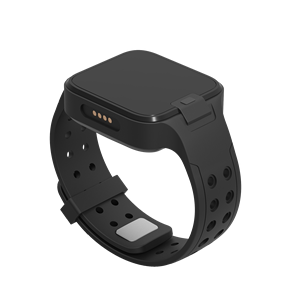
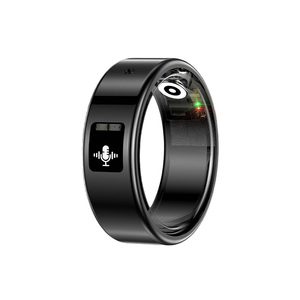
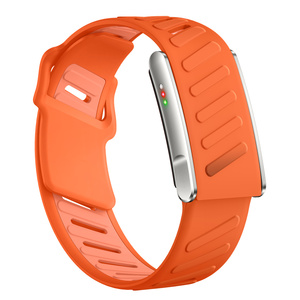
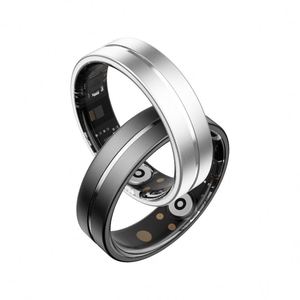
Our specialized product ecosystem covers wearable natural language processing, micro-optical heads-up displays, and intelligent biometric telemetry, fully customizable under private-label OEM/ODM frameworks.
Strategic Application Scenarios in Ho Chi Minh City’s Modern Economic Landscape
As the undisputed commercial engine and digital powerhouse of Vietnam, Ho Chi Minh City (HCMC) presents unique linguistic, physical, and infrastructural environments. Deploying real-time translation glasses in this dense metropolis necessitates overcoming specific local operational hurdles—ranging from acoustic pollution caused by urban transport to complex multivariant regional dialects. YT Smart Wear has engineered bespoke hardware-software solutions optimized purposefully for the Southern Vietnamese market.
FDI & High-Tech Industrial Hubs
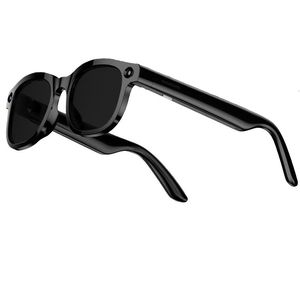
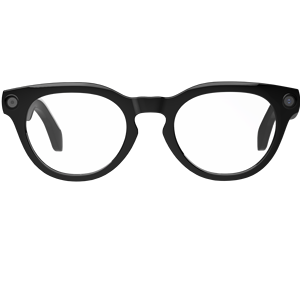
At facilities such as the Saigon Hi-Tech Park (SHTP) in Thu Duc City and Tan Thuan Export Processing Zone, foreign engineers (from Japan, Korea, Taiwan, and the West) interact daily with Vietnamese assembly and operations staff. Our real-time translation smart glasses feature bilingual acoustic beamforming and micro-LED text streaming, allowing technicians to read instantaneous operational manuals and communicate fluently across Vietnamese, English, Mandarin, and Japanese hands-free.
International MICE & Cross-Border Commerce
Venues like the Saigon Exhibition and Convention Center (SECC) host hundreds of global trade expos annually. Cross-border buyers frequently face friction with negotiation vernacular and industry-specific jargon. Equipping sales executives and international visitors with AI translation glasses eliminates clumsy handheld mobile translation apps, maintaining essential direct eye contact and subtle heads-up real-time subtitles during crucial contract discussions.
Hospitality & Heritage Tourism Hubs
In historical high-traffic tourist epicenters including District 1, Ben Thanh Market, and the War Remnants Museum, hospitality operators and concierge teams utilize our featherlight ergonomic glasses to assist multi-lingual guests effortlessly. Optical waveguide systems present instant visual translations of menus, cultural inscriptions, and street signage, dramatically improving the international tourist experience.
Crucially, these scenarios require physical hardware adapted to Vietnam’s tropical monsoon climate. Our smart glasses incorporate structural nanocoatings achieving IP65-to-IP67 water resistance, safeguarding complex optical projection cavities and miniature microphones against Ho Chi Minh City’s torrential downpours and ambient relative humidity averaging 75–85%.
Wearable AI Translation Trends Across Southern Vietnam (2025–2030)
Vietnam's consumer electronics and enterprise hardware markets are undergoing rapid structural shifts. By evaluating wholesale demand across Ho Chi Minh City and the Mekong Delta periphery, our engineering strategy has identified three dominant technological vectors shaping regional adoption:
1. Hybrid Neural Machine Translation (NMT)
Standard machine translation models frequently fail to parse the contextual subtleties, tonal diacritics, and regional slang of Southern Vietnamese (Tiếng Miền Nam). Our proprietary pipeline implements localized Small Language Models (SLMs) trained specifically on Vietnamese colloquial structures, paired with dual-engine cloud fallback to maintain grammatical accuracy above 96% even in colloquial business exchanges.
2. Motorbike Traffic ENC Optimization
Ho Chi Minh City accommodates more than 8 million motorbikes, producing pervasive background low-frequency noise (75–85 dB SPL). Standard wearable consumer audio interfaces cannot cleanly capture human speech in this environment. Our hardware integrates a proprietary Quad-Microphone Bone-Conduction Sensor Array paired with an Environmental Noise Cancellation (ENC) deep neural network, isolating the speaker’s vocal resonance within a 0.5-meter radius.
3. Zero-Latency Edge Processing
As 5G deployment rapidly accelerates across Thu Duc, Binh Thanh, and District 7, hardware architectures are transitioning from bulky smart terminal tethering to autonomous edge processing. Our newest wearable platforms deploy ultra-low-power NPUs (Neural Processing Units) embedded directly into the titanium frame temple, computing preliminary audio-to-phoneme tokenization offline before offloading semantic resolution to low-latency edge servers.
Shenzhen YT Technology: The Direct Factory Advantage for Vietnamese B2B Partners
Unlike trading brokers or white-label repackagers, Shenzhen Yt Technology Co., Ltd. controls the comprehensive vertical lifecycle of intelligent wearable devices. Operating since 2009 in Shenzhen—the world's most sophisticated consumer hardware nexus—we offer direct factory-to-market advantages to Vietnamese distributors, enterprise clients, and consumer tech labels:
Turnkey OEM/ODM Engineering
From initial concept industrial design (ID) and mechanical structural engineering to PCBA layout, firmware formulation, and custom SDK/API creation, our in-house R&D engineering team manages the complete hardware realization pathway.
SMT & Assembly Capacity
With 8 dedicated assembly lines and 2 high-speed SMT surface-mount lines operated by over 100 skilled technicians, our facility sustains a production volume exceeding 300,000 units monthly, easily supporting rapid seasonal scale-ups.
Rigorous 28-Point QC Gates
Operating under certified ISO 9001 quality systems, our inspection workflow mandates five distinct check phases: incoming material inspection, in-line process control, 100% optical alignment testing, drop/sweat reliability verification, and final pre-shipment audit, keeping defect rates below 5‰.
Total Intellectual Property Shielding
We secure every commercial relationship via legally enforceable Non-Disclosure Agreements (NDAs). Custom industrial molds, proprietary optical designs, and client firmware remain strictly siloed, safeguarding client brand assets.
Ho Chi Minh City Procurement FAQ
Clear, practical answers addressing logistical, technical, and regulatory concerns commonly evaluated by Vietnamese hardware importers and corporate procurers.
1. How does your speech-to-text algorithm handle Southern Vietnamese accents and street acoustics?
2. What is the typical lead time for custom OEM/ODM prototypes and bulk shipping to Cat Lai Port or Tan Son Nhat (SGN)?
3. What regulatory certificates accompany shipments destined for Vietnam, and do you support local MIC QCVN conformity?
4. Can the glasses operate without an active internet connection in remote regional districts?
5. What Minimum Order Quantities (MOQ) and private labeling options are available for new brands in Vietnam?
Accelerate Your Smart Wearable Roadmap in Vietnam
Direct factory engineering access. Predictable supply chains. Tailored bilingual firmware architectures. Partner directly with an established ISO 9001 certified manufacturer to engineer your next real-time translation glasses portfolio for Ho Chi Minh City and the broader ASEAN region.