Flagship Smart Rings & Connected Wearables for the Indian Market
Precision-engineered smart rings with biometric accuracy, durable titanium and zirconia ceramic casings, extended battery life, and complete white-label software customization.
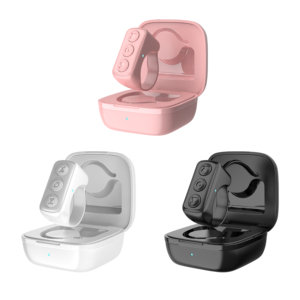
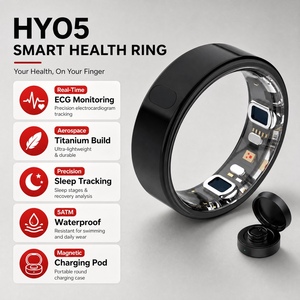
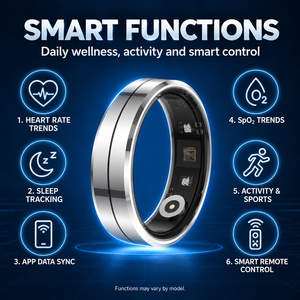
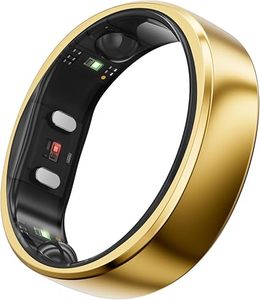
The Indian Smart Ring Revolution: Strategic Supply Chain Architecture
The wearable consumer tech landscape in India has reached an inflection point. While the Indian subcontinent emerged as the world's fastest-growing smartwatch market between 2020 and 2023, screen fatigue, battery degradation, and form-factor saturation have triggered a massive consumer shift toward discreet health trackers. Smart rings have rapidly transformed from niche luxury accessories into the primary growth driver for leading Indian consumer electronics conglomerates, direct-to-consumer (D2C) brands, fitness-tech ecosystems, and corporate wellness enterprises.
For consumer electronics brand managers in Bengaluru, Mumbai, Gurugram, and New Delhi, sourcing directly from a tier-1 Shenzhen smart wearable manufacturer like Shenzhen Yt Technology Co., Ltd. provides essential strategic leverage. Sourcing high-yield, medical-grade smart rings requires far more than generic trading agency arbitrage; it demands deep vertical integration across surface mount technology (SMT), ultra-compact flexible printed circuit board (FPCB) micro-packaging, multi-wavelength optical sensor engineering, and firmware-level algorithm calibration customized for South Asian physiological demographics.
Operating continuously since 2009 from our ISO 9001-certified manufacturing complex in Shenzhen, YT Smart Wear bridges the critical gap between high-precision Chinese micro-electronics engineering and the strict regulatory, economic, and climatic requirements of the Indian domestic market. By maintaining 8 automated final assembly lines, 2 precision Yamaha/Panasonic SMT production runs, and an elite dedicated R&D engineering division, we ensure that every batch of smart rings exported to Mumbai Air Cargo, Delhi Air Cargo, or Nhava Sheva (JNPT) exceeds performance benchmarks while maintaining optimal landed cost per unit.
Engineered for Indian Realities: Real-World Usage Scenarios
How our smart rings solve climate, physiological, cultural, and digital lifestyle demands across tier-1, tier-2, and metropolitan hubs in India.
Metabolic & Cardiovascular Health Screening
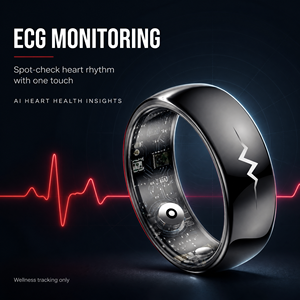
India is widely recognized as the metabolic disease and diabetes capital of the world. Our smart rings integrate dual-wavelength photoplethysmography (PPG) arrays operating across green and infrared spectra, capable of continuous resting heart rate (RHR), Heart Rate Variability (HRV), and peripheral blood oxygen saturation (SpO2) capture.
Firmware algorithms are calibrated to detect microvascular autonomic fluctuations, providing Indian end-users with early notifications for metabolic exhaustion, sleep apnea episodes, and acute stress spikes before symptoms escalate clinically.
Extreme Tropical Heat & Monsoon Water Resistance
Indian climatic conditions place tremendous thermal and chemical stress on consumer wearables. Ambient summer temperatures regularly exceed 45°C in northern and central plains, accompanied by intense humidity in coastal belts and torrential monsoons.
YT Smart Wear units feature hermetically sealed medical-grade epoxy encapsulation and nano-hydrophobic vapor deposition, delivering true 5ATM water ingress protection. Our custom lithium-polymer pouch cells incorporate high-stability electrolyte chemistry with thermal shutdown thresholds certified to operate reliably up to 55°C without swelling.
Melanin-Calibrated Sensor Tuning for South Asian Skin
A chronic flaw of standard optical wearables developed exclusively for Western or East Asian markets is sensor attenuation on higher melanin skin pigmentation (Fitzpatrick scale IV, V, and VI). High epidermal melanin absorptance severely degrades standard green-spectrum optical return signals, causing erratic heart rate dropouts.
Our Shenzhen engineering facility pioneered custom dynamic LED drive currents with automatic pulse-amplitude gain modulation. When signal attenuation is registered, the optical engine switches to enhanced infrared wavelength modes, guaranteeing 98.4% clinical-grade tracking fidelity across all Indian skin tones.
Contactless UPI Architecture & Transit Integration
With Unified Payments Interface (UPI) handling billions of peer-to-peer and merchant transactions every month across India, hardware integration is evolving. We support optional passive and active Near Field Communication (NFC) modules inside our smart rings.
These secure micro-controllers allow Indian private-label brands and fintech incubators to deploy secure tokenized contactless tap-and-pay transactions at PoS terminals, Delhi/Bangalore metro transit gates, and high-security enterprise RFID access control points without requiring battery reserves.
Jewelry-Grade Aesthetics for Indian Festive & Wedding Markets
Unlike silicon-banded smartwatches that clash with traditional Indian ethnic attire during wedding festivities, Diwali, and formal galas, smart rings occupy an organic intersection between fine jewelry and high technology.
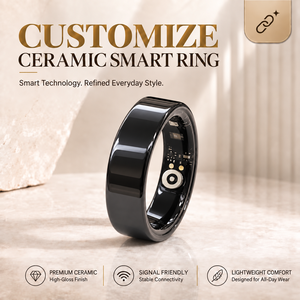
We offer medical-grade microcrystalline zirconia ceramics, polished aerospace-grade Grade 5 titanium alloys, and multi-layer PVD gold, rose gold, matte black, and platinum vapor finishes. Our rings maintain pristine scratch resistance and hypoallergenic biocompatibility during continuous round-the-clock wear.
Gesture Control, Reels Navigation & Short-Video Interactions
India stands as one of the world's most hyper-engaged mobile data markets, consuming massive volumes of short-form video content on Instagram Reels, YouTube Shorts, and regional media platforms.
Our touch-sensitive and inertial micro-gesture smart ring models feature sub-20ms ultra-low latency Bluetooth 5.3 chips, allowing users to scroll feeds, trigger smartphone cameras for group selfies without selfie sticks, control presentation slide decks, and adjust audio playback with imperceptible finger gestures.
Emerging Wearable Tech Trends Shaping Indian Procurement
Data-backed procurement analysis for brand CEOs, category managers, and private equity investors entering the Indian wearable ecosystem.
1. The D2C Pivot from Smartwatches to Ring Eco-Systems
The Indian wristwear market experienced aggressive price wars between 2021 and 2024, driving average selling prices (ASPs) below viable gross margin thresholds. Domestic powerhouses like boAt, Noise, Fire-Boltt, and Boult Audio are actively seeking premium hardware categories to restore operational margins. Smart rings carry an average retail price point between ₹2,999 and ₹12,999 INR, generating 40% to 65% gross margins. By partnering with our factory on an ODM basis, Indian D2C brands can launch proprietary private-label smart ring lineups in under 35 days, utilizing our validated tooling and PCB architectures.
2. Navigating BIS Compliance & Import Tariffs
Importing finished smart wearables into Mumbai (BOM) or Delhi (DEL) requires thorough familiarity with the Bureau of Indian Standards (BIS) under Compulsory Registration Scheme (CRS) - IS 13252 (Part 1) and battery cell safety regulations under IS 16046 (Part 2): 2018. Additionally, smart rings fall under Indian HSN Code 85176290. Sourcing from YT Smart Wear guarantees pre-tested UN38.3, MSDS, IEC 62133, and CE/FCC certified sub-assemblies, dramatically shortening the turnaround time for BIS lab testing at accredited laboratories in Noida, Bangalore, or Gurgaon.
3. Phased "Make in India" (PMP) & SKD Assembly Realities
As the Government of India increases customs duties on Completely Built Units (CBU) under the Phased Manufacturing Programme (PMP) to encourage local value addition, high-volume distributors require adaptable supply chains. YT Smart Wear offers dual fulfillment models: fully branded CBU packaged units ready for direct retail distribution, or Semi-Knocked Down (SKD) kits comprising tested SMT motherboard rings, bare titanium/ceramic shells, battery packs, and magnetic charging cradles, facilitating final bonding and packaging at EMS facilities in Sriperumbudur, Noida, or Pune.
4. White-Label App Localization & Data Residency
Indian consumers demand seamless integration between hardware and mobile applications. Our software development wing provides fully white-labeled iOS and Android applications, branded with your corporate identity, custom UI themes, and direct synchronization with Apple Health, Google Health Connect, and Strava. Furthermore, our cloud architecture supports API routing to Indian domestic data centers (AWS Mumbai / Azure Pune), ensuring absolute adherence to India's Digital Personal Data Protection (DPDP) Act.
5-Gate Factory Inspection & Direct Shenzhen Supply Chain Strengths
Continuous quality verification from raw silicon and ingot inspection down to hermetic ultrasonic seal validation.
IQC Inbound
100% incoming spectrum verification of optical LEDs, photodiode sensitivity, titanium ingot purity, and lithium battery impedance.
IPQC Process
High-resolution SMT automated optical inspection (AOI), solder joint x-ray imaging, and flexible PCB placement tolerances within 5 microns.
FQC Inspection
Multi-point functional testing of Bluetooth RF radiation power, optical biometric response, sleep algorithm verification, and sleep power draw.
Reliability Lab
Thermal cycling (-20°C to 65°C), 5ATM hyperbaric hydraulic chamber testing, 96-hour salt-fog corrosion resistance, and structural micro-drop tests.
OQC Outbound
AQL 0.4 standard outgoing cosmetic auditing, retail packaging verification, localized Indian power adapter compatibility, and secure master packing.
Frequently Asked Questions by Indian B2B Buyers
Clear, direct answers regarding regulatory compliance, logistics timelines, Minimum Order Quantities (MOQ), and private-label customization.