Precision Smart Wearable Deployments for Nigerian Wholesalers & Brands
Pre-engineered hardware architecture featuring turn-key firmware customization, multi-lingual natural language models, and tropicalized IP68 ingress protection ready for immediate container dispatch.
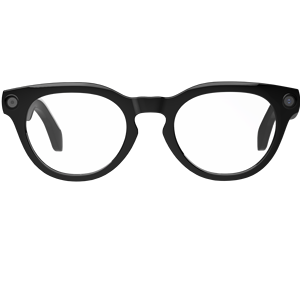
OEM ODM acceptable Smart AI Glasses AI Translation Anti-Shake Bluetooth Waterproof 4K Video Photo Smart Glasses with Display
- 4K Ultra-HD EIS Image Stabilization
- Waveguide Heads-Up Monocular Display
- Dual Mic ENC Noise Cancellation
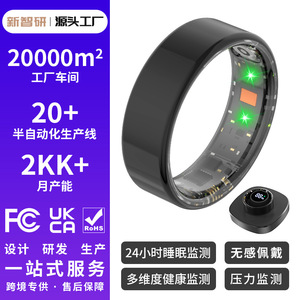
Black Smart Health Ring 24 Hour Sleep Monitor SpO2 Tracker Heart Rate Wellness Band for Android iOS
- Medical Grade PPG Optical Sensor Array
- 7-Day Ultra-Low Power Microcontroller
- Hypoallergenic Medical Resin Interior
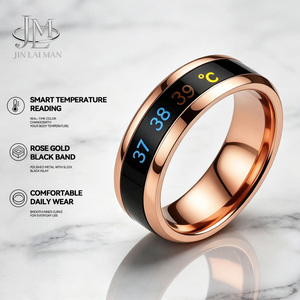
JLM Factory Direct Stainless Steel Smart Temperature Sensing Mood Ring Men Women Lovers Trendy Fashion Wedding Gift Band Jewelry
- Real-Time Thermal Gradient Indication
- Anti-Corrosive 316L Stainless Steel
- High-Volume Fast Moving Consumer Item
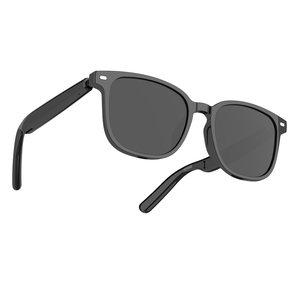
Wireless BT5.4 AI Smart Translation Glasses With 145 Languages Built-in Speaker & Clear Audio Real-Time Translator Smart Glasses
- 145 Dialects Real-Time Neural Translation
- Bluetooth 5.4 Low Latency Protocol
- Open-Ear Acoustic Directional Audio
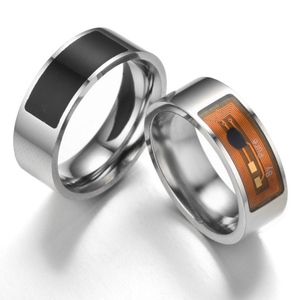
Free Sample Programmable Waterproof Durable in Stock Luxury NFC Chip Titanium Ceramic NFC RFID Smart Ring with Different Size
- Dual NTAG High-Frequency Chips
- Microcrystalline Zirconia Ceramic Bezel
- Zero Battery Passive Power Architecture
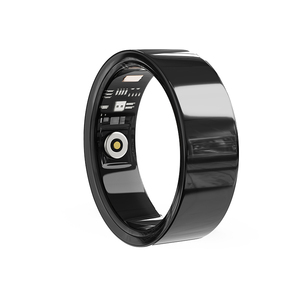
AI Health Tracker with Sleep SpO2 Monitoring IP68 Smart Ring for Men Women NFC Control Ceramic Bezel Magnetic Fast Charging
- Continuous PPG SpO2 & HRV Sensing
- IP68 5ATM Hydrostatic Ingress Rating
- Ultra-Fast Magnetic Pogo-Pin Dock
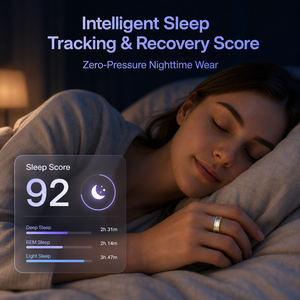
OEM Custom Logo AI Smart Health Ring Titanium Biosensing Wearable Wholesale Gift for Retailers Distributors
- Aerospace Grade TA2 Titanium Alloy
- Custom White-Label iOS & Android Apps
- Laser Precision Logo Etching & Gift Box
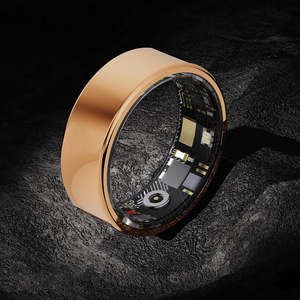
Brand New Smart Ring Sleep Fitness Monitoring Smart Ring for Sleep Tracker Health Tracker Smart Ring
- Multi-Stage Hypnogram Sleep Analysis
- 3-Axis Precision Kinematic Motion Engine
- High Margin Direct Factory Pricing
The Architecture of Smart Wearable Manufacturing for Nigeria: High-Density Electronics Meets West Africa's Tech Revolution
The sub-Saharan digital landscape is experiencing a paradigm shift, driven by Nigeria's position as Africa's largest demographic powerhouse and mobile-first commercial economy. As the urban centers of Lagos, Abuja, Port Harcourt, Kano, and Ibadan undergo massive digital integration, consumer expectations are transitioning rapidly from basic digital wristwear to sophisticated, purpose-built smart wearables. This transformation requires direct collaboration with industrial-grade manufacturing plants capable of overcoming unique sub-Saharan challenges: fluctuating electrical grids, extreme relative humidity, airborne dust particulates during the Harmattan season, and distinct consumer use-cases spanning fintech micro-payments and multi-dialect translation.
Shenzhen Yt Technology Co., Ltd., operating continuously since 2009, stands at the absolute intersection of high-density Shenzhen hardware innovation and international distribution engineering. Operating 8 automated assembly lines and 2 high-speed surface-mount technology (SMT) lines across cleanroom environments, our factory produces over 300,000 smart rings, AI video translation glasses, and biometric devices every month. For Nigerian importers, major tech retail distributors based out of Ikeja Computer Village, and private enterprise brands, we provide an uncompromised, vertically integrated production ecosystem that mitigates the supply chain risks associated with third-party trading intermediaries.
Bridging High-Density SMT Assembly with Sub-Saharan Field Durability
Manufacturing wearables for equatorial environments requires specialized chemical and metallurgical adaptations. Unlike generic wearable devices designed solely for temperate European or American indoor environments, hardware exported to Nigeria must withstand sustained atmospheric temperatures reaching 42°C, relative humidity levels above 85% along the coastal Bight of Benin, and microscopic silicate dust exposure carried by northeast trade winds across northern trading corridors. Our specialized design-for-manufacturing (DFM) protocols incorporate anti-hydrolysis conformal nano-coatings across all printed circuit board assemblies (PCBAs), gold-flashed anti-oxidation pogo pin charging terminals, and thermally stabilized Lithium-Cobalt-Oxide (LiCoO2) battery cells protected by independent dual-IC battery management systems (BMS).
68% Projected CAGR in West African IoT
Accelerated mobile broadband penetration (4G LTE & 5G rollouts by MTN and Airtel) is expanding the addressable market for connected wearables beyond fitness into everyday personal productivity and digital identification.
Unprecedented Fintech Convergence
Nigeria's leadership in mobile payment infrastructure creates massive commercial demand for wearable NFC credentials that bypass physical bank cards and vulnerable cash handling in dense retail centers.
Preventative Telehealth Demands
With an estimated doctor-to-patient ratio of 1:5,000, private healthcare clinics and urban professionals are turning to continuous SpO2, blood pressure trend, and ECG tracking rings to catch cardiovascular risks early.
Engineered for Real Nigerian Urban Realities: From Alaba to Victoria Island
Wearables cannot simply mirror generic consumer use-cases; they must solve functional day-to-day problems encountered across Nigeria's dynamic commercial hubs.
Contactless Payments & Transit
Integration of ISO/IEC 14443 Type A NFC chips into titanium smart rings allows seamless integration with Lagos State Cowry card transport networks and major POS terminals, eliminating risks associated with public smartphone exposure in crowded transit hubs.
Cross-Border Multilingual Commerce
Nigeria sits at the crossroads of West African cross-border trade. Our AI translation glasses allow merchants in Alaba International Market and Trade Fair Complex to hold seamless, bi-directional conversations across French, Hausa, Yoruba, Igbo, Mandarin, and Arabic without latency.
Nollywood & Content Creation
Nigeria's digital creative economy produces thousands of hours of mobile content weekly. Our 4K ultra-wide stabilized camera glasses provide content creators and journalists with true first-person POV video capture, open-ear audio monitoring, and instant Wi-Fi smartphone transfer.
Executive Stress & Cardiac Screening
High-stress executive lifestyles in Victoria Island, Ikoyi, and Abuja demand unobtrusive, 24/7 cardiovascular monitoring. Our titanium smart rings measure Heart Rate Variability (HRV), peripheral capillary oxygen saturation (SpO2), and sleep architectures with clinical reliability.
Emerging Smart Wearable Trends in the Nigerian Tech Ecosystem (2025–2030)
Actionable competitive intelligence for procurement directors and product definition teams planning long-term product roadmaps in West Africa.
1. Ring Dominance Over Wristbands
Traditional smartwatches face aesthetic fatigue and frequent charging friction. High-strength ceramic and titanium rings offering 5 to 7 days of real battery longevity are rapidly replacing wristbands as high-status, all-day biometric sentinels among Nigerian business leaders and tech professionals.
2. Decoupled AI Optical Hardware
Smart glasses are evolving beyond bulky heads-up VR displays. Nigerian consumers increasingly demand lightweight (under 45g) everyday optical frames equipped with directional micro-speakers, Bluetooth 5.4, and rapid tactile photo/voice note triggers connected to cloud LLM backends.
3. Offline Hybrid Edge Computing
Given periodic mobile data throttling and variable network connectivity across rural transit highways, edge-computing algorithms embedded directly onto our low-power Nordic and Realtek chipsets allow full vital and sensor data logging locally, syncing automatically once LTE/Wi-Fi is re-established.
Factory Infrastructure: Shenzhen Precision Engineering for Global Importers
Unlike export traders or assembly workshops, our fully self-owned Shenzhen facility manages every engineering phase in-house under an ISO 9001 quality regime.
Industrial Design & CMF
Custom 3D CAD modeling, ergonomic ring sizing mandrels, titanium aerospace anodizing, and bespoke optical frame molds matching African facial contours and sizing demographics.
Structural DFM Engineering
Mechanical stress simulation, structural IP68 ultrasonic sealing, thermal dissipation design, and impact-resistant internal resin bonding engineered to pass 1.5-meter drop tests.
High-Speed SMT PCBA
Dual Yamaha and Fuji high-speed SMT placement lines capable of mounting micro-pitch 01005 passive components, flexible printed circuits (FPC), and advanced BGA system-on-chips.
Firmware & Algorithm Tuning
Embedded C/C++ firmware development, motion artifact suppression, continuous PPG optical calibration, and SDK/API connectivity for proprietary corporate health software.
Tooling & Mold Production
In-house CNC mold-making workshops ensuring tight micrometer-level mechanical tolerances, precision micro-injection tooling, and specialized ceramic sintering furnaces.
Mass Assembly & Testing
8 cleanroom assembly lines executing automated functional verification, battery cycling calibration, hydrostatic vacuum testing, and automated optical inspection (AOI).
| Inspection Milestone | Engineering Parameter | Validation Equipment / Standard | Compliance Rating |
|---|---|---|---|
| IQC Component Inward | Resistors, ICs, Battery Cells, Micro-Optics | X-Ray Fluorescence, Solderability Testers | AQL 0.40 Strict PASS |
| SMT Post-Reflow | Solder Bridge, Tombstoning, Void Ratios | 3D Automated Optical Inspection (AOI) | IPC-A-610 Class 3 |
| Ingress Verification | 5ATM Hydrostatic & Submersion Seal | Differential Air Pressure Chambers | IP68 / EN 60529 |
| Thermal & Drop Stress | -20°C to +60°C Cycling, 1.5m Multi-Angle Drop | Programmable Environmental Chambers | MIL-STD-810H Compliant |
| Electrochemical Safety | Overcharge, Deep Discharge, Thermal Runaway | Multi-Channel Battery Analyzers | UN38.3 / IEC 62133 |
Commercial, Regulatory & Logistics Protocols for Nigerian Buyers
Comprehensive answers addressing common questions regarding SONCAP compliance, shipping via air/sea freight to Lagos, currency clearing, and intellectual property protection.
How do you assist Nigerian importers with SONCAP and NAFDAC clearances?
All smart wearables manufactured in our Shenzhen facility are certified under CE (RED), FCC ID, and RoHS standards. For Nigerian customs clearance, we work directly with accredited third-party testing laboratories (such as SGS, Intertek, or Cotecna) to issue Product Certificates (PC Route A, B, or C) and facilitate the issuance of the mandatory SONCAP Certificate (SC) required for final PAAR clearance through the Nigeria Single Window for Trade.
What are the freight options and lead times to Lagos (Apapa/Airport)?
For urgent replenishment and high-value pilot batches, we provide air cargo shipping with complete UN38.3 and MSDS battery declarations directly into Murtala Muhammed International Airport (LOS) in Ikeja, with standard transit times of 5 to 8 business days. For volume container shipments (20GP/40HQ), sea freight routing from Shenzhen Port (Yantian or Shekou) to Lagos Apapa or Tin Can Island takes approximately 35 to 45 days, supported by complete commercial invoices, packing lists, and Form M documentation.
Can you customize mobile applications for local Nigerian brands?
Yes. Our in-house software engineering department develops custom white-label companion apps for iOS and Android under your private developer accounts on the Apple App Store and Google Play Store. We can customize UI themes, incorporate local branding, configure dedicated cloud servers compliant with the Nigeria Data Protection Act (NDPA), and implement specialized language prompts.
How do you accommodate currency volatility and international payments?
We work flexibly with international commercial financing structures. We support payments via standard USD Telegraphic Transfers (T/T), confirmed Irrevocable Letters of Credit (L/C at sight) opened through top-tier Nigerian commercial banks (such as Zenith, Access, or GTBank), and third-party escrow solutions. This flexibility assists long-term Nigerian purchasing partners in managing foreign exchange allocation effectively.
What is your warranty policy, and how are defective units resolved?
We stand behind all hardware with a comprehensive 12-month factory warranty. Because returning RMA hardware across international borders incur shipping overheads, our standard enterprise contract includes 1% to 2% complimentary finished spare units and key functional sub-assemblies (such as batteries and charging docks) packed with every mass production batch to ensure immediate local fulfillment.
How do you safeguard proprietary designs and brand confidentiality?
We enforce rigorous intellectual property management. Prior to exchanging detailed technical drawings, industrial CADs, or custom firmware requirements, we execute bilateral Non-Disclosure Agreements (NDAs). Custom tooling and private-label molds remain your exclusive property and are never repurposed or licensed to third-party competitors.
Initiate Your Smart Wearable Program Serving Nigeria
Connect directly with our senior hardware engineering team in Shenzhen. Submit your technical specifications, private-label branding goals, and projected order volume to receive a comprehensive DFM feasibility review, bill of materials (BOM) cost model, and formal quotation within 24 hours.