Enterprise Smart Wearables Configured for the Polish Market
Engineered with clinical-grade biometric photoplethysmography (PPG), micro-mechanical hermetic sealing, and multilingual companion application support ready for localized commercialization.
The Poland Smart Fitness Landscape: Market Adoption & Operational Needs
Strategic perspectives on Poland's accelerating wearable demand, consumer purchasing criteria across the Vistula basin, and practical engineering parameters.
Macroeconomic Tailwinds: Why Poland Demands Specialized Wearables
The Polish consumer electronics ecosystem is experiencing an unprecedented evolution. Anchored by bustling tech-forward metropolises such as Warsaw (Warszawa), Kraków, Wrocław, Poznań, and Gdańsk, the domestic market has moved rapidly past basic step-counters. Today, Polish consumers actively evaluate recovery balance metrics, heart-rate variability (HRV), peripheral capillary oxygen saturation (SpO2), and sleep architectures.
Poland's fitness landscape is heavily driven by outdoor endurance disciplines, including cross-country running, marathon training, urban cycling, and triathlon clubs, alongside indoor functional gym chains and CrossFit communities. Wearables engineered for this territory must perform through dynamic thermal swings. During continental winters, ambient temperatures across Mazovia, Silesia, and Podhale routinely plummet below freezing (-10°C to -15°C), which creates immediate performance bottlenecks for conventional lithium polymer batteries. Our hardware design incorporates low-impedance electrolyte formulations and temperature-compensated crystal oscillators to avoid voltage dropouts and maintain sensor calibration in sub-zero Polish conditions.
Outdoor Cold-Resilience
Hardware validated for Central European winters. Advanced chemical battery packs preserve telemetry sampling down to -20°C without premature device shutdowns.
Hermetic Hydro-Protection
True 5ATM and IP68 physical nano-coatings resist Baltic coastal humidity, torrential rains, and pool chlorinated training regimes.
Algorithmic Specificity
Dynamic motion-artifact filtering algorithms designed for running, gravel gravel-biking, and strength sessions without phantom step accumulation.
Targeted Use Cases Across Polish Consumer and Enterprise Segments
How our smart rings, trackable insoles, and biometric bracelets solve everyday monitoring challenges from Baltic trails to industrial logistics hubs.
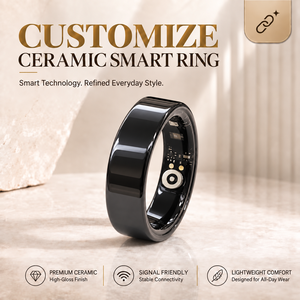
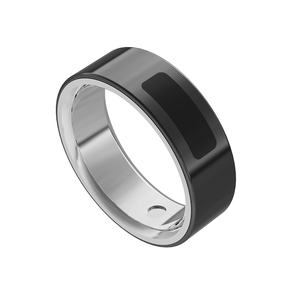
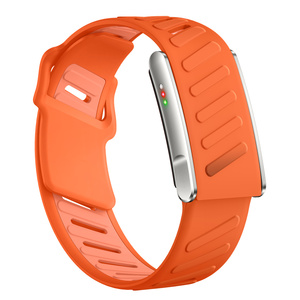
1. Winter Sports & Endurance Athletics in Southern Poland: In mountaineering hubs like Zakopane and trail hubs in the Tatras or Karkonosze, sports enthusiasts require form factors that integrate with cold-weather gear. Conventional wristwatches are frequently trapped under multiple layers of thermal sleeves, windbreakers, and heavy gloves, hindering both optical skin contact and real-time biometric readability. Our sleek titanium smart rings and the KR96 screenless biometric band sit directly against the user’s skin, gathering medical-grade pulse wave velocity (PWV) and blood oxygen continuous trends. Data seamlessly synchronizes via Bluetooth 5.3 to mobile apps once indoors.
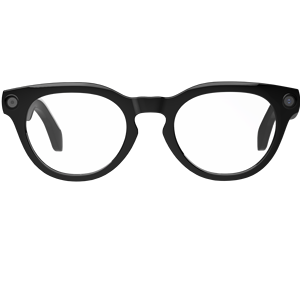
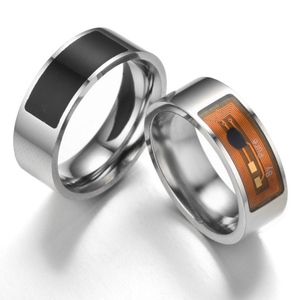
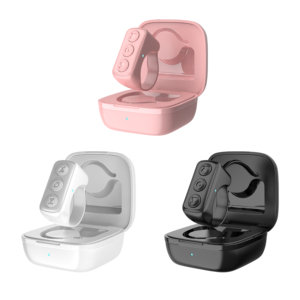
2. Urban Commuters & Micromobility in Warsaw and Wrocław: Poland's municipal bike lanes and e-scooter networks have driven demand for eyes-up navigation and gesture-based media control. Our AI Smart Glasses and Gesture Rings empower commuters to receive audio route instructions, manage incoming calls, and capture video logs without unsafely detaching their hands from bicycle handlebars during busy rush hours.
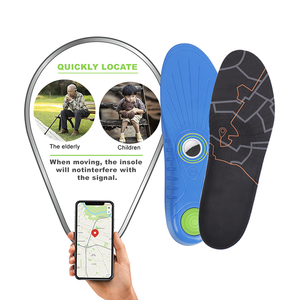
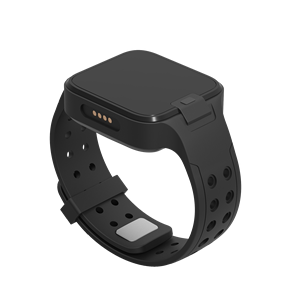
3. Logistics, Warehouse Safety & Field Personnel Tracking: Central Poland (notably around Łódź, Stryków, and Upper Silesia) serves as a primary logistics artery for Central and Eastern Europe (CEE). Logistics hubs employ our SKYLAB UWB proximity bracelets and GPS tracker insoles within safety workflows. The insoles fit inside standard ISO-compliant steel-toe work boots, providing discreet fall-detection, geofencing, and lone-worker SOS pings across multi-story fulfillment centers without needing external mobile handset pairings.
Compliance Engineering: EU Standards, CE Directives & GDPR Telemetry
Complete regulatory preparation mitigating market-entry risks for Polish importers and brand partners.
Distributing smart hardware into Poland requires strict adherence to European Union harmonized standards. Entering through customs at Gdynia, Gdańsk, or via European inland dry ports demands comprehensive Declaration of Conformity documentation. We build every production run around four core compliance frameworks:
Radio Equipment Directive (RED - 2014/53/EU): Wearables with BLE, GNSS, UWB, and NFC antennas are engineered with filtered RF architectures to clear spurious emissions testing, preventing electromagnetic cross-talk and guaranteeing stable transmission across the European 2.4 GHz ISM bands.
RoHS (2011/65/EU) & REACH (EC 1907/2006): Because wearable surfaces experience prolonged skin contact, our industrial finishes—from ceramic zirconia to PVD-coated medical stainless steel and biocompatible fluororubber straps—are analytically verified free of restricted phthalates, nickel leaching, and heavy metals.
GDPR / RODO Compliance Architecture: In Poland, personal data protection (RODO) is heavily scrutinized by the Personal Data Protection Office (UODO). Our firmware stack supports local device data isolation, zero-knowledge pairing handshakes, and end-to-end encrypted AES-128/256 payload transmissions. We supply our B2B customers with complete SDK/API documentation, allowing data storage to be mapped directly to client-controlled EU clouds (e.g., AWS Frankfurt/Warsaw, Google Cloud Warsaw) without unwanted secondary routing.
Why Polish Importers & Brands Partner With Our Shenzhen Facility
Combining the cost efficiency of Shenzhen's hardware supply chain with rigorous Western quality control expectations.
Integrated R&D and SMT Under One Roof
Operating 8 dedicated assembly lines and 2 SMT lines staffed by 100+ skilled operators, yielding a production capacity surpassing 300,000 units monthly. No secondary contractor delays.
Full-Stack White-Label Customization
From initial industrial design (ID) and tooling mold development to custom firmware flashing, customized laser etching, packaging localized into Polish, and localized companion app branding.
Multi-Stage Quality Checkpoints
An ISO 9001 quality system featuring 28 rigorous inspection gates. Incoming materials, surface mount alignment, drop resistance, saline sweat corrosion, and 5ATM pressure vessels ensure defect rates stay under 5‰.
Frequently Asked Questions by Polish Electronics Buyers
Clear, direct operational answers addressing customs, localization, lead times, and software governance.
What are the typical lead times for sample evaluation and full container shipments to Poland?
Standard engineering prototypes and off-the-shelf samples are dispatched via express air freight (DHL/FedEx/UPS) within 7 days, arriving in Warsaw or regional airports in 3 to 5 business days. Custom ODM projects requiring bespoke tooling molds, specific CMF coatings, or unique PCB layouts follow a disciplined developmental sprint with EVT/DVT phases over 25 to 30 days. Full-scale production lead time is typically 35 days following golden sample sign-off. Logistics options include fast air cargo (5–7 days) or economical rail freight via the regular China-Europe Railway Express (terminating at Małaszewice/Warsaw in 14–18 days).
Can companion iOS and Android software applications be localized into the Polish language (Język polski)?
Yes. We offer complete software engineering services for mobile applications. Our software development kits (SDKs) and off-the-shelf white-label apps support comprehensive string translation into correct, natural Polish, accommodating diacritics (ą, ć, ę, ł, ń, ó, ś, ź, ż). Furthermore, our engineering team can integrate localized unit standards (metric units, 24-hour time formatting) and configure the app UI to mirror your corporate design language for Google Play Store and Apple App Store deployment under your proprietary developer account.
How do you assist Polish buyers with customs clearing, CE certification, and WEEE compliance?
Every shipment ships accompanied by verified factory laboratory test reports, including RED (Radio Equipment Directive), EMC, LVD, RoHS, and UN38.3 lithium battery transportation safety reports. We supply full technical documentation to satisfy Polish Customs (KAS - Krajowa Administracja Skarbowa). Additionally, our hardware housings are designed to incorporate the required CE, WEEE (dustbin symbol), and country-specific markings via clean laser engraving or mold tooling, enabling smooth integration with your domestic Polish BDO waste register responsibilities.
What is your Minimum Order Quantity (MOQ) for custom private-label branding?
We structure our supply tiers to support brand launches as well as mature retail distribution. Private-label logo laser engraving, custom packaging, and pre-flashed localized firmware typically start at an accessible MOQ of 500 to 1,000 units. For fully customized hardware ODM projects requiring custom structural molds, specialized sensor arrays, or proprietary industrial design shells, the MOQ is generally 3,000 to 5,000 units, amortizing tooling and safety certification investments cleanly across the production cycle.
How is commercial IP and confidential product architecture protected during the ODM lifecycle?
Prior to reviewing technical schematics, market roadmaps, or mechanical design requirements, we execute an enforceable, bi-lingual Non-Disclosure Agreement (NDA). All design files, Gerber plots, CAD files, and firmware source codes are siloed on segregated project servers accessible solely by your designated R&D team. We never repurpose client-exclusive exterior molds or proprietary algorithms for third-party production runs.
What post-sales technical support and product warranty policies apply to imports into Poland?
All fitness tracking wearables manufactured in our facilities carry a standard 12-month global factory warranty. For high-volume enterprise and distributor contracts, we provide a mutual spare-parts allowance (typically 0.5% to 1% additional units or modular components) to support rapid RMA resolution within Poland. Furthermore, our Shenzhen-based firmware engineering desk operates 24/7 technical ticket resolution to assist your product team with over-the-air (OTA) updates and app debugging.
Scale Your Fitness Wearable Line in Poland
Connect directly with our engineering and procurement team in Shenzhen. Whether evaluating our field-tested smart rings or developing an original hardware ODM concept, we turn specifications into market-ready consumer reality.