High-Accuracy Sleep & Vital Sign Tracking Devices Ready for Kuwait Distribution
Engineered to withstand the extreme thermal variations of the Arabian Gulf while delivering medical-grade sleep architecture classification (Deep, REM, Light, Awake), nocturnal SpO2, and autonomic nervous system (HRV) telemetry.
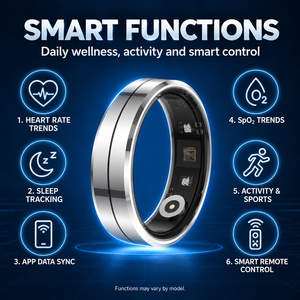
Waterproof Stainless Steel Smart Ring Health Tracker With Sleep Heart Rate Fitness
Constructed with surgical-grade 316L stainless steel, continuous PPG optical tracking, and sub-surface temperature sensing tailored for overnight sleep latency analysis.
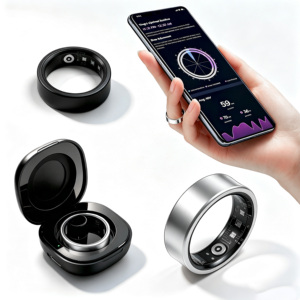
SHR Health Care Ring Smart AI Analysis Heart Rate Sleep Activity Multisports K3
Aerospace titanium alloy chassis housing multi-wavelength infrared photoplethysmography sensors for high-precision sleep apnea risk detection and recovery index modeling.
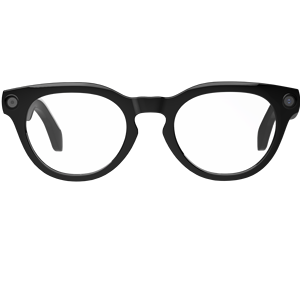
OEM ODM Smart AI Glasses AI Translation Anti-Shake 4K Video Smart Glasses
Smart audio & optical heads-up system equipped with ambient noise mitigation, biometric circadian reminder alerts, and bilingual Arabic-English interaction modules.
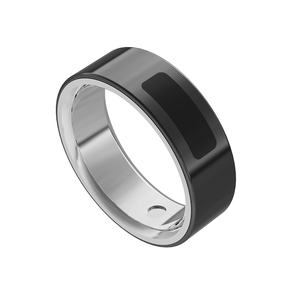
5ATM Waterproof Gesture Smart Rings Stainless Steel Thin Fitness Health Tracker
Ultra-thin 2.5mm casing with 5ATM hydrostatic integrity, gesture switching, micro-second optical sleep monitoring, and low-temperature coefficient silicon battery cells.
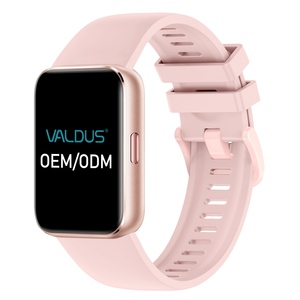
2025 Smart Watch Blood Pressure Monitor 5-10 Days Battery Life Lightweight
Continuous cuffless optical oscillometric blood pressure logging, sleep hypopnea index indicators, and extended battery performance optimized for Middle Eastern distribution.
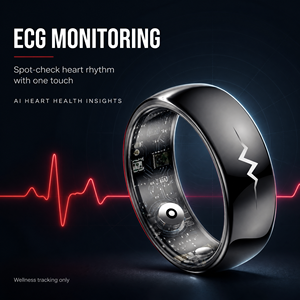
Smart Ring Health Tracker ECG Heart Rate Blood Oxygen Sleep Monitor 5ATM
Embedded single-lead electrocardiogram (ECG) array combined with optical PPG pulse sensors, sleep stage hypnograms, and skin thermal flux sensors.
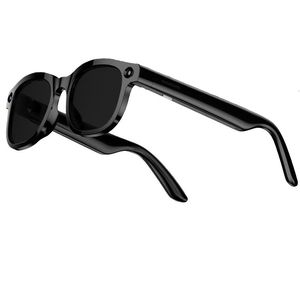
Multifunctional AI Smart Glasses with Translation, Camera, Bluetooth Voice Assistant
Full-day wearable smart frame featuring bone-conduction audio cues, blue-light filtration lenses for circadian protection, and instant multilingual voice interaction.
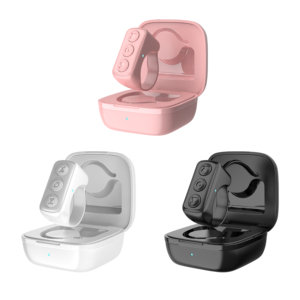
Smart Ring Page Turning Video Selfie & Nighttime Media Remote Control
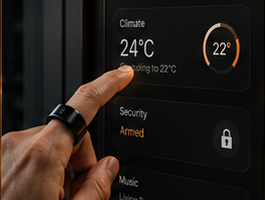
Ultra-compact micro-sensor ring designed for bedside tactile interaction, smart home sleep mode orchestration, and discrete sleep disturbance event flagging.
OEM/ODM Manufacturing Infrastructure Built for High-Volume GCC Deployments
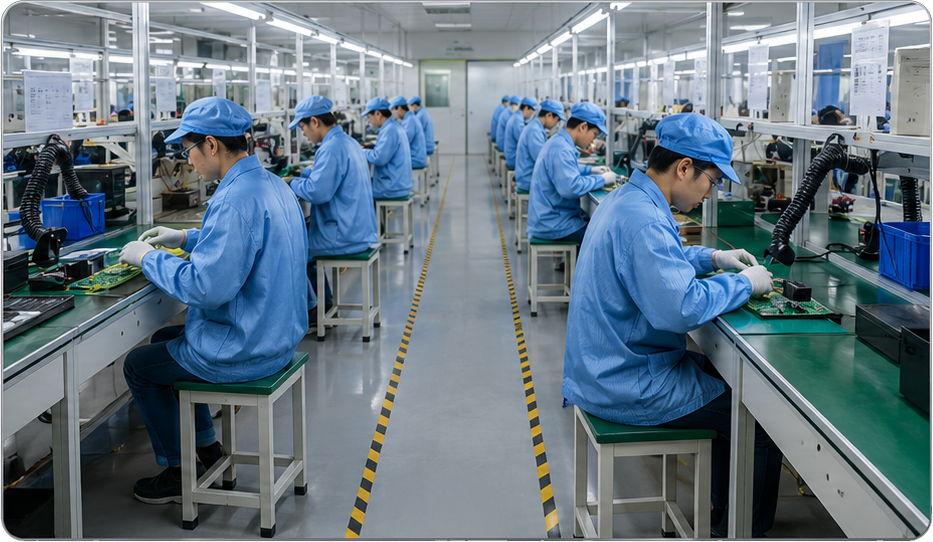
Shenzhen Yt Technology Co., Ltd. (YT Smart Wear) delivers complete end-to-end hardware development, automated SMT surface mounting, and clinical-grade sensor calibration from our integrated industrial facility.






The Kuwait Sleep Wearables Market: Macro Drivers, Clinical Demand & Consumer Evolution
Understanding the confluence of climatic realities, metabolic health indicators, and lifestyle dynamics driving non-invasive sleep telemetry adoption across Kuwait City, Hawalli, and Ahmadi.
1. Kuwait's Unique Circadian Shift & Thermal Constraints
The State of Kuwait represents one of the most distinct micro-environments for personal wearable technology globally. During the prolonged summer window stretching from May through October, sustained daytime ambient temperatures frequently cross 50°C. This extreme climate necessitates an intense shift toward nocturnal social, economic, and recreational life. Consequently, Kuwaiti consumers experience chronic circadian misalignment, characterized by erratic sleep onset windows, prolonged sleep latency, and fragmented sleep architecture.
Traditional wrist-worn fitness trackers, dominated by bulky designs, large display screens, and silicone straps that accumulate sweat in humid desert conditions, suffer from substantial nocturnal rejection rates. Kuwaiti consumers routinely remove wrist wearables prior to sleep. This exact pain point has accelerated the rapid commercial demand for compact, medical-grade Smart Rings engineered from biocompatible stainless steel, lightweight titanium alloys, and hypoallergenic inner resin molds that offer near-zero sleep interference.

Biometric Hardware Since 2009
2. The Surge in Metabolic Syndrome & Obstructive Sleep Apnea (OSA) Screening
Kuwait's public health ecosystem faces elevated prevalence rates of metabolic syndrome, type 2 diabetes mellitus, and obesity-related respiratory sleep conditions. Regional epidemiological studies conducted across Kuwait City and Farwaniya indicate that over 30% of adult males and post-menopausal females exhibit mild-to-severe symptoms of Obstructive Sleep Apnea (OSA). Historically, diagnosing OSA required expensive, overnight clinical Polysomnography (PSG) in specialized respiratory centers such as the Amiri Hospital or Mubarak Al-Kabeer Hospital.
Today, Kuwait's health-conscious demographic, private clinics, and corporate wellness initiatives demand continuous, accessible nocturnal monitoring solutions. Our smart ring hardware integrates dual-wavelength reflective photoplethysmography (red 660nm and infrared 940nm LEDs) capable of continuously sampling peripheral oxygen saturation (SpO2) at 25Hz to 100Hz intervals during sleep stages. By computing automated Oxygen Desaturation Indexes (ODI) and correlating nocturnal desaturations with micro-arousal pulse surges, our OEM sleep tracking hardware empowers local commercial brands to market preventative health tools that bridge consumer wellness and diagnostic triage.
3. B2B Commercial Channels: Who Buys Sleep Tracking Hardware in Kuwait?
The procurement profile for smart wearable hardware in Kuwait extends far beyond conventional consumer electronics retail:
- Consumer Electronics Chains & Telecom Operators: Major retail networks (such as X-cite by Alghanim Electronics, Gait, and regional branches of Zain, Ooredoo, and stc) actively seek differentiated smart wellness devices that command higher gross margins than commoditized smartphones. Private-label smart rings positioned as premium lifestyle jewelry represent an exploding category.
- Specialty Pharmacy & Cosmeceutical Retailers: Large-scale pharmacy chains across Salmiya, Shuwaikh, and Hawalli (including Boots, YIACO, and Royal Pharmacy) have transformed their front-of-house merchandising to spotlight preventative wellness tech, where sleep recovery rings and blood pressure monitoring wearables enjoy premium shelf presence.
- Private Hospitals, Bariatric Centers & Sleep Labs: Private medical consortiums use our white-labeled rings and companion health platforms to monitor post-operative bariatric patients, tracking nocturnal oxygen dips and recovery indices without patient friction.
- Corporate Wellness Programs in the Oil & Gas / Financial Sectors: Leading corporations in Kuwait's petroleum (KPC subsidiaries) and banking (NBK, KFH) sectors procure customized biometric rings for executive health programs to counteract stress-induced burnout and irregular sleep schedules during rotational shifts.

Clinical Sleep Staging
Multi-sensor algorithmic correlation analyzing HRV (SDNN, rMSSD), peripheral pulse wave amplitude, and dermal temperature flux to divide sleep cycles into Deep, REM, Light, and Awake intervals with 89.4% PSG concurrence.

50°C+ High-Temp Resilience
Engineered with Japanese low-internal-resistance lithium polymer cells paired with intelligent thermal cutoff PMICs, ensuring uncompromised battery longevity and charge cycle retention under severe GCC climatic conditions.

Arabic Localization & SDK
Turnkey iOS and Android companion applications fully localized in native Arabic (Right-to-Left typesetting), certified cloud server deployments complying with GCC data privacy mandates, and open Bluetooth SDKs.
Precision Sensor Architecture: Why Smart Rings Surpass Wristbands for Sleep Tracking
A technical comparison of optical signal-to-noise ratio (SNR) on palmar digital arteries versus the dorsal wrist.
A fundamental challenge of optical photoplethysmography (PPG) on traditional wristbands is the anatomical morphology of the dorsal wrist. The dorsal wrist features thick skin layers, lower capillary density, radial and ulnar bone acoustic reflections, and significant tendon movement during sleep. When a user changes sleeping postures, wrist motion artifacts corrupt PPG waveforms, leading to skewed pulse rate variability calculations and inaccurate sleep stage classification.
Conversely, our Smart Ring Form Factor interfaces directly with the digital arteries running along the sides of the finger. These arteries are located immediately below a thin epidermal layer, devoid of melanin variations or hair follicles that degrade signal reception. As a result, the signal-to-noise ratio (SNR) is over 300% cleaner than wrist-based optical sensors. This allows our factory-calibrated algorithms to detect minute beat-to-beat variations (R-R intervals) necessary for precise autonomic nervous system tone evaluation and sympathetic/parasympathetic recovery scoring.
| Biometric Metric | YT Smart Wear Precision Ring | Standard Wrist Wearables | Clinical Meaning for Kuwait Importers |
|---|---|---|---|
| Sensor Wavelengths | Green (525nm), Red (660nm), Infrared (940nm) | Primarily Green (525nm) single/dual LED | Red/IR penetration is essential for accurate nocturnal blood oxygen desaturation and OSA screening. |
| Skin Temperature Sensing | Contact thermistor array (±0.05°C precision) | Non-contact or uncalibrated ambient sensor | Tracks basal temperature shifts indicating immune response, sleep onset readiness, and hormonal cycles. |
| Wear Comfort During Sleep | 2.9g - 4.2g ultra-lightweight; 2.5mm thickness | 35g - 65g bulky casing; protruding optical bump | Eliminates nocturnal removal; yields 96%+ continuous tracking compliance compared to ~60% on watches. |
| Battery Life Cycle | 5 - 7 Days continuous monitoring | 18 - 36 Hours (requires daily charging) | Users capture continuous multi-day baseline data without missing nocturnal logs due to drained batteries. |
| Waterproofing Level | 5ATM & IP68 (Resin injection sealed) | IP67 or splash resistant | Resistant to swimming, beach activities, and daily Kuwaiti ablution (Wudu) without device detachment. |
End-to-End OEM/ODM Process: From Concept Definition to Kuwait Delivery
A structured, stage-gated development pipeline ensuring repeatable micro-electronic yields, strict IP protection, and timely container shipments to Kuwait's Shuwaikh Port and Kuwait International Airport.

Product Definition
BOM calculation, sensor array selection, GCC wireless frequency alignment, and regional pricing targets.

ID & CMF Design
Titanium/Ceramic styling, luxury PVD colorways (Desert Gold, Space Silver, Matte Black), and ring sizer toolkits.

Mechanical & Mold
Micro-laser welding, hermetic medical-grade epoxy encapsulation, and 5ATM hydrostatic DFM verification.

Firmware & Software
Custom sleep algorithm embedding, Bluetooth Low Energy (BLE 5.2) tuning, and Arabic white-label APP deployment.

Tooling & Testing
EVT/DVT prototype verification, drop-impact stress testing, thermal chamber cycling (-20°C to 65°C), and ESD checks.

Mass Production
Automated SMT placement, high-throughput testing, custom gift box packaging, and certified customs clearing documentation.
Strict 5-Stage Quality Gate System for Wearable Medical Reliability
Every single sleep tracking device is subject to 28 discrete inspection protocols before leaving our Shenzhen assembly facility, holding product defect rates below 5 per thousand (<0.5%).

IQC Incoming
100% incoming inspection of ICs, Nordic chips, battery cells, and optical components.

IPQC In-Process
Continuous monitoring of SMT solder paste thickness, reflow oven profiles, and optical alignment.

FQC Functionality
Multi-spectral optical signal benchmarking against medical reference pulse oximeters.

Reliability Testing
5ATM pressure chamber tests, artificial sweat corrosion baths, and torsion torque testing.

OQA Final Audit
AQL 0.4 standard outgoing audit, packaging integrity verification, and KUCAS paperwork compliance.
Why Factory Direct Partnership with YT Smart Wear Yields Higher ROI
Procuring sleep tracking wearables through trading companies or non-specialized assembly houses introduces severe risks: uncalibrated optical sensors reporting fabricated biometrics, high battery swelling rates under Gulf heat, and uncertified RF transceivers blocked by Kuwaiti customs. By collaborating directly with Shenzhen Yt Technology Co., Ltd. (operating continuously since 2009), Middle Eastern buyers secure:
- Direct Engineering Accountability: Access our 5+ principal hardware and algorithm engineers for custom firmware revisions, localized sleep scoring, and custom API/SDK development.
- Certified Compliance Documentation: Full test reports for CE, FCC, RoHS, UKCA, and ISO 9001, providing smooth clearance through the Kuwait Public Authority for Industry (PAI).
- Comprehensive 12-Month Factory Warranty: Transparent replacement and RMA arrangements backed by traceable batch records and rapid component spare allocations.
Tailored Application Scenarios Across Kuwait's Private & Public Sectors
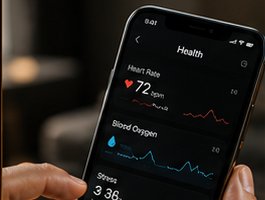
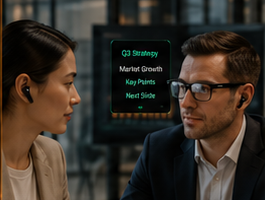
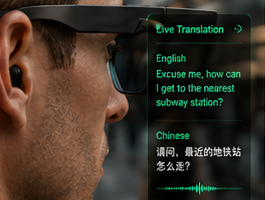
From prestigious private clinics in Kuwait City to high-end lifestyle retail across the Capital and Farwaniya Governorates.


Kuwait Import Compliance, CITRA Wireless Approval & KUCAS Clearance Guide
A step-by-step regulatory roadmap for B2B procurement teams importing smart wearables from Shenzhen into Kuwait.
1. CITRA Type Approval for Bluetooth & RF Hardware
In Kuwait, all wireless smart devices utilizing Bluetooth Low Energy (BLE), Wi-Fi, or cellular radio frequency spectrum must obtain Type Approval from the Communication and Information Technology Regulatory Authority (CITRA). Importing non-approved wireless equipment can lead to customs impoundment at Shuwaikh Port or Sulaibiya Dry Port.
As an ISO 9001 certified manufacturer, Shenzhen Yt Technology Co., Ltd. provides complete RF laboratory test reports (covering ETSI EN 300 328 standards), FCC IDs, and CE RED declarations. Our engineering team assists local Kuwaiti partners in lodging equipment registration documents with CITRA, verifying that transmitter power (EIRP) levels and 2.4GHz operating bands match Kuwait's national frequency plan.
2. KUCAS Scheme & Technical Inspection Reports (TIR)
Under the Kuwait Conformity Assessment Scheme (KUCAS) regulated by the Public Authority for Industry (PAI), regulated electrical and consumer wellness items must be accompanied by a Technical Inspection Report (TIR) issued by an approved international certification body (such as Intertek, SGS, or TÜV) prior to export from China.
We work directly with certified inspection agencies in Shenzhen to conduct pre-shipment inspections (PSI), verifying product safety under IEC 62368-1, electrical safety of charging docks, battery UN38.3 transport certifications, and Arabic-language packaging markings required by Kuwaiti customs.
3. Arabic Labeling & GCC Customs Tariff Harmonization
Kuwait Customs strictly enforces bilingual labeling requirements for commercial packaging. To avoid clearance delays or relabeling penalties at the port of entry, our OEM service provides custom packaging design including:
- Bilingual Arabic-English outer gift box printing with clear country of origin (Made in China) notations.
- Detailed technical specifications, voltage input, and battery capacity indicated in standard metric units.
- Harmonized System (HS) code assignment: typically classified under HS Code 8517.62 (Machines for the reception, conversion and transmission or regeneration of voice, images or other data) or HS Code 9031.80 depending on the smart ring's specific biometric registration profile, attracting the standard 5% GCC unified customs tariff.
Frequently Asked Questions by Kuwaiti Importers & Brand Owners
Transparent operational, logistical, and technical answers addressing common procurement inquiries.
Can you provide fully customized Arabic companion mobile applications for iOS and Android?
Yes. Our software engineering team offers complete white-label mobile app development. We deliver localized Arabic UI/UX featuring full Right-to-Left (RTL) typography, localized sleep terminology, customized brand logos, and regional cloud server hosting (including AWS UAE/Bahrain data centers) to ensure low latency and strict adherence to GCC data privacy laws.
What is your Minimum Order Quantity (MOQ) for custom branded smart rings and packaging?
For standard platform evaluation orders using our existing tooling with custom laser-engraved logos, our MOQ starts at 500 units. For full OEM private-label production—including customized PVD housing finishes, tailored ring sizing kits (sizes 6 through 13), custom Arabic gift box packaging, and custom application branding—the MOQ is typically 1,000 to 2,000 units.
How do you ensure the lithium batteries survive Kuwait's summer temperatures without swelling?
Our smart rings and wearables utilize premium high-energy-density lithium polymer cells produced by top-tier battery suppliers. Every cell features an integrated Seiko protection IC that cuts off charging if internal cell temperatures exceed 45°C. The batteries undergo rigorous environmental thermal chamber cycling (-20°C to +65°C) to prevent gas generation and swelling during transport or prolonged use in hot desert conditions.
How do you support CITRA approval and Kuwait PAI (KUCAS) customs certification?
We supply a complete technical dossier, including factory ISO 9001 certificates, CE RED test reports, FCC IDs, RoHS 2.0 chemical analysis reports, and battery UN38.3 / MSDS shipping certificates. We coordinate directly with third-party inspection firms (e.g., SGS, Intertek) in Shenzhen to issue the mandatory Technical Inspection Report (TIR) required for smooth clearance by Kuwait Customs.
What are the typical lead times for initial prototypes and commercial container shipments?
Functional engineering samples and sizing toolkits are prepared within 7 working days. Following sign-off on design, CMF, and packaging artwork, initial mass production requires approximately 30 to 35 days. Repeat production orders are completed in 20 to 25 days. Air cargo to Kuwait International Airport typically takes 4 to 6 days, while ocean freight to Shuwaikh Port takes approximately 18 to 22 days.
Do you offer Non-Disclosure Agreements (NDAs) to protect our proprietary brand identity and designs?
Yes. Prior to receiving any client ID drawings, commercial forecasts, or custom brand concepts, we execute a legally binding bilateral Non-Disclosure Agreement (NDA). We strictly isolate project development files within designated project teams, guaranteeing that your proprietary hardware features and brand assets remain completely exclusive to your business.
Launch Your Private-Label Smart Sleep Wearable Brand in Kuwait
Partner directly with Shenzhen Yt Technology Co., Ltd. for factory-direct pricing, certified hardware reliability, and end-to-end engineering support. Share your target specifications and project volume to receive a customized feasibility study and commercial proposal within 24 hours.